20 Top Cricketers Banned For Corruption: Cricket, historically idealised as the ultimate "gentleman's game", has routinely been rocked to its absolute foundations by structural corruption. While the sport thrives on high-stakes competitive drama, a insidious network of illicit bookmakers, betting syndicates, and spot-fixing cartels has repeatedly compromised its integrity across multiple eras.
From explosive dressing room whistleblowers to systemic multi-player conspiracies that led directly to prison sentences, the International Cricket Council (ICC) and local governing boards have been forced to implement uncompromising disciplinary bans. Examining the twenty players highlighted in the public record reveals a stark mixture of fully validated lifelong expulsions, successful legal appeals, and brief, minor suspensions.
1. Mohammad Azharuddin (India) - Life Ban
The elegant former Indian captain was handed a lifetime ban by the Board of Control for Cricket in India (BCCI) in 2000 following a damning Central Bureau of Investigation (CBI) inquiry into a major match-fixing syndicate. Although the Andhra Pradesh High Court eventually declared the operational ban illegal in 2012 due to procedural technicalities, the administrative stain on his career remained permanent.
2. Hansie Cronje (South Africa) - Life Ban
Perhaps the most tragic fall from grace in sporting history, the widely respected South African captain was banned for life in 2000. He admitted to accepting significant financial sums from illegal bookmakers to forecast match variables, a scandal that completely reshaped global anti-corruption protocols before his untimely death in a 2002 plane crash.
3. Saleem Malik (Pakistan) - Life Ban
The former Pakistani captain became the first modern cricketer to receive a lifetime ban for corruption in 2000. The landmark decision followed extensive investigations by the Qayyum Commission, which uncovered substantial evidence of match manipulation and attempts to bribe visiting international players.
4. Danish Kaneria (Pakistan) - Life Ban
The leg-spinner was banned for life by the England and Wales Cricket Board (ECB) in 2012 for his central role in enticing teammates into spot-fixing schemes while playing county cricket for Essex. After years of absolute public denial, Kaneria finally made a full confession in 2018 regarding his illicit bookmaker involvement.
5. Ata-ur-Rehman (Pakistan) - Life Ban (Overturned)
The pace bowler was originally handed a lifetime ban in 2000 by the Qayyum Commission for perjury and suspected dealings with bookmakers. However, the ICC subsequently lifted his ban in 2006, allowing him to return to domestic cricket structures.
6. Sreesanth (India) - Life Ban (Reduced to 7 Years)
The Indian pace bowler was initially banned for life by the BCCI after being arrested for alleged spot-fixing during the 2013 Indian Premier League (IPL) season. Following a prolonged and complex legal battle, the Supreme Court of India set aside the lifelong ban, prompting the BCCI ombudsman to reduce his official sanction to seven years, which concluded in 2020.
7. Lou Vincent (New Zealand) - Life Ban
The former New Zealand top-order batsman openly confessed to his systemic involvement in multiple match-fixing rings operating across English county cricket, the IPL, and the Champions League. In 2014, he released a public statement confirming his guilt and was subsequently handed eleven concurrent lifetime bans by the ECB.
8. Salman Butt (Pakistan) - 10-Year Ban
As the sitting Test captain, Butt masterminded the infamous 2010 Lord’s spot-fixing plot, convincing his young bowlers to intentionally deliver pre-arranged no-balls. The ICC banned him for ten years (with five suspended), and he was subsequently sentenced to prison by a British criminal court.
9. Lonwabo Tsotsobe (South Africa) - 8-Year Ban
The international left-arm seamer was handed an eight-year suspension by Cricket South Africa (CSA) in 2017. An extensive internal investigation proved his involvement in the highly publicised 2015 Ram Slam domestic T20 match-fixing conspiracy.
10. Mohammad Ashraful (Bangladesh) - 8-Year Ban
The former Bangladesh captain confessed to widespread spot-fixing during the 2013 Bangladesh Premier League (BPL) edition. He received an eight-year ban from a special anti-corruption tribunal, which was later legally reduced to five years with an additional two years suspended on appeal.
11. Mohammad Asif (Pakistan) - 7-Year Ban
The highly talented swing bowler was banned for seven years (with two suspended) by the ICC for his direct involvement in the 2010 Lord's spot-fixing scandal. Asif was proven to have bowled a deliberate, pre-planned no-ball for financial reward and served a custodial sentence in the United Kingdom.
12. Ajay Jadeja (India) - 5-Year Ban (Overturned)
The Indian middle-order batsman was handed a five-year ban by the BCCI in 2000 for allegedly associating with illegal bookmakers. This ban was completely dismissed and overturned by the Delhi High Court in 2003, paving the way for him to return to domestic cricket structures.
13. Manoj Prabhakar (India) - 5-Year Ban
The Indian all-rounder attempted to trigger a major anti-corruption inquiry by accusing legendary teammates of offering bribes. However, the subsequent BCCI investigation backfired spectacularly when the independent Madhavan Committee found Prabhakar himself guilty of bringing the game into disrepute through illicit bookmaker links.
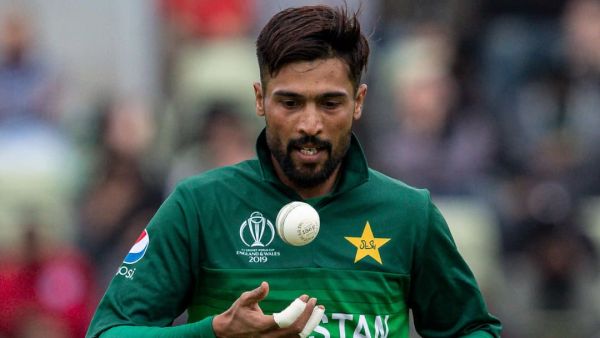
14. Mohammad Amir (Pakistan) - 5-Year Ban
The teenage bowling prodigy was banned for five years by the ICC after pleading guilty to bowling deliberate no-balls under instructions during the 2010 Lord's Test. Because of his youth and immediate cooperation with investigators, he received the minimum sanction and successfully returned to international cricket after completing his term.
15. Sharjeel Khan (Pakistan) - 5-Year Ban
The aggressive opening batsman was banned for five years by the Pakistan Cricket Board (PCB) in 2017 following a high-profile spot-fixing investigation during the Pakistan Super League (PSL) in Dubai. Half of his five-year sentence was suspended, allowing him to return to competitive play after two and a half years.
16. Umar Akmal (Pakistan) - 3-Year Ban (Reduced to 12 Months)
The middle-order batsman was banned for three years by the PCB in 2020 for failing to report multiple corrupt approaches ahead of the PSL. The Court of Arbitration for Sport (CAS) eventually slashed the ban to twelve months alongside a substantial financial fine, clearing him to return to domestic systems.
17. Marlon Samuels (West Indies) - 2-Year Ban
The West Indian batting icon was handed a two-year ban by the ICC in 2008 for passing vital team inside information to an illegal bookmaker during a tour of India. Samuels served his complete suspension before returning to anchor two separate ICC World T20 final victories.
18. Alviro Petersen (South Africa) - 2-Year Ban
The former Proteas opening batsman was banned for two years by CSA in 2016. While he was completely cleared of actively fixing matches, he admitted to multiple charges of failing to report corrupt approaches during the Ram Slam T20 tournament.
19. Shakib Al Hasan (Bangladesh) - 1-Year Ban
The world's premier all-rounder was handed a two-year ban (with one year suspended) by the ICC in 2019. The severe penalty was issued because he completely failed to report multiple corrupt approaches from an international bookmaker regarding matches in 2018.
20. Herschelle Gibbs (South Africa) - 6-Month Ban
The explosive opening batsman was banned for a brief six-month period in 2000. Gibbs admitted he initially accepted a financial offer from captain Hansie Cronje to score fewer than twenty runs in an ODI against India, though he ultimately went back on the agreement on the field.
-
Four Potential Replacements Chelsea Could Sign for Marc Cucurella

-
Ruben Dias brushes off Cristiano Ronaldo criticism as Portugal focus on World Cup ambition
-
Americans Were Raised To Romanticize Hard Work

-
Your Zodiac Sign’s Daily Horoscope For Sunday, June 21, 2026

-
Weekly Business News: Everything from SEBI’s GARUDA Launch to TCS-Anthropic Partnership