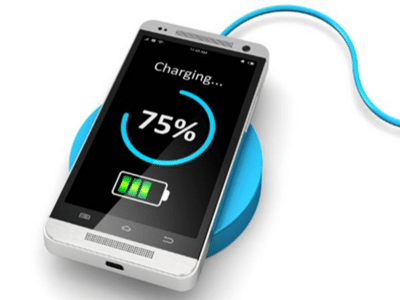
Mobile Data and Battery Usage: There are hardly any people who do not use the internet, yet few realize that the internet connection plays a role in phone battery consumption. Many users believe that Wi-Fi and mobile data affect the battery equally, but the reality is different. If your phone's battery is draining quickly, your network connection could be a contributing factor. Let’s understand which consumes more battery—Wi-Fi or mobile data—and the underlying reasons for this.
Why does the battery drain faster on mobile data?
According to experts, using mobile data (4G and 5G) drains the phone's battery faster than using Wi-Fi. The primary reason for this is the distance to the mobile network signal source.
Telecom network towers are often located quite far from the user. Consequently, the phone has to expend more energy to capture and maintain a signal coming from a distance.
Battery load increases when the signal is weak.
You may have noticed that when you are in an elevator, basement, parking garage, or an area with poor network coverage, your phone has to work harder to find a signal.
In such situations, the smartphone constantly searches for a better signal, leading to increased battery consumption. This is why the battery level appears to drop rapidly in areas with weak network coverage.
Switching between 4G and 5G networks is also a factor
Smartphones often switch continuously between 4G and 5G networks. This process also consumes extra battery power.
When the phone frequently switches networks, the radio module has to work harder, placing additional strain on the battery.
Why does Wi-Fi consume less battery?
In contrast, Wi-Fi connections are typically used within your home, office, or immediate vicinity. Since the Wi-Fi router is much closer to the phone, the device does not need to exert much effort to capture the signal. Due to the short distance, the network remains stable, allowing the phone to access the internet while consuming less energy. This is why battery consumption is relatively lower when using Wi-Fi.
Understanding the math behind the distance
The distance factor plays a crucial role here. With mobile data, the signal travels from a tower located several kilometers away, whereas a Wi-Fi signal is typically received from just a few meters away.
The greater the distance, the more power the phone requires to maintain the signal. Consequently, Wi-Fi is considered more battery-efficient than mobile data.
How to save battery?
If you wish to reduce battery consumption, use Wi-Fi whenever possible. Avoid keeping mobile data turned on unnecessarily in areas with weak network coverage.
If the 5G network in your area is unstable and frequently switches between 4G and 5G, locking the network mode to a specific setting when needed can also help conserve battery life.
Disclaimer: This content has been sourced and edited from Amar Ujala. While we have made modifications for clarity and presentation, the original content belongs to its respective authors and website. We do not claim ownership of the content.
-
MPPSC: Interim stay on MPPSC Main Exam lifted; wait of 4,000 candidates ends..
-
'BJP Supporter With A Gun': Abhishek Alleges Security Lapse, Brien Backs Claim

-
How Morocco’s Early Strike Against Scotland Compares Among the Fastest Goals in World Cup History

-
Nipah Virus Outbreaks: How The Deadly Zoonotic Disease Affects Humans

-
IND vs AFG, 3rd ODI: Afghanistan Wins Toss & Opts To Bat Against Team India In Chennai