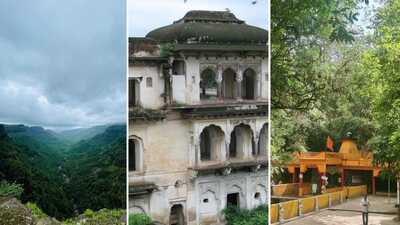
New Delhi: Many travellers head to crowded hill stations the moment the rainy season arrives, completely missing out on quiet alternative retreats. Nestled high on a ridge within the Sindhudurg district of Maharashtra, Amboli serves as a brilliant remedy for standard holiday fatigue. This serene destination transforms entirely during the monsoon, wrapping itself in thick blankets of mist while endless streams of fresh water rush down the hillsides.
Amboli is an ideal monsoon destination for anyone looking to slow down, slow-travel, and enjoy nature without the usual rush of tourists. Over the course of a weekend, this peaceful hill station reveals an incredible variety of rare wildlife, misty viewpoints, and quiet historical landmarks. Visitors will find a perfect mix of outdoor adventure and calm relaxation, making it a highly rewarding getaway for couples, solo explorers, and nature lovers alike.
Amboli travel guide Amboli waterfallSurrounded by the verdant Sahyadri Hills, this spectacular 300 to 400-foot cascade sits roughly 3 km from the main local bus stand along the Nippani Sawantwadi Road. Earning the title of Maharashtra’s Cherrapunji because of the intense downpours, the spot hits its absolute peak between June and September. Visitors can access the base via a brief downhill walk directly from the Kolhapur-Goa highway. Convenience is well managed here, with roadside parking spaces and dedicated changing rooms maintained by the local Gram Panchayat for a nominal fee of Rs 10 per individual.
Amboli forest parkThis protected eco-reserve showcases the immense biodiversity of the Western Ghats and requires around 3 to 4 hours to thoroughly investigate. The dense overhead canopy and seasonal streams come alive during the rainy months, creating a haven for wildlife photographers. It serves as a critical habitat for distinctive reptiles and amphibians, including the Malabar pit viper, the Amboli bush frog, and the Malabar gliding frog. Birdwatchers and insect enthusiasts can track over 150 butterfly variants, including the massive Southern Birdwing and the vibrant Blue Mormon, alongside 200 avian species like the melodic Malabar whistling thrush. Deeper in the woods, the terrain shelters larger mammals such as the Indian gaur, sambar deer, Malabar giant squirrel, and occasional leopards.
Kavalshet pointAlso referred to locally as Kavlesad Point, this dramatic cliff edge provides sweeping views over deep valley drop-offs. The peak travel window falls between June and August when the weather creates a fascinating optical illusion known as a reverse waterfall. When the monsoon peaks, incredibly powerful upward wind currents rushing through the gorge intercept the falling streams, forcing the water straight back up over the cliff face in defiance of gravity. The area is equally prized by binocular-wielding travellers looking to spot montane birdlife navigating the thermal winds.
Chaukul plateauOften compared to the well-known Kaas Plateau, this undisturbed rocky tableland behaves like a miniature Valley of Flowers. Situated within an eco-sensitive zone, the landscape changes dramatically between September and October when massive carpets of rare endemic orchids and seasonal wildflowers burst into bloom. The plateau is bordered by thick, tree-canopied forests that hide secluded torrents like the Chaukul Waterfall. Beyond the botanical appeal, the area supports diverse herpetofauna and unique insects like the common onyx butterfly. Walkers can explore local cultural landmarks scattered across the plateau, including the historic Chaukul Cave and the peaceful walking path leading toward Khamdev Mandir.
Madhavgad FortPerched high above the surrounding terrain, this historic hilltop fortification provides a brilliant vantage point for viewing the green expanses of the Ghats, extending as far as the Arabian Sea coastline when the horizon clears. Located 2.5 km from the central bus station, reaching the ruins involves a scenic uphill walk. The site preserves layers of regional history, containing structural remnants from the Maratha Empire alongside an old tombstone belonging to a British soldier. Visitors can also explore a traditional Krishna temple, which local lore associates with a deeply devoted follower regarded as a manifestation of Lord Shiva. A trip here takes roughly 2 to 3 hours and links up perfectly with a visit to nearby Kavlesaad Point.
Hiranyakeshi TempleDating back to the 12th century, this ancient stone shrine is dedicated to Goddess Parvati and marks the exact geographical source of the Hiranyakeshi River. The site sits 5 km away from the town bus stand and involves a pleasant 10-minute stroll through dense forest trails from the vehicle parking zone. Architecturally, the shrine displays classic Hemadpanti and Kadamba design styles, meticulously built using heavy black stone. The main sanctum houses a self-manifested red stone Shivling called Hiranyakeshwar alongside the idol of Devi Hiranyakeshi. Directly next to the structure, mountain water bursts out with immense power from an underground cavern, filling a square stone tank before continuing downstream.
The monsoon completely changes the driving conditions through the Ghats, so heavy-grip footwear and reliable rain gear are essential. Planning visits to the open plateaus during early morning light offers the best chance to witness the mist clearing across the valleys.
-
Delhi doctor kills domestic help at his Mount Kailash residence, suspected her of occult practices

-
For workers in Delhi's deadly heat, cooling zones can only offer a temporary respite

-
How Banda Singh Bahadur founded – and defended – the first Sikh empire against the Mughals

-
Assam's Investment Surge: Rs 2 Lakh Crore in Progress

-
Jupiter Enters Pushya Nakshatra: These 3 Zodiac Signs May Face Challenges in Money, Career, and Health