As geopolitical uncertainty continues to constrict the world’s supply of fossil fuels, plenty of countries are weighing up their options for finding alternative energy sources. Nuclear power remains a controversial option, with the fallout from disasters like Chernobyl still continuing decades later, but it’s a very efficient solution. A single average nuclear power plant can generate around 900 megawatts, which is enough to power hundreds of thousands of homes. Renewable energy sources like wind and solar are less controversial, but you’ll also need a whole lot more of them to power the same number of homes.
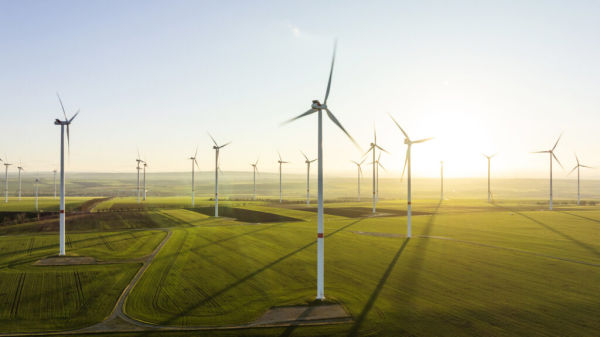
According to John Parsons, the deputy director of the MIT Center for Energy and Environmental Policy Researchmatching the output from an average nuclear reactor would mean building roughly 800 wind turbines. There are a variety of factors to consider, not the least of which is when you switch on a nuclear power plant, it operates at capacity all the time. Wind farms, on the other hand, are dependent on external factors.
To build such a huge wind farm, you’d need around 1,000 times more land than a nuclear reactor would need, if you measure the total size of the farm. Much of that land is the space in between each turbine, which could potentially be used as farmland, but even if you measure only the space taken up by the turbines themselves, the wind farm will still take up 10 times as much space as the nuclear reactor.
Researchers are trying to develop more efficient wind turbines
Wind and solar power remain much greener than fossil fuels, with almost all of their emissions being generated during the manufacturing process and the construction of the power plants. However, the land requirements and production costs to build these plants are still major limiting factors for now.
Researchers continue to work on ways to make wind and solar power more efficient, with one company in China currently developing unique wind turbines that fly above the ground rather than being built on it. According to the Chinese state-affiliated Global Timesthe airborne wind turbine, which looks like a cross between a blimp and a cartoon rocket ship, successfully took its maiden flight in January 2026.
Operating at 2,000 meters above ground level, the turbine is subjected to stronger, more consistent wind than a traditional land-based wind turbine. This stronger wind allows it to produce significantly more energy, which is then transferred along a cable that anchors it to the ground. Speaking to the Global Times, a researcher working on the project said that they envisioned the turbine being used as an energy supply in remote outposts, as well as “complement[ing] traditional ground-based wind power systems.”
The data gathered during the initial flight suggested that the airborne turbine prototype could generate up to 3 megawatts of power. That would mean that only 300 of these turbines could match the output of a nuclear reactor, compared to 800 average ground-based turbines.
Bigger is better when it comes to wind turbines
Although the Chinese prototype wind turbine looks promising, it isn’t yet in production. If and when it arrives, its makers reportedly plan to prioritize the Chinese market at first, so it’s safe to assume that the rest of the world won’t be generating power using floating wind turbines anytime soon. Thankfully, it’s not the only way that researchers are trying to make wind turbines more efficient.
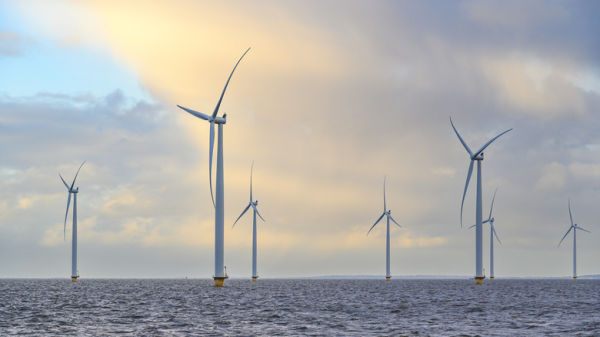
One development that’s already happening in America is the introduction of increasingly large surface-level wind turbines. A bigger wind turbine has the potential to generate significantly more energy, and turbines built in the 2020s are already far larger on average than the turbines built in previous decades.
This increase in size is expected to continue, with offshore wind turbines expected to reach an average height of almost 500 feet by 2035, up from around 330 feet in 2016. Each new turbine in 2035 is expected to generate almost 3 times as much energy as its 20-year-old predecessors. A smaller number of large turbines takes up less space than a larger number of small turbines, and it also makes it cheaper to generate the same amount of energy.
It turns out that wind farms might have some unexpected environmental benefits too. Despite lingering concerns about sea birds hitting turbines, studies have found that some aquatic wind turbine farms have become places of shelter for everything from harbor seals to fish and lobsters.