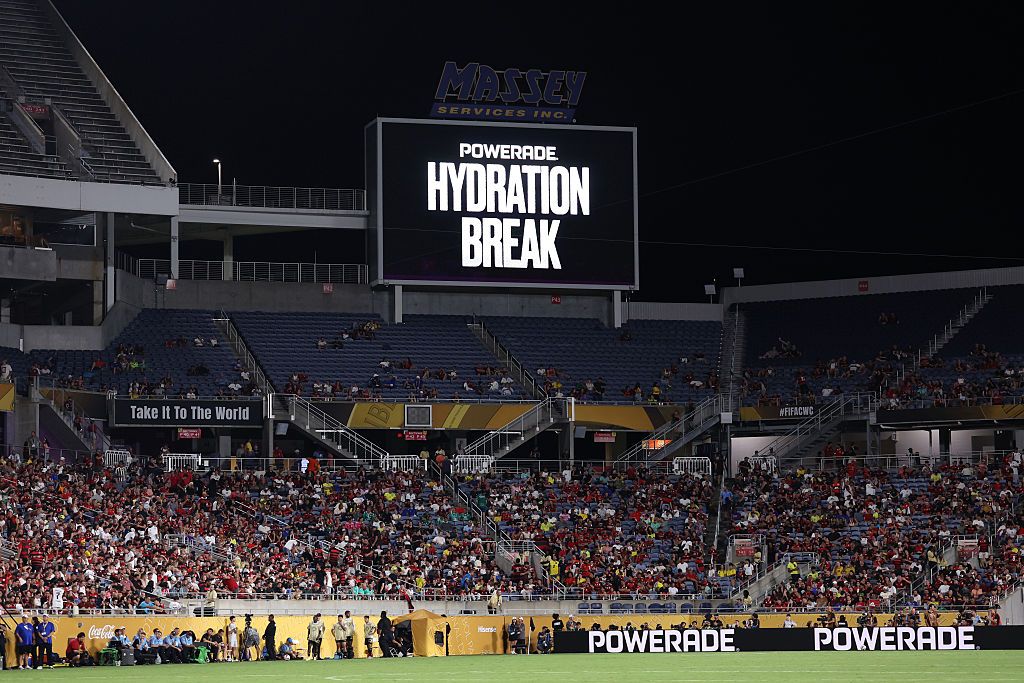
BBC co-commentator Stephen Warnock observed during the Iraq vs Norway clash that the newly enforced three-minute hydration breaks at World Cup 2026 are harming the natural flow of football.
Throughout the opening week of the competition, players have been using these breaks not only to rehydrate but also to receive tactical guidance from their coaches. Warnock argued that such tactical input should be reserved for half-time, insisting that hydration pauses should last no more than 45 seconds with drinks placed on the far side of the field.
Whether that suggestion is truly workable is open to debate, but it highlights a deeper transformation in the structure of each half. The extended opportunities for managers to gather their players have raised concerns about how the rhythm and momentum of games are being altered.
Analyst and journalist Yash Thakur’s research visualisations have provided strong evidence of this shift, showing that these interruptions can dramatically swing momentum from one side to another.
Thakur’s data revealed striking changes in attacking momentum during early group stage fixtures, with the most noticeable swings occurring in the first halves of matches.
In Ivory Coast’s opening match against Ecuador, for example, the Ivorians dominated the opening phase without converting chances, only for Ecuador to take control following the first-half hydration break, as measured by their increase in attacking actions.
Japan’s recovery against the Netherlands offered another illustration. The Dutch had been dominant early on, but Japan seized control after the pause. Similarly, Morocco enjoyed a strong spell immediately after their break against Brazil, equalising soon afterwards.
Even Sweden’s commanding 5-1 triumph over Tunisia supported this pattern. Tunisia had begun to find their rhythm towards the end of the opening quarter, only for Sweden to reassert their authority after the three-minute stoppage.
That defeat led to Tunisia parting ways with Sabri Lamouchi, appointing Herve Renard—an experienced coach with a long record managing various African and international sides—as his replacement.
While critics have warned against football’s drift toward commercialisation and the adoption of ‘quarter-style’ breaks reminiscent of American sports, the official justification for the hydration breaks is sound. Several matches at the 2026 World Cup are being held in extreme heat and high humidity, making regular fluid intake essential for player welfare.
There is also a case for applying the system universally across all fixtures to ensure consistency. That reasoning is fair and practical, ensuring every team competes under identical conditions.
However, the side effects of these scheduled, predictable, and lengthy interruptions are already apparent. Many are questioning whether such a fundamental alteration to the game’s rhythm should have been introduced so casually.
What’s your opinion? Should the approach to hydration breaks be changed? Share your thoughts below…
Please adhere to our community guidelines when commenting.
-
World Cup dreams come true for young German footballers

-
Manipur: Three injured Kuki men moved from Imphal hospital under heavy security after protests

-
Navi Mumbai Airport to launch international operations on July 15

-
UGC NET June 2026 Admit Card Released: Download Now

-
Afghanistan Chooses to Bowl First Against India in 2nd ODI