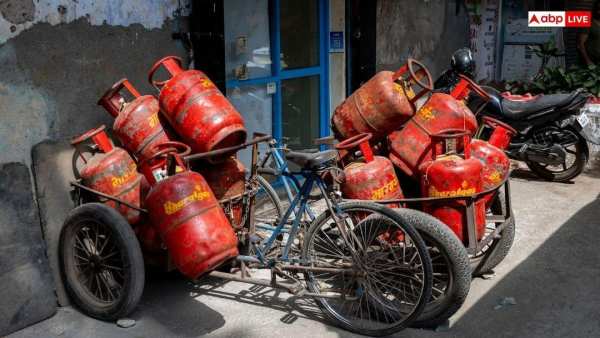
For households already grappling with higher fuel costs, the recent increase in LPG prices may have felt like yet another blow. But according to the government, the latest revision tells only part of the story.
The Ministry of Petroleum and Natural Gas (MoPNG) has said that state-run Oil Marketing Companies (OMCs) continue to lose around Rs 700 on every domestic LPG cylinder sold, despite the latest Rs 29 increase in cooking gas prices.
The statement comes amid an unprecedented energy shock triggered by the ongoing crisis in West Asia, which has pushed global fuel prices sharply higher and placed fresh pressure on India's energy import bill.
Why LPG Prices Are Rising
The latest revision, which came into effect on June 7, raised the price of a 14.2 kg domestic LPG cylinder from Rs 913 to Rs 942 in Delhi for general consumers. For Pradhan Mantri Ujjwala Yojana (PMUY) beneficiaries, the effective price stands at Rs 642.
The increase follows a previous Rs 60 per cylinder hike announced on March 7, making it the second major revision in just three months.
According to the ministry, the surge in international LPG prices has significantly increased the cost of supplying cooking gas in India. The Saudi Contract Price (CP), which serves as a benchmark for global LPG pricing, has risen by 46 per cent since February 28.
As a result, the cost of supplying a domestic LPG cylinder has crossed Rs 1,600, far above the price consumers currently pay.
The Rs 700 Gap Explained
The difference between the actual international cost of LPG and the regulated retail price is known as "under-recovery", and that gap remains substantial.
Despite the recent hike, OMCs are still absorbing losses of approximately Rs 700 on every domestic cylinder sold.
The ministry said this burden is shared between public-sector fuel retailers and the government, which provides partial compensation to offset losses.
The financial impact has been significant. By the end of the last financial year, cumulative under-recoveries on domestic LPG had surged to Rs 60,000 crore, compared with just Rs 1,338 crore a year earlier.
To help ease the strain, the Union Cabinet has approved compensation of Rs 30,000 crore for the OMCs.
What Commercial LPG Prices Reveal
One way to understand the scale of the subsidy is by comparing household LPG prices with fully market-linked commercial cylinders.
"The scale of this is visible in the fully market-priced commercial cylinder: the 19kg cylinder used by hotels and restaurants sells in Delhi at Rs 3,113.50, about Rs 164 a kg, after five hikes during the West Asia crisis," the ministry said.
"By contrast, the domestic household pays Rs 66 per kg after the revision."
The comparison highlights the extent to which domestic consumers continue to be shielded from the full impact of global fuel prices.
How The Strait Of Hormuz Crisis Hit India's LPG Supply
The government's explanation for rising LPG costs is closely linked to developments in West Asia.
According to the ministry, disruptions around the Strait of Hormuz, one of the world's most critical energy shipping routes, have directly affected India's fuel supply chain.
"As the conflict tightened the Strait of Hormuz, through which a large share of India's energy imports pass, most commercial traffic in the waterway was brought to a near halt. About 54 per cent of India's LPG consumption was routed through the strait, leaving the cooking-gas supply directly exposed to the disruption," the ministry said.
The conflict has triggered sharp increases in global energy prices, affecting everything from crude oil and natural gas to LPG.
Fuel Inflation Extends Beyond LPG
Cooking gas is not the only fuel becoming more expensive.
Over the past few weeks, petrol and diesel prices have risen by a cumulative Rs 7.50 per litre since mid-May. Compressed Natural Gas (CNG) prices have also increased by around Rs 6 per kg.
The successive revisions reflect the broader impact of elevated global energy prices on India's fuel basket.
While the government and OMCs have absorbed a portion of the increase, officials say continued disruptions in global energy markets are making it increasingly difficult to shield consumers entirely from international price movements.
Ujjwala Households Continue To Receive Significant Support
The ministry also highlighted the extent of support being extended to lower-income households through the Ujjwala scheme.
According to official estimates, the effective Ujjwala price of Rs 642 for the first four cylinders remains roughly 60 per cent below the prevailing international cost of an LPG cylinder.
Even for non-Ujjwala consumers, the revised retail price of Rs 942 is around 45 per cent lower than the international equivalent, the ministry said.
The figures underscore the balancing act facing policymakers: protecting consumers from a global energy shock while limiting the financial burden on oil companies and government finances.
-
Credit Card: Why are banks suddenly reducing credit card limits? It could impact your financial situation..
-
You will be able to send private messages on WhatsApp that disappear after being read once..

-
Home Loan: How much will your home loan EMI change following the RBI's announcement? Understand the full calculation for a ₹50 lakh loan.

-
Desktop or Laptop for coding and office work? Find out which is the best choice and what the differences are..

-
Home Loan Rates: Planning a New Home? These Banks Offer the Lowest Interest Rates on Home Loans Right Now