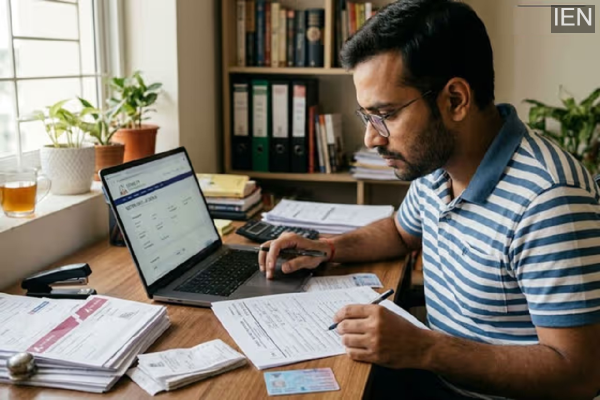
Presumptive Taxation Scheme: Under Section 44ADA, small-scale professionals are receiving significant tax relief. Save on taxes by treating 50% of your earnings as business expenses. Learn about the eligibility criteria, limits, and deadlines.
Presumptive Taxation Scheme: The season for filing Income Tax Returns (ITR) has officially begun. If you are a doctor, engineer, lawyer, IT professional, or interior decorator working in a self-employed capacity, a fantastic scheme is available to help you save on taxes. Governed by Section 44ADA of the Income Tax Act, this scheme is known as the ‘Presumptive Taxation Scheme.’ It makes the process of filing taxes incredibly simple for small-scale professionals.
Let’s understand how this scheme works and what benefits it offers.
Who Can Avail of This Benefit?
This scheme is available exclusively to resident individuals, Hindu Undivided Families (HUF), and partnership firms residing in India. Please note that Limited Liability Partnerships (LLPs) are not included under this scheme.
According to tax experts, tax relief under this scheme is granted only to specific categories of professionals, such as:
Medical and Legal (Lawyers)
Engineering and Architecture
Accountancy and Technical Consultancy
Interior Decoration and Film Artists
IT Professionals
Individuals engaged in brokerage or commission-based businesses, as well as digital content creators (YouTubers/Influencers), are not eligible to avail of the benefits of this scheme.
What is the Income Limit?
To avail of the benefits of this scheme, your total annual professional earnings (Gross Receipts) must not exceed ₹50 lakh. However, the government has recently introduced a significant relief measure regarding this limit. If cash transactions account for less than 5% of your total receipts (meaning more than 95% of your business is conducted digitally or through banking channels), this limit is increased to ₹75 lakhs. If your receipts exceed ₹75 lakhs, it becomes mandatory for you to undergo a tax audit under Section 44AB.
How is the tax calculated?
The most significant feature of this scheme is that you are required to treat a flat 50% of your total receipts as your taxable income (the amount subject to tax). The remaining 50% is deemed to be your business expenditure.
No more accounting hassles: You are not required to maintain detailed books of accounts for your day-to-day expenses.
Relief regarding Advance Tax: You are not required to pay Advance Tax in multiple installments throughout the year. Instead, you can pay the entire Advance Tax liability in a single payment by March 15th.
Chapter VI-A Exemptions: Even after declaring 50% of your receipts as income, you can still separately claim the benefits of tax deductions available under provisions such as Section 80C.
If you wish to declare your taxable income as less than 50% of your total receipts, you will be required to undergo a tax audit. Furthermore, opting for this scheme does not exempt you from the possibility of scrutiny (examination) by tax authorities. Therefore, you should carefully preserve your invoices, bank statements, and AIS (Annual Information Statement).
Which ITR form needs to be filed?
For the Assessment Year (AY) 2026-27, professionals opting for Section 44ADA must file their Income Tax Return by August 31, 2026. Typically, ITR-4 is the form used for this purpose.
However, under certain specific circumstances, you cannot file ITR-4; for instance:
If you hold unlisted shares or serve as a Director in a company.
If you have earned substantial income from Capital Gains, F&O (Futures and Options), or Cryptocurrencies. If you hold foreign assets or your agricultural income exceeds ₹5,000,
in such a scenario, you must select ITR-3. Before filing, ensure that you reconcile your GST turnover with your bank statements.
-
Chinese supermodel Ming Xi, Mario Ho, son of casino mogul Stanley, greet guests at wedding celebration

-
NBC pulls the plug on The Hunting Party, fans beg Netflix to step in

-
UP Style Tehri Recipe: Make UP Style Tehri easily at home, the taste will be such that you will keep licking your fingers.

-
Heart Surgeon Prescribes A Career Change For Teacher With Health Issues

-
Daily Horoscope For Each Zodiac Sign On Thursday, June 4, 2026