A recent survey revealed that the 2026 FIFA World Cup may lead to financial losses for companies as a result of employees adjusting their work schedules to watch the matches.
According to the study, the global football event is likely to disrupt employee concentration, with many expected to arrive late to work after staying up late to watch games.
The survey, conducted by UKG — an AI-based platform specialising in human resource management, payroll, and workforce solutions — involved 8,000 employees from several countries.
Participants came from countries such as Australia, Canada, France, Germany, Mexico, the Netherlands, the United Kingdom, and the United States, with the goal of assessing the World Cup’s impact on workplaces.
UKG estimates that the tournament, scheduled from 11 June to 19 July 2026, could result in a global productivity loss valued at approximately USD 17 billion.
This projection is based on findings that around 37 percent of employees plan to adjust their work schedules according to the World Cup broadcast times.
The survey also found that 27 percent of respondents might miss work by arriving late, leaving early, or skipping work entirely.
Additionally, 11 percent admitted they might work under the influence after staying up late, while 14 percent said they intend to secretly watch live matches or highlights during office hours.
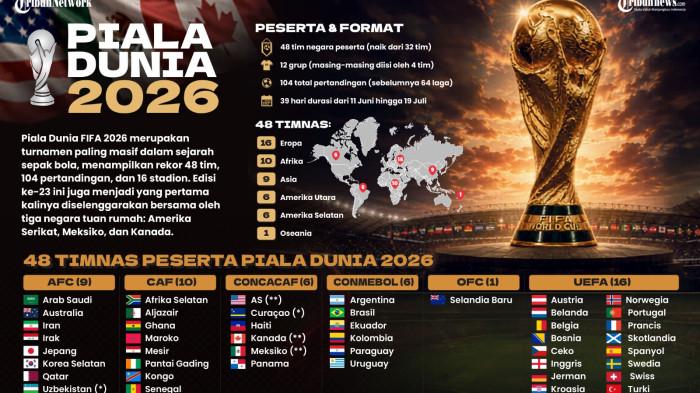
The 2026 edition of the World Cup will differ from previous tournaments, as it will be jointly hosted by the United States, Canada, and Mexico, featuring 48 nations and 104 matches.
According to UKG, the United States is expected to experience the largest financial impact, with potential losses estimated at USD 11.7 billion.
Germany is projected to follow in second place, with estimated losses reaching USD 1.34 billion, alongside several other countries included in the survey.
“When absenteeism and presenteeism occur at scale, the effects are immediate and costly,” said Suresh Vittal, Chief Product Officer at UKG.
“Productivity drops, customer experiences suffer, and morale declines as other team members are forced to compensate for the shortfall,” he added.
Not only employees, but managers are also expected to contribute to these losses, as many are equally tempted by the excitement of the World Cup.
The same survey revealed that about 42 percent of managers plan to take at least one day off, while 45 percent are likely to request last-minute schedule flexibility.
While the survey covered host nations and several European countries, it raises questions about its implications for regions like Southeast Asia, including Indonesia.
Given that many matches will be played in the early morning hours or during typical office and factory start times, employees in these regions may face additional challenges.
Staying up late to watch the World Cup 2026 during workdays could certainly have consequences for workers’ performance and well-being.
Employees are encouraged to manage their time wisely to balance their professional responsibilities with their enthusiasm for the tournament.
As the World Cup takes place only once every four years, companies might consider offering flexibility to employees so they can enjoy the global event without compromising productivity.
-
World Cup 2026 Controversy Continues: Swiss Star Striker Barred from Entering the United States

-
Official Uzbekistan National Team Squad for the 2026 World Cup: Shomurodov Leads, Khusanov Becomes Key Player

-
Manchester United Set to Earn IDR 6.3 Trillion from FIFA After Sending 13 Players to the 2026 World Cup

-
Live on SCTV at 20:00 WIB! Indonesia vs Oman Schedule: FIFA Rankings and Why Jay Idzes Is Absent
-
Contrasts in the 2026 World Cup: Manchester City’s Player Dominance, Real Madrid Equal to Slavia Prague