As the Income Tax Return (ITR) filing season for Assessment Year 2026-27 gains momentum, millions of salaried employees across India are preparing to submit their tax returns. While the online filing process has already begun for several taxpayer categories, many salaried individuals are choosing to wait for one crucial document before proceeding — Form 16.
This document plays a key role in ensuring accurate tax filing and helps taxpayers avoid common mistakes while reporting their income and tax deductions. But what exactly is Form 16, when should employers issue it, and can you file your return without it? Here's everything you need to know.
What Is Form 16 and Why Is It Important?
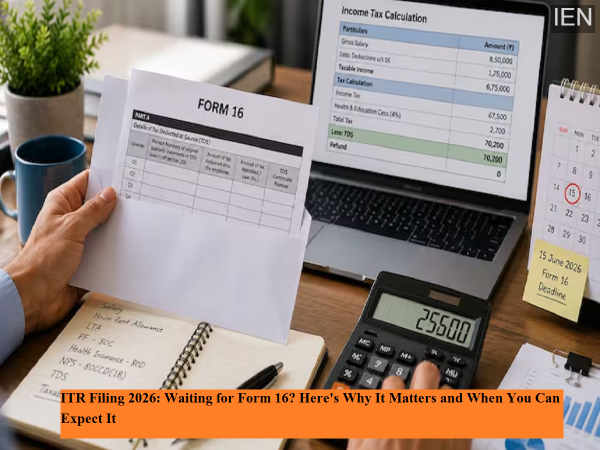
Form 16 is a Tax Deducted at Source (TDS) certificate provided by an employer to an employee. It serves as an official record of the tax deducted from an employee’s salary and deposited with the government during a financial year.
Apart from TDS details, Form 16 also contains a comprehensive summary of salary income, exemptions, deductions claimed under various sections of the Income Tax Act, and the final tax liability calculation. Because all this information is available in one place, Form 16 becomes one of the most useful documents for salaried taxpayers during the ITR filing process.
Tax experts often recommend waiting for Form 16 before filing a return, as it significantly reduces the chances of reporting errors and mismatches.
Form 16 Issuance Deadline for FY 2025-26
According to income tax regulations, employers are required to issue Form 16 to employees by June 15 following the end of the relevant financial year in which salary payments were made and TDS was deducted.
For the financial year 2025-26, employers must provide Form 16 to eligible employees on or before June 15, 2026.
Employees can generally download the document from their company's payroll system, HR portal, or receive it directly from the employer’s finance department.
Why Tax Experts Recommend Waiting for Form 16
While filing an ITR without Form 16 is legally allowed, experts believe that having the document makes the process smoother and more accurate.
Without Form 16, taxpayers must manually collect information from salary slips, investment proofs, bank statements, Form 26AS, and other tax-related records. This increases the possibility of omissions, incorrect reporting, and tax calculation errors.
Having Form 16 ensures that salary income and TDS details match official records, helping taxpayers avoid notices or discrepancies later.
Understanding the Two Parts of Form 16
Form 16 consists of two separate sections — Part A and Part B. Together, these sections provide a complete picture of an employee's salary income and tax deductions.
What Does Part A Contain?
Part A primarily serves as the TDS certificate component of Form 16. It contains details related to the tax deducted by the employer and deposited with the Income Tax Department.
Information included in Part A typically covers:
-
Employer's name, address, PAN, and TAN
-
Employee's name and PAN
-
Assessment year details
-
Employment period
-
Quarterly TDS deductions and deposits
-
TDS payment acknowledgment numbers
If an employee has worked for more than one employer during the same financial year, each employer will issue a separate Part A for the period of employment.
Part A is generated through the TRACES portal, making it an authenticated tax record.
What Information Is Included in Part B?
Part B focuses on salary and tax computation details. It provides a detailed breakdown of the employee's earnings and deductions.
This section generally includes:
-
Basic salary and allowances
-
House Rent Allowance (HRA)
-
Leave Travel Allowance (LTA)
-
Gratuity payments
-
Leave encashment benefits
-
Pension-related income
-
Deductions claimed under Sections 80C, 80D, 80CCD, and other eligible provisions
-
Taxable income calculations
-
Education cess and surcharge details
-
Final tax payable or refund amount
Part B is prepared by the employer and complements the information provided in Part A.
What If You Changed Jobs During the Year?
Employees who switched jobs during the financial year may receive multiple Form 16 certificates from different employers. In such situations, taxpayers must carefully consolidate salary income and TDS details from all Form 16 documents before filing their returns.
Failure to include income from all employers could result in incorrect tax reporting and potential tax liabilities later.
Can You File an ITR Without Form 16?
Yes, taxpayers can file an Income Tax Return even if they have not received Form 16. There is no legal requirement that makes Form 16 mandatory for filing an ITR.
However, experts advise salaried individuals to wait until they receive the document whenever possible. Form 16 helps verify salary income, tax deductions, exemptions, and TDS deposits in a structured manner, making return filing more accurate and hassle-free.
For most salaried taxpayers, waiting until mid-June to receive Form 16 can help ensure that their return is filed correctly and with minimal chances of errors or future tax notices.
-
Who Should Avoid Egg Yolks? Experts Explain The Risks

-
Maharashtra CM Approves Rs 2 Lakh Farm Loan Waiver Ahead Of Monsoon

-
Melbourne Stars And Renegades Set For Historic Merger Into Single BBL Franchise

-
RCB Title Celebrations Turn Violent, Police Arrest 18 After Fans Vandalise Private Bus In Andhra Pradesh

-
CBSE Re-Evaluation Portal Survives Cyberattack Scare After 1.5 Million Hits Emerge Within 2 Minutes; Over 16,000 Students Complete Submissions