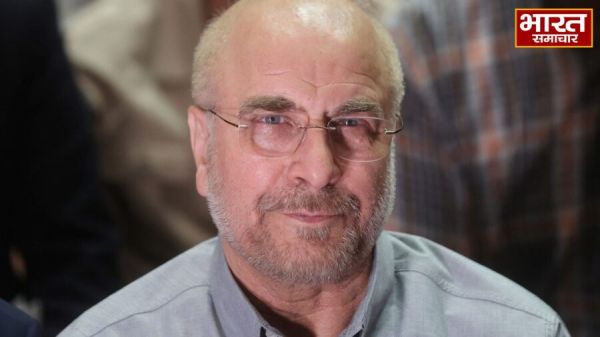
Tehran: Iran’s Parliament Speaker Mohammad Baqer Ghalibaf on Sunday adopted a very tough and clear stance regarding a possible peace agreement with America. Ghalibaf said in blunt words that Iran, in the name of solving the crisis in West Asia, will not approve any agreement with America in which the rights of the Iranian people are not fully protected.
According to an official statement issued by the Iranian state media, ‘Islamic Republic of Iran Broadcasting’ (IRIB), the speaker made it clear that Tehran is working on a strategy to convert its military victories into political and legal gains.
“Success of missiles is the basis of diplomacy, do not trust the promises of enemies”
Addressing the online swearing-in ceremony of new members of the parliament’s presidium, Ghalibaf praised Iran’s military might and missile capability against the US-Israeli alliance amid the ongoing conflicts. He said:
Ghalibaf added that the only criterion for Iran in negotiations is what “concrete and tangible achievements” the country is getting in return for the deal. He reiterated that no paper will be signed until the rights of the Iranian people are fully taken away.
“American efforts to subdue Iran are just a false dream”
Mohammad Baqer Ghalibaf seriously accused the US and its allies of creating internal strife and division within Iran. He said that America is now resorting to “a new round of war” to hide its military failures, whose weapons are economic sanctions (economic pressure) and media propaganda.
The Iranian speaker warned Western powers, saying:
It is noteworthy that a total of 201 MPs participated in this virtual swearing-in ceremony, out of which 187 representatives joined online and 14 were present in Parliament in person. After this statement, it is clear that Iran is in no mood to bow down at the moment amidst the ongoing tension in West Asia.
-
Leandro Trossard’s wife Laura Hilven erases every sign of Arsenal star from social media amid reports of marital troubles
-
Khvicha Kvaratskhelia Named 2025/26 Champions League Player of the Season

-
Manchester City Women crush Brighton 4-0 to secure historic domestic double
-
Gabriel speaks out after Champions League heartbreak as Arsenal supporters rally behind him following penalty miss

-
World Cup 2026 Warm-Up Results – Germany Crushes Finland in Dominant 4-0 Victory