India and the United States on Tuesday signed a major framework for cooperation in critical minerals and rare earth supply chains, a strategic move aimed at reducing dependence on China and strengthening access to materials vital for advanced technologies, clean energy, and defence manufacturing.
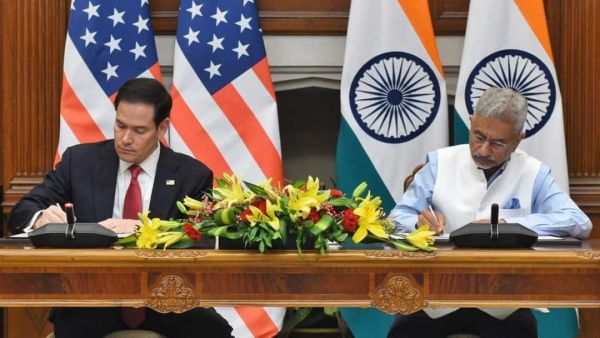
The agreement was signed on the sidelines of the Quad foreign ministers’ meeting in New Delhi in the presence of External Affairs Minister S. Jaishankar and US Secretary of State Marco Rubio.
Calling the framework “very timely and critical,” Jaishankar said it would deepen cooperation across the entire supply chain, including mining, processing, recycling and investment.
“This framework aims to deepen our cooperation across the entire critical minerals and rare earth supply chain, including mining, processing, recycling and related investment,” he said.
Why Critical Minerals Deal Matters
Critical minerals and rare earth elements are essential for manufacturing products such as semiconductors, electric vehicle batteries, solar panels, telecommunications equipment, fighter jets and AI infrastructure.
Countries around the world have become increasingly concerned about overdependence on China, which dominates global rare earth processing and refining capacity.
Beijing’s recent export controls on strategic metals and rare earth materials have heightened fears of supply disruptions, especially during geopolitical tensions.
The India-US agreement seeks to build resilient and diversified supply chains to ensure stable long-term access to these resources.
Jaishankar said the pact would help finance projects and strengthen effective management of critical minerals and rare earths.
“It is one more sign of how close our cooperation has been in a world where there are so many challenges but also so many opportunities,” he added.
Rubio Highlights Strategic Importance
Rubio described the agreement as a “tangible example” of the growing strategic partnership between India and the United States.
“We are two countries that have strategic interests in ensuring reliable long-term access to critical minerals and supply chains that are important for our innovation economy,” Rubio said.
A US government readout said the agreement marked a milestone in ensuring that foundational materials needed for advanced technology and energy systems remain available within trusted networks.
“Through this framework, the US and India will engage in international efforts to protect sensitive supply chains from coercive market practices and reduce our collective vulnerability to single-source monopolies,” the statement said.
Link To Pax Silica Initiative
Rubio also referred to the US-backed Pax Silica initiative, launched in December last year to create a secure and innovation-driven ecosystem for critical minerals and artificial intelligence supply chains.
“The groundwork was laid for this on February 4 when you joined us at the Critical Minerals Forum that we hosted in Washington DC,” Rubio said, adding that momentum increased after India joined the initiative.
The US has reportedly mobilised more than USD 30 billion in investments, loans and support mechanisms for securing critical mineral supply chains in partnership with the private sector.
Rubio said innovation-driven economies such as India and the US could not afford to leave foundational industrial materials vulnerable to monopoly control.
“Vibrant innovation economies such as ours cannot afford to leave the foundational materials of these industries vulnerable to single source monopoly,” he said.
The Quad grouping includes India, United States, Japan and Australia, with increasing focus on economic security, emerging technologies and Indo-Pacific supply chain resilience.
-
Delhi: 17-year-old shot at Amar Colony eatery after argument over touching chair

-
Aam Ki Guthli Benefits: Read this before throwing away mango seeds, its benefits will surprise you.

-
How to make Matka Kulfi at home

-
Angry Walmart shopper hit with dynamic price in real time

-
The great war has not stopped! America-Iran dispute flares up again due to Trump’s move, closure of Hormuz will create outcry across the world