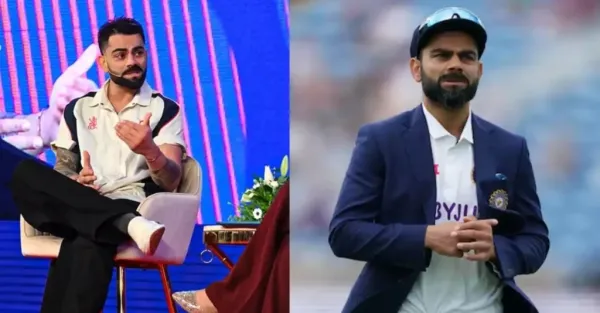
More than four years later when he India Left the test captaincy of, Virat Kohli ultimately spoke at length about the emotional and mental burden that forced him to step down from the role. The former Indian captain admitted that he was “completely exhausted” due to the constant responsibility of leading the team and handling the batting unit.
Kohli, who retired from Test cricket after India’s series defeat in South Africa last year, remains the country’s most successful Test captain. During his unparalleled seven-year tenure, India recorded 40 wins in 68 Tests and turned into one of the most dominant red-ball teams in world cricket.
Virat Kohli considered leaving India’s Test captaincy
Speaking at the RCB Innovation Lab on Tuesday, Kohli explained how the pressure of being India’s premier batsman and leader gradually became overwhelming.
“I got to the point where I became the focal point of our batting unit and the focal point of leadership. I didn’t realize how much of a burden both of those things would add to my daily life,” Kohli said.
The batting icon admitted that his constant drive to keep Indian cricket at the top has prevented him from focusing on his own well-being. According to Kohli, the fatigue only became apparent when he ultimately stepped back from captaincy responsibilities.
“When I left the captaincy, I was completely exhausted. There was nothing left in the tank. I was completely in it. It was terrible,” He added.
Kohli’s comments provided fans a rare glimpse into his personal struggles during one of the most successful leadership eras in Indian cricket history. While India continued to achieve success overseas and dominate the ICC Test rankings, the pressure behind the scenes continued to mount.
His decision to resign as Test captain came after India’s 1–2 series defeat in South Africa, which also deprived the team of its first-ever Test series win in the country. Around the same time, Kohli had already resigned as India’s T20I captain and was later replaced as the ODI captain as well.
Rise of the fearless Test captain
Kohli’s journey as India’s Test captain began in dramatic fashion in the 2014 Adelaide Test against Australia. MS Dhoni With Kohli out of the match due to injury, Kohli proved himself by scoring centuries in both the innings and came close to leading India to an unforgettable target.
A year later, aged just 26, he led India to a historic Test series win in Sri Lanka — the team’s first series win there since 1993. That win marked the beginning of a golden era under the partnership of Kohli and Ravi Shastri.
Under his leadership, India won the ICC Test Trophy for five consecutive seasons and scripted one of the country’s biggest overseas achievements by defeating Australia in the 2018–19 Border-Gavaskar Trophy. Kohli’s aggressive style, unmatched fitness standards and emphasis on fast bowling turned India into a strong Test team in a variety of conditions.
Leadership paid a personal price
Despite the success, Kohli admitted that leadership demanded complete self-sacrifice, leaving almost no room for attention to one’s own mental or emotional state.
“You are given leadership roles because people believe you can take on more responsibility and still handle it,” Kohli clarified.
He further said that leadership only means understanding teammates and helping them perform at their best, and not thinking about yourself.
“For that to happen, you have to constantly be in a state where you’re not focused on yourself. You don’t even think that someone is going to ask you, ‘Are you OK?'” Kohli said.
His candid comments have once again highlighted the immense pressure placed on modern-day captains, who are trying to balance expectations, performance and personal well-being.
-
Oral Care Tips: You will be shocked to know the benefits of gargling with salt mixed with mustard oil! give it a try

-
Important tips and suggestions for buying a cooler

-
Sailor Brinkley Cook on her beloved Hamptons, the pressures of inherited fame and her goal of uplifting others

-
Good news for farmers, date of wheat procurement extended, now purchase will be done till May 28, CM Dr. Mohan Yadav announced
-
Frenchman writes about 16,000-km bicycle journey with Vietnamese wife