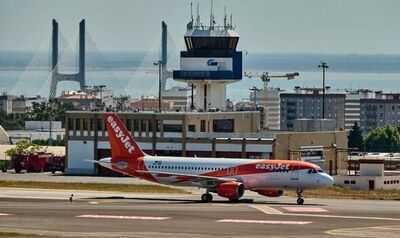
EasyJet passengers flying home from a popular European destination experience something during their journey that may surprise them compared to flights to other countries. The airline advises some passengers to cover their "eyes, nose and mouth" during the procedure.
EasyJet flights departing from the Portuguese island of Madeira, specifically the capital Funchal, to the UK and other destinations, are routinely sprayed with insecticide prior to takeoff. The measure is designed to prevent mosquitoes from being transported, particularly in the fight against dengue fever.
The procedure is either required or strongly recommended for airlines operating out of Madeira. A statement on EasyJet's website reads: "The Portuguese regulators and World Health Organisation (WHO) have mandated that all flights from Madeira are required to be disinsected before departure."
It further explains: "This process involves cabin crew spraying the inside of the aircraft with insecticide to ensure that insects are not brought into the country. The disinsection must take place once all customers are on board."
Cabin crew typically apply a specialist insecticide spray throughout the aircraft once all passengers have boarded and the doors are sealed, generally just before takeoff. The sprays used are fully approved and deemed safe for those on board.
For anyone suffering from respiratory problems, the airline advises: "Please make sure you cover your eyes, nose and mouth whilst the disinsection process takes place." According to the National Institute for Health and Care Excellence, respiratory conditions include asthma, chronic obstructive pulmonary disease, covid-19 and cystic fibrosis, reports the Mirror.
EasyJet also notes it "is common practice for many destinations". For example, Italy mandates disinsection for flights arriving from regions where Aedes aegypti mosquitoes are found.
The process is also common on flights to and from Barbados, Jamaica, Cuba, India, Thailand, Seychelles and Zimbabwe. Cabin crew usually spray an aerosolised insecticide while passengers are seated.
On TUI's website, the carrier shares similar guidance for travellers flying from Barbados, India, Italy, Jamaica and Madeira. It states: "Due to regulatory requirements, airlines are obligated to spray the aircraft cabin with insecticide on several flight routes.
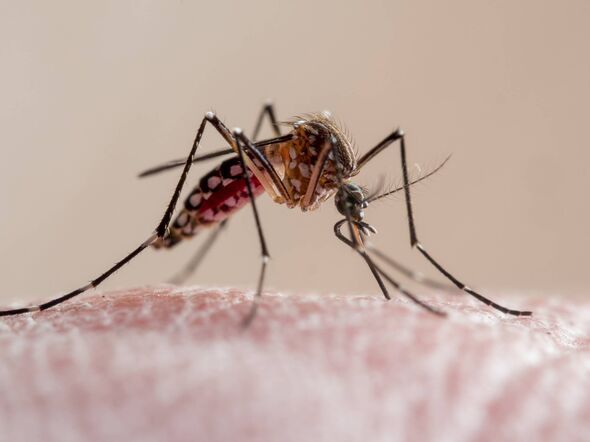
"TUI Airways uses an environmentally friendly, non-flammable aircraft insecticide that's endorsed and recommended by the World Health Organisation, ensuring that it meets the highest safety standards. The treatment is necessary to avoid the introduction of insects at our destination airport".
The WHO provides guidelines for disinsection procedures and locations. Further details can be found on the WHO's website.
The most recent edition of WHO's aircraft disinsection methods and procedures is available online. An excerpt states: "Requirements for aircraft disinsection are determined by national authorities at the arrival destination. WHO recommendations can only be advisory to national authorities."
-
Marcus Rashford trains with Manchester United coach in Miami ahead of crucial summer for club and country

-
‘He will fight for it’: Roberto Martinez confident Cristiano Ronaldo could play in 2030 World Cup as 41-year-old legend retains his hunger for success

-
From Ghana’s Asamoah Gyan to Colombia’s James Rodríguez – Revisiting the World Cup’s Unforgettable One-Hit Wonders

-
De Oranje Ready to Make History at the 2026 World Cup and Break the Runner-Up Curse

-
Megawati’s Manager Backs Messi to Lift Trophy, Predicts Dream 2026 World Cup Final Between Argentina and Brazil