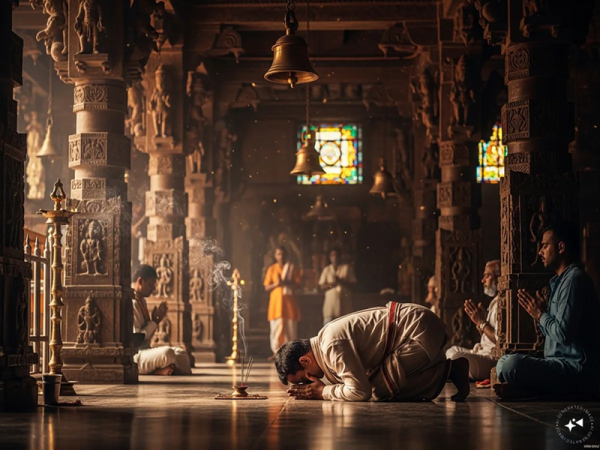
Rules for Offering Obeisance (Pranam) in a Temple: When a person arrives at a temple, their primary desire is to behold the deity and seek blessings. Many people bow and touch their foreheads to the ground before the deity, as this act symbolizes humility and devotion. However, have you ever wondered if there is a specific, traditional method prescribed for this act of bowing?

Sanatan tradition outlines numerous nuances regarding worship, each rooted in religious beliefs and folk customs. One such practice is the method of bowing—or offering *pranam*—before the deity. In many places, it is believed that one should not place the forehead directly on the bare ground; instead, a specific manner of bowing is considered auspicious.
Religious Beliefs Regarding Bowing
While temple grounds are considered sacred according to religious beliefs, there are varying traditions regarding placing one's head directly on the floor. Some folk beliefs suggest that touching the forehead directly to the ground might expose a person to the negative energy or impurities of others present there. However, this belief is primarily based on religious traditions and folklore; methods of worship can vary across different regions and communities. Many view this as a matter of faith and reverence.
What is Considered the Correct Way to Offer *Pranam* Before the Deity?
According to traditional belief, if one wishes to bow or touch the forehead to the ground in a temple, one should first place both hands on the floor. Subsequently, one should touch the forehead to the hands while offering *pranam*. It is believed that bowing in this manner is more dignified and respectful. In this method, the hands act as a medium, reflecting the individual's humility and surrender. Just as touching the feet of an elder evokes a sense of respect, bowing before the deity symbolizes the shedding of the ego.
Things to Keep in Mind While Visiting a Temple
A temple is not merely a place of worship; it is also considered a sanctuary for calming the mind and experiencing positive energy. Therefore, observing certain practices during a visit is considered auspicious. Maintain a calm mind and avoid haste when entering a temple. It is considered important to cultivate a sense of gratitude and thankfulness before the deity, rather than praying solely for the fulfillment of personal desires. Additionally, maintaining the cleanliness of the temple premises, observing discipline, and respecting the faith of others are considered virtuous practices.
Do the same rules apply everywhere?
Worship practices and religious traditions in India vary by region. While some places follow the custom of *Dandavat Pranam* (full prostration), others practice bowing the head with folded hands. Therefore, the rules regarding bowing one's head are viewed through the lens of faith and tradition. Many scholars also believe that the true essence of worship lies in an individual's inner sentiment. True devotion is defined by the presence of reverence, faith, and positive thinking within the heart.

Faith and Reverence Are Paramount
Bowing one's head in a temple is not merely a physical act; it is a way to express respect and surrender to the Divine. More important than debating what is right or wrong is maintaining a spirit of reverence and humility. Religious beliefs inspire people to cultivate discipline, virtuous values, and a positive mindset. Thus, when offering obeisance in a temple, the inner sentiment is considered just as significant as the ritualistic procedure.
PC Social Media
-
African Teams Steal the Spotlight at the 2026 World Cup After Belgium Held by Egypt

-
FIFA World Cup 2026 – 40-Year-Old Cape Verde Goalkeeper Vozinha in Tears After Stunning Spain, Shares Emotional Story About His Grandparents and Mother

-
Healthy Lifestyle Tips: Include these healthy habits in your morning routine to maintain fitness as you age.

-
Increasing trend of solo travel among women

-
Munawwar appeals to the public in Praneet More’s 370 biryani case, says – stop now