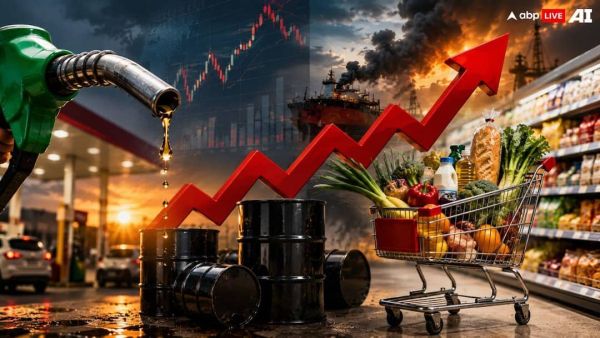
India's wholesale inflation accelerated sharply in May, highlighting the growing economic impact of the prolonged West Asia crisis and elevated energy costs.
Fresh data released by the Ministry of Commerce and Industry on Monday showed Wholesale Price Index (WPI)-based inflation rising to 9.68 per cent in May, up from 8.26 per cent in April. The increase was largely driven by a surge in fuel and power costs, along with rising prices of manufactured products and food items.
The latest data comes after the government revised the WPI base year to 2022-23 from the earlier 2011-12 series.
The sharp rise in wholesale inflation reflects how higher global energy prices are increasingly feeding through the broader economy, affecting everything from transportation and manufacturing costs to food prices.
Fuel And Power Inflation Crosses 30 Per Cent
The biggest contributor to May's inflation spike was the fuel and power segment.
Inflation in the category climbed to 30.33 per cent in May, compared with 24.89 per cent in April.
Crude petroleum prices remained under significant pressure, with inflation in the segment rising to 61.51 per cent from 56.31 per cent a month earlier.
The surge follows months of disruption in global energy markets after tensions in West Asia affected shipping through the Strait of Hormuz, a critical route through which a substantial share of India's crude oil imports pass.
The resulting increase in global crude prices pushed up energy costs across the supply chain, creating inflationary pressures that extended beyond fuel markets.
Why The Strait Of Hormuz Matters To India's Inflation Story
For India, one of the world's largest energy importers, developments in the Gulf region have direct consequences for domestic prices.
The disruption of crude oil flows through the Strait of Hormuz contributed to a sharp increase in global oil prices during recent months, raising import costs for refiners and increasing input costs across multiple industries.
The pressure eventually translated into higher retail fuel prices.
Petrol and diesel prices were raised by around Rs 7.50 per litre during the second half of May as oil marketing companies adjusted rates to reflect elevated global energy costs.
Economists note that higher fuel prices typically affect a wide range of sectors because transportation and logistics costs form a key component of everyday economic activity.
Food Inflation Begins To Climb
The impact of rising energy costs is also becoming visible in food prices.
Inflation in food articles increased to 3.60 per cent in May from 2.43 per cent in April.
Higher transportation expenses, increased input costs and supply-chain pressures have all contributed to the rise.
While food inflation remains below headline wholesale inflation, the upward trend is being closely monitored given its influence on household budgets.
Manufacturers Feel The Pressure
Rising costs were not limited to fuel and food.
Inflation in manufactured products rose to 7.48 per cent in May from 6.68 per cent in April, indicating that producers are continuing to face higher input expenses.
Manufacturing remains particularly sensitive to fluctuations in energy prices because fuel, electricity and transportation costs affect nearly every stage of production.
As input costs rise, companies often face difficult choices between absorbing the increase or passing some of the burden on to consumers.
Retail Inflation Also Moving Higher
The wholesale inflation data comes shortly after consumer inflation also recorded an increase.
Retail inflation, measured through the Consumer Price Index (CPI), rose to a 16-month high of 3.93 per cent in May, compared with 3.48 per cent in April.
Although the CPI reading remains within the Reserve Bank of India's comfort zone, the acceleration highlights the broader inflationary impact of higher energy prices.
The RBI has been mandated to keep headline inflation at 4 per cent, with a tolerance band of 2 percentage points on either side.
RBI Turns More Cautious On Inflation
The recent rise in price pressures has already prompted the central bank to revise its outlook.
Earlier this month, the RBI raised its inflation forecast for the current financial year to 5.1 per cent from 4.6 per cent.
The revision was largely attributed to mounting input costs and the pass-through of higher global energy prices into domestic petrol and diesel rates.
The central bank has repeatedly indicated that developments in global commodity markets, particularly crude oil, remain one of the most important risks to India's inflation outlook.
Markets have recently reacted positively to signs of a potential easing of tensions between the United States and Iran, with crude oil prices retreating from recent highs. If energy markets stabilise and crude prices continue to moderate, some of the inflationary pressure currently building in the economy could begin to ease.
-
The potential of geothermal energy for US homes

-
Bengal: CBI team visits RG Kar Hospital to have a relook at rape-murder case

-
JEECUP 2026 Result Date: Candidates with low scores in the UP Polytechnic exam will also get an opportunity for admission..

-
The altered version of the 'Dancing Girl' of Mohenjo-daro in the new NCERT Class 9 Art Education book..

-
Ration Dealer Not Giving Full Food Grains? Here's How You Can File a Complaint Easily