Asset Monetization: A Major Masterstroke by the Central Government! ₹35,000 crore to be raised through 28 National Highways. Learn what ‘Asset Monetization’ entails and how the government plans to transform the country’s landscape using these funds.
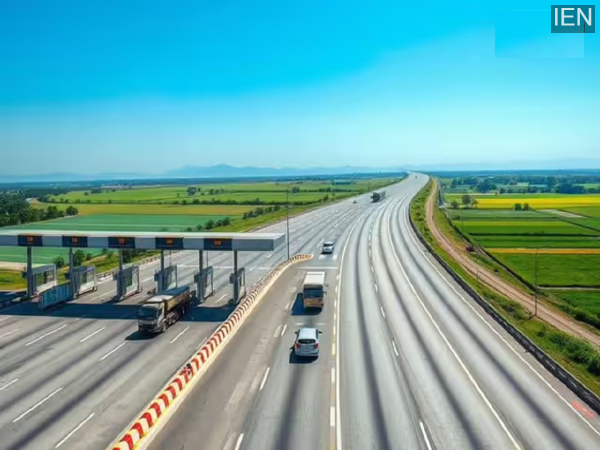
Asset Monetization: The Central Government has formulated a mega-plan regarding the country’s highway network for the financial year 2026-2027. The government is preparing to raise approximately ₹35,000 crore by monetizing assets associated with 28 of the nation’s National Highways. The combined length of these highways exceeds 1,800 kilometers.
The National Highways Authority of India (NHAI) has finalized a list of highways for this initiative, with highways in Haryana topping the list, followed by those in Uttar Pradesh. However, it is crucial to understand here that the government is not selling these roads. So, how exactly does this entire mechanism work? Let’s understand it in simple terms.
What are ‘Asset Monetization’ and ‘Asset Recycling’?
According to a report by The Economic Times, the government is currently implementing a strategy known as “Asset Recycling.”
Simply put, the government does not sell off existing and operational highways or expressways; instead, it retains full ownership of them. The government hands over the management of these highways to private companies or trusts for a specific, fixed period.
In exchange for this privilege, these companies pay the government a substantial lump sum amount upfront, thereby acquiring the rights to operate the highway and collect tolls from it. Instead of merely stashing this massive lump sum in its coffers, the government directly reinvests it into the construction of new National Highways and infrastructure projects. This process is what is referred to as ‘Asset Recycling.’ The ‘InvIT’ Model—Similar to Mutual Funds—Set to Deliver Results
To achieve this target of ₹35,000 crore, the government will utilize both public and private Infrastructure Investment Trusts (InvITs), as well as the Toll-Operate-Transfer (TOT) route. What exactly is an InvIT? It is a modern investment vehicle that functions largely like a mutual fund.
Under this model, the government transfers its completed and operational infrastructure projects (such as highways) into a trust, subsequently raising capital from market investors. Investors who have invested in this trust receive regular dividends—or a share of the earnings—derived from the revenue generated by those highways (specifically, toll taxes).
Bumper Earnings Recorded Last Year as Well
This model is proving to be highly successful in India. A look at the statistics reveals the following:
- In the financial year 2025-26, the Ministry of Road Transport and Highways generated ₹29,000 crore through asset monetization.
- During the same period, the Ministry raised over ₹9,000 crore through its first ‘Public InvIT’ by monetizing five highway sections—spanning a combined length of over 260 kilometers—across four different states.
What is the Plan Moving Forward?
The government does not intend to stop here. Within the next 3 to 5 years, the government plans to incorporate an additional 1,500 kilometers of completed and operational National Highways into this ‘Public InvIT’ model.
-
S Name Personality: People with name starting with ‘S’ are rich in versatile talent, they always have the blessings of Guru.
-
Hard Times End For 4 Chinese Zodiac Signs After May 20, 2026

-
1 ton of durian served at $7 all-you-can-eat buffet in Ho Chi Minh City

-
uhomes.com Partners with Top UK PBSA Brands to Offer Students a Trusted Platform

-
Motorola Razr Fold vs Samsung Galaxy Z Fold7: Which Is Worth Your Money?