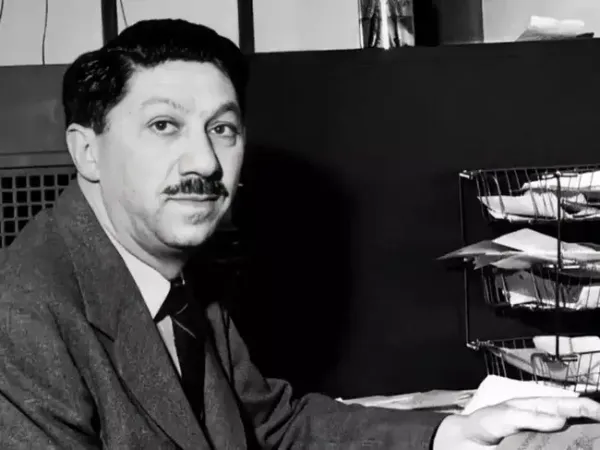
Quote of the Day by Abraham Maslow: People often believe they are being logical when solving problems. But sometimes, without even realising it, they rely so heavily on one idea, one habit, or one perspective that they begin applying it to everything around them. Decades before modern conversations about bias, echo chambers, and rigid thinking became common, Abraham Maslow captured this human tendency in one unforgettable line.
Maslow once wrote, “To the man who only has a hammer, everything he encounters begins to look like a nail.”
The quote has survived generations because it describes something people witness constantly in everyday life. Whether in politics, relationships, education, business, or social media, individuals often become trapped inside a single way of thinking. Instead of adapting to different situations, they force every problem to fit the tools they already know how to use.
What makes the quote so powerful is its simplicity. Almost everyone immediately understands the image of a person holding a hammer and seeing nails everywhere. But beneath that simple metaphor is a much deeper warning about ego, intellectual limitations, and the danger of narrow thinking.
Maslow spent much of his career studying human motivation, behaviour, and personal growth. Unlike many psychologists of his era who focused mainly on illness or dysfunction, he became one of the leading voices behind humanistic psychology, which explored human potential, creativity, meaning, and self-actualization.
He is best remembered for developing the famous “hierarchy of needs,” which argued that human beings move through different levels of emotional and psychological development — from basic survival needs like food and safety to love, self-esteem, and eventually self-actualization.
But Maslow also understood that people often become psychologically comfortable with familiar patterns. Once someone becomes successful using one method, ideology, or skill, they may start believing that same approach works for every situation.
That is exactly what his “hammer and nail” quote criticises. A person with only one tool may stop seeing complexity altogether. Instead of listening, adapting, or understanding nuance, they reduce every challenge into a version of what they already know.
The idea feels especially relevant today, where people are constantly encouraged to think in extremes. Social media algorithms, political arguments, and online debates often reward certainty rather than curiosity. Maslow’s quote quietly challenges that mindset by reminding people that intelligence also requires flexibility.
The reason the quote still resonates decades later is because it applies to nearly every part of life. In relationships, people may treat emotional problems with anger because anger is the only emotional “tool” they understand. In workplaces, leaders may apply the same management style to every employee regardless of personality or situation. Even in everyday conversations, people sometimes stop trying to understand others because they assume their own viewpoint is always correct.
Maslow’s words highlight the importance of self-awareness. The quote asks people to step back and question whether they are truly understanding a situation or simply forcing it to fit their existing beliefs.
In many ways, the quote is also about humility. Truly wise people usually recognise the limits of their knowledge. They stay open to learning new approaches, new ideas, and new perspectives instead of assuming they already possess every answer.
Over the years, Abraham Maslow became one of the most influential psychologists of the 20th century because his work focused not just on mental illness, but on human growth and fulfillment. His writings about self-actualization, purpose, creativity, and emotional development continue shaping psychology, education, leadership, and self-help culture today.
Yet among all his theories and academic work, this short quote remains one of his most widely repeated observations because of how universal it feels. Almost everyone has encountered someone unable to see beyond a single worldview. And at some point, most people realise they have done the same themselves.
That may be why the quote still feels so timeless. Not because it criticises human beings, but because it gently reminds them to keep expanding their understanding of the world instead of trying to force every situation into the shape of what they already know.
Abraham Maslow’s famous ‘hammer and nail’ quote
Maslow once wrote, “To the man who only has a hammer, everything he encounters begins to look like a nail.”
The quote has survived generations because it describes something people witness constantly in everyday life. Whether in politics, relationships, education, business, or social media, individuals often become trapped inside a single way of thinking. Instead of adapting to different situations, they force every problem to fit the tools they already know how to use.
What makes the quote so powerful is its simplicity. Almost everyone immediately understands the image of a person holding a hammer and seeing nails everywhere. But beneath that simple metaphor is a much deeper warning about ego, intellectual limitations, and the danger of narrow thinking.
Why did Abraham Maslow believe human beings limit themselves this way?
Maslow spent much of his career studying human motivation, behaviour, and personal growth. Unlike many psychologists of his era who focused mainly on illness or dysfunction, he became one of the leading voices behind humanistic psychology, which explored human potential, creativity, meaning, and self-actualization.
He is best remembered for developing the famous “hierarchy of needs,” which argued that human beings move through different levels of emotional and psychological development — from basic survival needs like food and safety to love, self-esteem, and eventually self-actualization.
But Maslow also understood that people often become psychologically comfortable with familiar patterns. Once someone becomes successful using one method, ideology, or skill, they may start believing that same approach works for every situation.
That is exactly what his “hammer and nail” quote criticises. A person with only one tool may stop seeing complexity altogether. Instead of listening, adapting, or understanding nuance, they reduce every challenge into a version of what they already know.
The idea feels especially relevant today, where people are constantly encouraged to think in extremes. Social media algorithms, political arguments, and online debates often reward certainty rather than curiosity. Maslow’s quote quietly challenges that mindset by reminding people that intelligence also requires flexibility.
Abraham Maslow’s famous ‘hammer and nail’ quote still explains why people see the world so narrowly
The reason the quote still resonates decades later is because it applies to nearly every part of life. In relationships, people may treat emotional problems with anger because anger is the only emotional “tool” they understand. In workplaces, leaders may apply the same management style to every employee regardless of personality or situation. Even in everyday conversations, people sometimes stop trying to understand others because they assume their own viewpoint is always correct.
Maslow’s words highlight the importance of self-awareness. The quote asks people to step back and question whether they are truly understanding a situation or simply forcing it to fit their existing beliefs.
In many ways, the quote is also about humility. Truly wise people usually recognise the limits of their knowledge. They stay open to learning new approaches, new ideas, and new perspectives instead of assuming they already possess every answer.
Over the years, Abraham Maslow became one of the most influential psychologists of the 20th century because his work focused not just on mental illness, but on human growth and fulfillment. His writings about self-actualization, purpose, creativity, and emotional development continue shaping psychology, education, leadership, and self-help culture today.
Inspiring quotes by Abraham Maslow
- “I suppose it is tempting, if the only tool you have is a hammer, to treat everything as if it were a nail.”
- “It isn't normal to know what we want. It is a rare and difficult psychological achievement.”
- “One can choose to go back toward safety or forward toward growth. Growth must be chosen again and again; fear must be overcome again and again.”
- “A musician must make music, an artist must paint, a poet must write, if he is to be ultimately at peace with himself. What a man can be, he must be”
- “What is necessary to change a person is to change his awareness of himself.”
- “We need not take refuge in supernatural gods to explain our saints and sages and heroes and statesmen, as if to explain our disbelief that mere unaided human beings could be that good or wise.”
- “Be independent of the good opinion of other people.”
- “If you plan on being anything less than you are capable of being, you will probably be unhappy all the days of your life.”
Yet among all his theories and academic work, this short quote remains one of his most widely repeated observations because of how universal it feels. Almost everyone has encountered someone unable to see beyond a single worldview. And at some point, most people realise they have done the same themselves.
That may be why the quote still feels so timeless. Not because it criticises human beings, but because it gently reminds them to keep expanding their understanding of the world instead of trying to force every situation into the shape of what they already know.