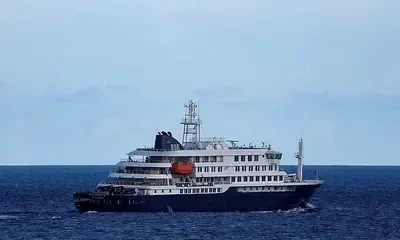
Rotterdam (Netherlands): The luxury cruise ship ‘MV Hondius’, which has been hit by the deadly Hantavirus infection, is expected to arrive at Rotterdam, a major port city in the Netherlands, on Monday.
All passengers aboard the ship, which had departed from the Canary Islands six days ago, have already been safely evacuated by crew members wearing full protective gear. The passengers have been flown to more than 20 countries, where they have been placed under mandatory quarantine.
Three dead, 11 infected: According to information released by the World Health Organization, 11 Hantavirus cases have so far been reported on the ship, of which nine have been confirmed. Three passengers, including a Dutch couple, have died due to the infection. It is suspected that the couple may have contracted the virus during their trip to South America.
At present, only 25 crew members and two medical staff remain on board the ship. According to the cruise operator, ‘Oceanwide Expeditions’, none of those currently on the vessel are showing any symptoms of infection.
Global alert issued: A Canadian passenger who returned home from the ship and 18 passengers from the United States have been placed under observation at specialised infectious disease hospitals. One Canadian passenger reportedly tested positive during preliminary screening.
Once the ship arrives at Rotterdam port, the remaining crew members on board will be quarantined in the Netherlands. The entire vessel will then undergo complete decontamination under strict guidelines issued by Dutch health authorities. The Dutch Health Ministry stated that the ship will be allowed to sail again only after health officials conduct a full inspection and give clearance.
It is being described as the first known case in global history of a Hantavirus outbreak spreading aboard a cruise ship. France’s Pasteur Institute, which examined the virus strain, clarified that it belongs to the common ‘Andes virus’ strain found in South America and does not show signs of being a new or more dangerous variant.
-
RIL, NTPC, Adani and Lalitpur line up Rs 6.5 lakh cr for nuclear energy

-
Airtel launches priority postpaid plans with 5G slicing

-
Khanduri's 'contribution will always be remembered'

-
Elon Musk vs Sam Altman: AI control, not courtroom clash, is the bigger battle

-
If India wants faster growth, it must first solve its female labour force participation problem