New Delhi: The Central Board of Secondary Education (CBSE) has announced that the three-language formula will be implemented for Class IX starting July 1, 2026, two months into the 2026-27 academic year.
Understanding the Three-Language Formula
What is the three-language formula?
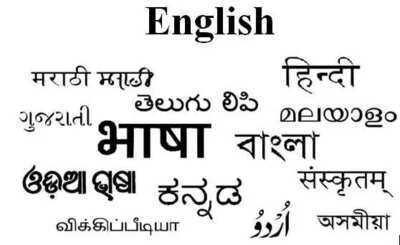
The three-language formula, as outlined in the National Education Policy (NEP) 2020, mandates that students learn three languages, with at least two being native to India. This policy applies to both public and private educational institutions, allowing states to select languages based on their preferences.
Historical Context of the Formula
Originally proposed by the Kothari Commission during 1964-66, the formula was officially adopted in the National Policy on Education (NPE) 1968 under Prime Minister Indira Gandhi. It was later reaffirmed in NPE 1986 by PM Rajiv Gandhi and revised in 1992 to enhance linguistic diversity and foster national unity. The formula includes a mother tongue or regional language, an official language, and a modern Indian or European language.
NEP 2020's Perspective
The NEP emphasizes the early adoption of the three-language formula to encourage multilingualism from the school level. It asserts that the implementation will respect constitutional provisions and regional aspirations while promoting national unity. Importantly, the NEP allows for flexibility, ensuring no language is mandated upon any state.
Inclusion of Foreign Languages
Under NEP 2020, students can also study foreign languages such as Korean, Japanese, French, German, and Spanish at the secondary level. Notably, English is now classified as a foreign language, limiting students to one foreign language within the three-language framework, which may prevent them from selecting both English and another foreign language as their second and third languages.
Availability of Textbooks
The CBSE has indicated that until the new R3 textbooks are ready, Class IX students will utilize the Class VI R3 textbooks (2026-27 edition) for their chosen language. Schools lacking qualified native language teachers may temporarily employ teachers from other subjects who have functional proficiency in the required language.
Controversies Surrounding the Formula
The three-language formula has sparked political debates, particularly between the former DMK-led Tamil Nadu government and the Central government. Historically, Tamil Nadu has resisted the three-language formula, stemming from a 1937 initiative that mandated Hindi in schools, which led to significant protests. The state has consistently favored a two-language policy, teaching only Tamil and English, and remains the only state that has not adopted the three-language formula.
-
What happens to the ‘soul’ after death? Understand from the scriptures from Islam to Sanatan Dharma

-
6 Incredible Benefits Of Kulith Kalan That Make It Perfect For Summer

-
What is the secret of Salman Khan’s fitness? Trainer told diet, discipline and workout secret

-
IPL 2026: Top in hitting sixes, but in catching catches… What is the shocking figure of Vaibhav Suryavanshi? Will give tension to RR

-
Babar Azam, who is being trolled, settled the account in a single innings, left Kohli behind too