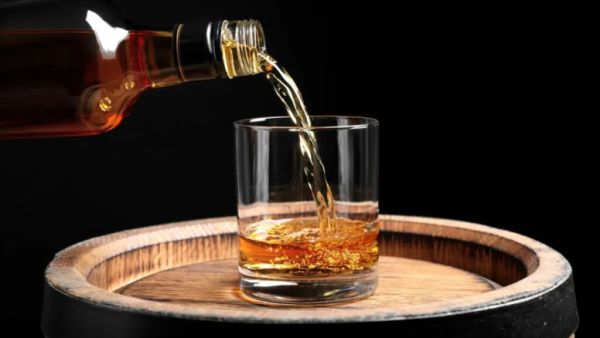
Every year on the third Saturday of May, the world pauses to raise a glass and celebrate whiskey. World Whiskey Day is the one occasion that genuinely welcomes everyone: the seasoned single malt collector, the casual office drinker who only ever orders “a peg of Scotch,” and the complete newcomer who has been curious about whiskey but felt too intimidated to dive in. If you belong to that last group, this is your moment. India is now one of the largest whiskey-consuming nations on the planet, and yet the vocabulary around the drink remains confusing for most people. Scotch, bourbon, single malt, blended, Irish, Japanese: what does any of it actually mean? Let us find out.
What Is Whiskey, Really?
Photo Credit: Pexels
Whiskey is a distilled, barrel-aged spirit from fermented grain, with barley, corn, rye, and wheat offering distinct flavours: corn for sweetness, rye for spice, and barley for malt and depth. Scotch whiskey, made from malted barley, is distilled in recycled oak barrels for at least three years and one day. Enjoy it straight, on the rocks, in cocktails, or with cola. With thousands of varieties and prices from a few pounds to thousands, whiskey suits any setting. The process involves malting grain, milling, mashing with hot water, fermenting with yeast, distilling, and aging in oak casks, where most color and flavor develop. Longer aging generally results in a more complex and rounded whiskey.
Whiskey vs. Whiskey: Why the Spelling Difference?
This one trips up almost everyone. Both spellings are correct. The difference is geographical: whiskey is used in the USA and Ireland, while whiskey is used in Scotland, Canada, Japan, and the EU. The spelling does not change the category, only the tradition behind it.
The word comes from the Gaelic word “uisce,” meaning “water.” Both Scottish and Irish transliterations of the word were slightly different, so while the spelling has changed over the years, the difference is really nothing more than convention. So when you order a “Scotch whiskey” and see it spelled without the “e,” that is intentional.
The Big Types, Explained Simply
Scotch Whiskey
Scotch whiskey is any whiskey distilled and matured in Scotland for at least three years, bottled at a minimum 40% ABV. It must use only yeast in fermentation, be distilled to less than 94.4% ABV, aged in oak barrels of 700 liters or less, and allow only E150a caramel color and water as additives. There are five official types: Single Malt, distilled from malted barley at one distillery; Single Grain, from other grains at one distillery; Blended, a mix of single malts and grains; Blended Grain, from different grain distilleries; and Blended Malt, from multiple malt distilleries.
Tasting Notes: What to Expect
Scotch from the Highlands tends to be warming and varied, ranging from fruity and coastal to rich and peaty depending on the distillery. Lowland whiskeys can be grouped as fresher, grassy and perfumed, with notes of creamy honeysuckle, citrus, and a hint of malt, traditionally without any peated notes. Islay whiskeys are world famous for their peaty smokiness, and their coastal location adds a unique flavor profile of salty maritimeness, giving subtle notes of brine or seaweed. Speyside, the most densely populated whiskey region in the world, tends to produce whiskeys that are sweeter, fruitier, and more elegant.
Single Malt Scotch: A Closer Look
Single malt is the category most whiskey lovers in India tend to graduate to once they move past blended Scotch. Single malt whiskeys are produced by individual distilleries and only contain one variety of malted barley. They are distilled twice using pot stills and aged in oak barrels, which gives them a rich woody color and infuses them with unique flavours. The characteristics of every single malt will change considerably depending on the water and malt, the barrels, the peat, the land, the distillation process, and the length of maturation.
This is exactly why a 12-year-old Glenfiddich tastes nothing like a 12-year-old Lagavulin, even though both are single malt Scotch whiskies. The distillery itself, the water it uses, the shape of its stills, and whether peat is used in drying the malt all have enormous influence.
Blended Scotch Whiskey
When most Indians drink “Scotch” at a party, they’re likely enjoying a blended Scotch like Johnnie Walker, Chivas Regal, or Ballantine’s. Blended whiskey combines single malts and grain whiskeys for a smoother drink, allowing brands to standardise flavour. It requires a master distiller’s expertise to blend dozens of whiskeys into a recognizable product. Tasting notes include vanilla, light fruit, gentle spice, and oak. The grain whiskey adds lightness, while single malts provide character, making it ideal for mixing or easy sipping.
Bourbon
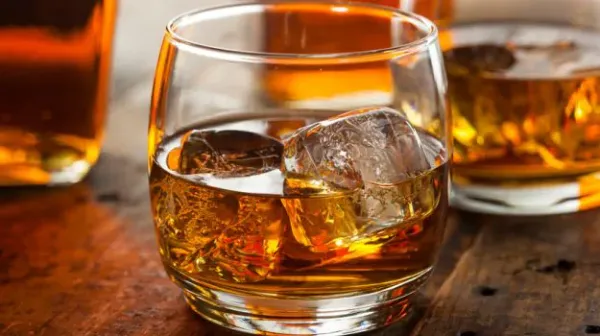
Bourbon is an American whiskey with strict legal requirements: it must be made in the US, contain at least 51% corn, and be aged in new charred oak barrels. This last rule means used barrels are sold to Scotch distilleries, indirectly influencing Scotch’s flavour. Bourbon’s corn base gives it a sweeter taste and full body. Although it can be made anywhere in the US, it’s most closely linked with Kentucky, where about 95% of bourbon is produced.
Tasting Notes: Sweet, full-bodied, and warming. Expect caramel, vanilla, toasted oak, and often a touch of spice from the rye in the mash. The new charred oak barrel gives bourbon a distinctively rich, rounded sweetness that is quite unlike Scotch. Brands like Maker’s Mark, Woodford Reserve, and Jim Beam are solid starting points.
Irish Whiskey
Irish whiskeys, like Scotch, must be distilled to under 94.8% ABV and aged for at least three years in 700-litre or smaller vessels. They allow exogenous enzymes and have flexible barrel aging rules. The signature pot still Irish whiskey, unique globally, uses a mash of at least 30% unpeated malted barley, 30% unmalted barley, and other unmalted cereals, distilled two or three times. This 19th-century method bypassed British malt taxes. Tasting notes: lighter, smoother, and more approachable than Scotch, with triple distillation offering a creamy texture. Expect vanilla, light fruit, fresh grain, and gentle spice, with minimal smokiness. Popular brands include Jameson and Redbreast.
Japanese Whiskey
Japanese whiskey is the relative newcomer that has taken the world completely by storm. Japanese whiskey was inspired by Scotch traditions and must be produced and aged in Japan. Recently, the Japan Spirits and Liqueur Makers Association introduced rules defining it: to be labeled Japanese Whiskey, it must be mashed, fermented, distilled and aged for a minimum of three years in Japan. Barley must be part of the mash bill.
Japanese whiskey is known for obsessive attention to detail and extreme precision in production. It tends to sit somewhere between Scotch and Irish in style.
Tasting Notes: Delicate, refined, and often floral. Expect notes of green fruit, white flowers, subtle oak, gentle smoke (in some expressions), and clean grain. There is an elegance to Japanese whiskey that makes it particularly enjoyable neat or with a large ice cube. Suntory’s Toki and Nikka’s From The Barrel are well-distributed in India and worth starting with.
How to Actually Taste Whiskey

Now that you know what you are drinking, here is how to actually drink it properly. You do not need special equipment or years of experience. You just need to slow down.
The Glass: A Glencairn glass is ideal for whiskey tasting due to its narrow mouth, enhancing aroma reach, and wider body for swirling. However, a regular tumbler works too; the whiskey will still be enjoyable.
Colour: The color of whiskey is determined by the type of cask it has been matured in and for how long. Lighter-coloured whiskeys tend to be sweeter, whereas darker whiskeys might contain more fruited and spiced flavours. Take a moment to look at it before you do anything else.
The Legs: Whiskey legs are the droplets of whiskey that run down the inside of the glass. Droplets that run down faster are indicative of a lighter whiskey, while slower moving legs can mean the whiskey is heavier.
Nose: Before tasting, nose your whiskey. Inhale gently to avoid burning. If strong, inhale through your mouth. Start with broad aromas: sweet, spicy, smoky, fruity. Narrow down by identifying specific scents and their origins.
Taste: Take a balanced sip, not too large or too small, like the first sip of hot coffee. Hold the whiskey in your mouth for a few seconds, moving it around to unlock different flavors and reduce burn. Notice the evolving flavors as you hold it. When you swallow, consider the lingering flavours, known as the finish.
To Add Water or Not: Adding just a couple of drops of water to whiskey can significantly alter how it tastes, bringing forward different flavours. This makes a great way to experience the same whiskey in different ways. Try it neat first, then add a drop or two of plain water and nose it again. You will be surprised.
A Quick Tasting Cheat Sheet
If you want a single reference to carry into your next whiskey conversation, here it is:
- Single Malt Scotch: made from 100% malted barley at one distillery. Complex, varied, distillery-specific. Can be fruity, floral, smoky, or coastal depending on where it was made.
- Blended Scotch: a mix of single malts and grain whiskies. Smooth, approachable, consistent. The most widely drunk style in the world.
- Bourbon: American, corn-heavy, aged in new charred oak. Sweet, vanilla-rich, full-bodied.
- Irish Whiskey: triple-distilled, smooth, light, creamy. Minimal smoke. Very approachable for beginners.
- Japanese Whiskey: precision-crafted, delicate, floral. Inspired by Scotch but distinctly its own thing.
The Last Drama
Whiskey is a drink where knowledge enhances enjoyment, not by altering taste, but by encouraging attention. Scotch whiskey embodies heritage and history, gaining global popularity in places like Japan, India, and South Africa, each adding unique variations. India is now a key player, producing world-class whiskeys and consuming them in large quantities. On World Whiskey Day 2026, we have a chance to engage with it more thoughtfully. Choose a style, pour a sensible dram, slow down, and truly taste what’s in the glass. That’s the essence of whiskey appreciation.
-
IP University Launches 7 New Paramedical Courses; Apply Now—May 31 is the Application Deadline...

-
When will the results for the CBSE Class 10 Second Board Exam be released? The exams have already begun..

-
Study at IIT Madras Without a JEE Score: New Courses Launched in Data Science and Mathematics..

-
NEET Paper Leak: ABRSM Advocates for Reforms in NTA; Demands Counseling Services for NEET Candidates..

-
How will CBT be helpful for NEET candidates? Find out how you can practice for it..