Dining-out and food deliveries are set to turn 5-10% more expensive next week onwards after state-run oil marketing companies raised petrol and diesel prices on Friday, industry executives said.
While a price hike may impact demand, executives at over a dozen companies that ET spoke with said price increases are inevitable as restaurants have already been struggling with liquefied petroleum gas shortage, commercial LPG price increase and labour workforce deficit for over two months since the West Asia war started.
Read more: Doing more with less is India Inc's new mantra to beat tough times
"Fuel price hikes will lead to an increase in our transportation, packaging, material and input costs; we are not left with any choice but to increase prices," said Vikrant Batra, founder of Cafe Delhi Heights, which has 50 outlets across 17 cities.
"The cascading effect is such that the cost of living for our staff members will also go up," he added.
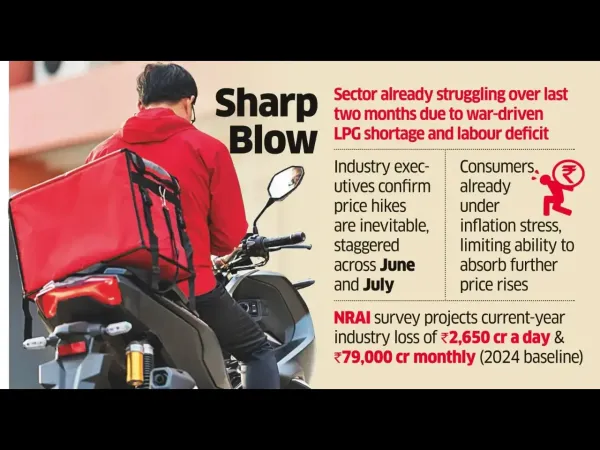
Some chains will start correcting menu prices as early as next week, while others plan to stagger the price increases from either June or July, executives said.
National Restaurants Association of India (NRAI) president Sagar Daryani, who is also cofounder of Wow! Momo, noted that the fuel price hike comes on top of an almost 60% surge in LPG costs. "Usually, we take an annual price hike around September. This year, we have no choice but to increase prices from July 1," he said.
Friday's is the first major fuel price increase in about four years. Petrol now costs ₹97.77 a litre in Delhi while diesel price surged to ₹90.67 per litre.
"I don't think the market has the capacity to take anymore shocks," said Saurabh Khanijo, managing director of Kylin chain of restaurants. "We will have to see how much of an impact we can take; our raw material costs will go up."
Meanwhile, higher logistics costs will lead to increased delivery charges, reduction in minimum order values for deliveries and lower discounts, a senior executive at a leading delivery platform said.
While work-from-home mandates following Prime Minister Narendra Modi's appeal may lead to higher home-deliveries, they directly impact dining-out, particularly lunches and Friday office dining with colleagues and teams, restaurant executives noted. "The sentiments have been low after the PM's announcement on working-from-home," Kylin's Khanijo said. Executives also said a further increase in channel partner fees by delivery platforms Zomato and Swiggy could make it tougher for chains to balance profitability with consumer prices.
Demand Factor
However, companies are cautious that price increases should not hamper demand, considering that consumers are already under inflation stress.
"While some gradual price corrections across dining-out and ordering in May become inevitable if the situation persists, I believe several responsible restaurant brands will first try to absorb a large part of the impact," said Zorawar Kalra, managing director of Massive Restaurants.
While a price hike may impact demand, executives at over a dozen companies that ET spoke with said price increases are inevitable as restaurants have already been struggling with liquefied petroleum gas shortage, commercial LPG price increase and labour workforce deficit for over two months since the West Asia war started.
Read more: Doing more with less is India Inc's new mantra to beat tough times
"Fuel price hikes will lead to an increase in our transportation, packaging, material and input costs; we are not left with any choice but to increase prices," said Vikrant Batra, founder of Cafe Delhi Heights, which has 50 outlets across 17 cities.
"The cascading effect is such that the cost of living for our staff members will also go up," he added.
Food services set to become 5–10% costlier starting next week as input costs climb further
Some chains will start correcting menu prices as early as next week, while others plan to stagger the price increases from either June or July, executives said.
National Restaurants Association of India (NRAI) president Sagar Daryani, who is also cofounder of Wow! Momo, noted that the fuel price hike comes on top of an almost 60% surge in LPG costs. "Usually, we take an annual price hike around September. This year, we have no choice but to increase prices from July 1," he said.
Friday's is the first major fuel price increase in about four years. Petrol now costs ₹97.77 a litre in Delhi while diesel price surged to ₹90.67 per litre.
"I don't think the market has the capacity to take anymore shocks," said Saurabh Khanijo, managing director of Kylin chain of restaurants. "We will have to see how much of an impact we can take; our raw material costs will go up."
Meanwhile, higher logistics costs will lead to increased delivery charges, reduction in minimum order values for deliveries and lower discounts, a senior executive at a leading delivery platform said.
While work-from-home mandates following Prime Minister Narendra Modi's appeal may lead to higher home-deliveries, they directly impact dining-out, particularly lunches and Friday office dining with colleagues and teams, restaurant executives noted. "The sentiments have been low after the PM's announcement on working-from-home," Kylin's Khanijo said. Executives also said a further increase in channel partner fees by delivery platforms Zomato and Swiggy could make it tougher for chains to balance profitability with consumer prices.
Demand Factor
However, companies are cautious that price increases should not hamper demand, considering that consumers are already under inflation stress.
"While some gradual price corrections across dining-out and ordering in May become inevitable if the situation persists, I believe several responsible restaurant brands will first try to absorb a large part of the impact," said Zorawar Kalra, managing director of Massive Restaurants.