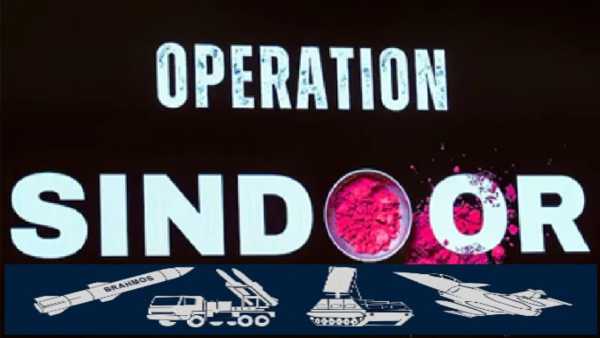
New Delhi: The India–Pakistan conflict of May 2025 lasted thirteen days. Pakistan has been paying for those thirteen days ever since—in emergency contracts, constitutional rewrites, and the quiet, expensive labour of rebuilding a military that discovered its limits under fire.
India’s opening move on 07 May 2025 was precisely designed. Nine terrorist-linked targets across Pakistan and Pakistan-Occupied Jammu and Kashmir were struck and destroyed. Pakistan’s military infrastructure was deliberately left alone, and India made that deliberateness public in a press briefing that doubled as a strategic signal. Restraint, in this instance, was weaponised. It offered Pakistan a way out while making clear that India controlled the terms of engagement. Pakistan read the signal and escalated anyway.
The drone campaign Pakistan launched between 08 and 10 May was the first measure of the capability gap that would define the conflict. The drones were intercepted. Rockets and long-range artillery followed, achieving little. And then India answered, not with proportional restraint but with escalation dominance.
Eleven air bases were struck simultaneously. Nur Khan, sitting alongside General Headquarters and within the Islamabad Capital Territory, among them.
The implicit message was clinical: India could reach Pakistan’s command spine, and had apparently prepared a subsequent phase targeting leadership nodes and the communications architecture that held the Pakistani military together.
The threat of progressive command decapitation, rendering GHQ unable to communicate with or direct its formations, was understood in Rawalpindi for what it was. The ceasefire came within hours.
In the months that followed, Pakistan’s military moved with an urgency that contradicted every official statement about the conflict’s outcome.
The Army Rocket Force Command was created around the FATAH-series precision rocket system. Artillery divisions at Gujranwala and Pano Aqil were reorganised into ARF Division (North) and ARF Division (South), with missile regiments placed directly under GHQ, a structural response to the precision strike deficiencies the conflict had made undeniable.
A domestic 155mm artillery ammunition production facility was rushed into development after battlefield consumption exposed dangerous supply chain vulnerabilities. Over 25 regiments of Chinese SH-15 Mounted Gun Systems were contracted to address artillery mobility and survivability gaps, the same equipment that had reportedly been sheltered in civilian areas during the conflict to prevent its destruction by Indian forces.
Chinese Z-10ME attack helicopters joined No. 31 Attack Helicopter Squadron by August 2025, filling close air support voids that the conflict’s operational tempo had exposed.
A new UAV force was built under the Bahawalpur Corps, centred on ISR and targeting drones, after Pakistan’s own drone offensive had achieved almost nothing against Indian air defences. Contracts for Chinese CH-4 and CH-5 UCAVs and SA-180 loitering munitions followed. Turkish KORKUT air-defence platforms addressed the low-level aerial vulnerabilities Indian operations had exploited.
Turkish OMTAS anti-tank missiles and ERYX ATGMs answered anti-armour deficiencies. Chinese VT-4 tanks, reclassified as MBT Haider, addressed armour modernisation gaps.
MILGEM-class corvettes from Turkey and Hangor-class submarines completed a procurement sweep remarkable for its breadth, every domain of warfare addressed in emergency sequence. A Turkish electronic warfare cooperation agreement, signed within days of the ceasefire, acknowledged that Pakistan had been outmatched in the electromagnetic domain in ways it had apparently not anticipated.
The constitutional dimension was the most dramatic. The 27th Constitutional Amendment, reportedly passed in the conflict’s aftermath, abolished the office of Chairman Joint Chiefs of Staff Committee and established a Chief of Defence Forces in its place.
A Commander, National Strategic Command was created under an Army Lieutenant General, reorganising nuclear command authority with the Army Chief at its centre. The restructuring was a direct response to the inter-services coordination failures the conflict had revealed — and a tacit admission that India’s willingness to strike deep had materially damaged Pakistan’s nuclear deterrence narrative. States that restructure their nuclear command posture in the immediate aftermath of a conflict are not projecting strength. They are attempting to recover it.
Pakistan was already stretched before the first SINDOOR strike landed. Troops committed to Saudi Arabia under the Strategic Mutual Defence Agreement, operations under GHAZAB-LIL-HAQ along the Durand Line, and the ongoing Azm-e-Istekam campaign across Khyber Pakhtunkhwa and Balochistan had left a limited operational reserve. Sustaining a prolonged conventional confrontation with India was not a strategic choice available to Rawalpindi. The ceasefire was less a decision than a recognition of arithmetic.
-
Minecraft Bedrock Edition 26.20 update brings Closed Captions and Chaos Cubed experimental features, complete changelog here

-
Governance Will Teach You Practical Realities Of Fulfilling Poll Promises, Stalin Tells Vijay On Rs 10 Lakh Crore Debt

-
Sunday Brunch explains schedule change as guest appears to go missing

-
Bride Cancels Wedding After Groom's Outburst Over Traditional Shoe Theft Ritual

-
Australian Cricket In Turmoil, 5 Senior Players Unhappy, BBL Stars Eye Overseas Leagues