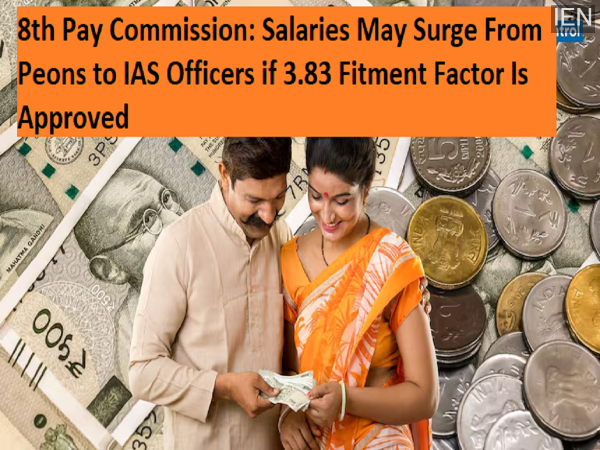
The discussion around the upcoming 8th Pay Commission is gaining momentum as central government employees and pensioners continue to push for a major salary revision. One of the biggest demands currently under discussion is increasing the fitment factor from the existing 2.57 to 3.83.
If the central government accepts this proposal, salaries across all levels — from peons, clerks, teachers, railway employees, and constables to senior IAS officers — could witness a massive jump.
According to estimates being discussed by employee unions, the minimum basic salary could rise from the current ₹18,000 to nearly ₹69,000 under the proposed fitment structure.
However, it is important to note that these figures are currently based on demands and calculations by employee organizations. The government has not yet taken any final decision on the matter.
What is the Fitment Factor?
The fitment factor is the formula used to calculate revised basic salaries under a pay commission.
In the 7th Pay Commission, the government implemented a fitment factor of 2.57, which significantly increased salaries and pensions for central government employees.
Now, staff unions under the National Council-JCM are reportedly demanding that the fitment factor be increased to 3.83 under the 8th Pay Commission.
Employee representatives argue that rising inflation, urban living expenses, housing costs, and overall economic pressures have made the current salary structure insufficient.
Major Salary Jump Possible Across All Pay Levels
If the proposed 3.83 fitment factor is implemented, employees across all pay matrix levels could see substantial increases in basic pay.
Proposed Minimum Salary Increase
Current minimum basic pay:
- ₹18,000
Expected revised basic pay under 3.83 fitment factor:
- Approximately ₹68,940
The proposed revision would not only affect salaries but also pensions, since pension calculations are directly linked to basic pay.
Estimated Salary Hike Across Different Pay Levels
Here is an estimated comparison of current and projected salaries based on the proposed 3.83 fitment factor.
Lower-Level Employees
Level-1 Employees
Includes:
- Peons
- Attendants
- Support staff
Current basic pay:
- ₹18,000
Estimated revised pay:
- Around ₹69,000
Level-2 Employees
Includes:
- Lower Division Clerks (LDCs)
Current basic pay:
- ₹19,900
Estimated revised pay:
- Around ₹76,000
Level-3 Employees
Includes:
- Constables
- Skilled workers
Current basic pay:
- ₹21,700
Estimated revised pay:
- Around ₹83,000
Level-4 Employees
Includes:
- Junior clerks
- Grade-D stenographers
Current basic pay:
- ₹25,500
Estimated revised pay:
- Around ₹97,000
Level-5 Employees
Current basic pay:
- ₹29,200
Estimated revised pay:
- Around ₹1.11 lakh
Expected Salary Increase for Mid-Level Employees
Level-6 Employees
Current basic pay:
- ₹35,400
Estimated revised pay:
- Around ₹1.35 lakh
Level-7 Employees
This category often includes:
- Section officers
- Teachers
- Railway supervisors
Current basic pay:
- ₹44,900
Estimated revised pay:
- Around ₹1.72 lakh
Level-8 Employees
Current basic pay:
- ₹47,600
Estimated revised pay:
- Around ₹1.82 lakh
Level-9 Employees
Current basic pay:
- ₹53,100
Estimated revised pay:
- Around ₹2.03 lakh
Massive Jump Possible for Senior Officers
Senior administrative officers and top bureaucrats could also witness major salary increases if the proposal is accepted.
Level-13 Officers
Current pay:
- ₹1.23 lakh
Estimated revised pay:
- Around ₹4.71 lakh
Level-14 Officers
Current pay:
- ₹1.44 lakh
Estimated revised pay:
- Around ₹5.52 lakh
Level-15 Officers
Current pay:
- ₹1.82 lakh
Estimated revised pay:
- Around ₹6.97 lakh
Level-18 Officers
This category includes top-level officers such as Cabinet Secretary-level positions.
Current pay:
- ₹2.50 lakh
Estimated revised pay:
- Around ₹9.57 lakh
Why Employees Are Demanding Higher Salaries
Employee unions argue that the current salary structure is no longer sufficient because of:
- Rising inflation
- Increasing housing costs
- Expensive healthcare
- Urban living expenses
- Education costs
Representatives reportedly raised these concerns during meetings held in New Delhi between April 28 and April 30.
According to employee organizations, the revised fitment factor is necessary to maintain a decent standard of living for government employees.
Government Yet to Take Final Decision
Despite rising expectations among employees, the government has not officially approved any salary revision or fitment factor yet.
The upcoming pay commission will reportedly need to consider several important factors before making recommendations, including:
- Economic conditions
- Government expenditure
- Fiscal deficit
- Inflation trends
- Budgetary pressure
Experts say the final recommendations may differ significantly from the current demands being raised by employee unions.
Pensioners Also Watching Closely
The proposed salary revision is also extremely important for pensioners because pension calculations are directly linked to basic pay structures.
If salaries increase substantially under the 8th Pay Commission, pension payouts may also rise significantly for retired central government employees.
This is one of the reasons why both employees and pensioners are closely monitoring developments related to the fitment factor discussions.
8th Pay Commission Expectations Continue to Rise
Although the government has not yet finalized the structure of the 8th Pay Commission, the demand for a 3.83 fitment factor has already increased expectations among lakhs of central government employees.
For now, all eyes remain on the government’s next steps and whether the commission ultimately recommends a major salary overhaul similar to — or even bigger than — the changes seen during the 7th Pay Commission.
-
Summer Special: Make fresh mango papad at home from ripe mangoes, the method is very easy

-
White Shirt Styling Tips: Amazing effect of white shirt, if you style it in these 5 ways then everyone will look at you.

-
Simple Tips to Celebrate a Memorable Mother’s Day

-
CBSE Board 12th result will be released soon, DigiLocker issued notification, check this way
-
Good news for Rajma-rice lovers: It is not only a treasure of taste but also of health, you get these 5 big benefits.