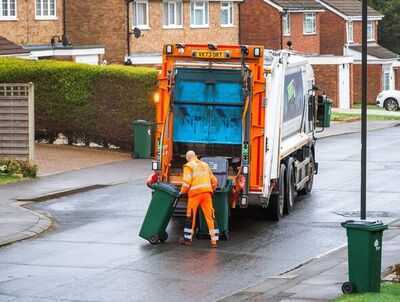
Bin collections have been standardised across England, so all councils must follow the same rules. The Government hopes this will simplify recycling, end the 'postcode lottery' with handy bin collections, and reduce the amount of contaminated recycling, so that less waste goes to landfill.
Introduced on March 31, the Government has laid out new collection frequencies and specified which waste streams councils will be required to collect. The changes are designed to create a more consistent system across England, after years of differences between local authorities on what could and could not be recycled.
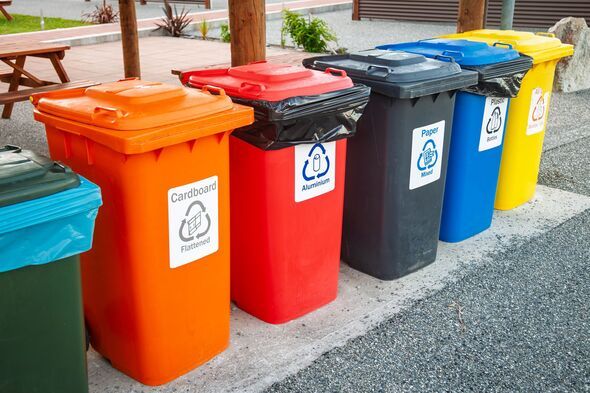
 1. All councils must collect the following waste separately
- Food and garden waste
- Paper and card
- All other dry recyclable materials (glass, metal and plastic, including cartons)
- Residual waste (non-recyclable waste that is sent for energy recovery or to landfill)
Paper and card can be collected with other dry recyclable materials in certain circumstances, which the Government said will allow local authorities to deliver servicesthat work best for their communities.
2. Weekly food waste collectionsTwo bins will be provided to every household for food waste - a small bin suitable for the kitchen, often called a caddy, and a larger bin for outside for collection. This is the only waste bin for which the government has imposed a strict weekly schedule.
3. Plastic film collections next yearStarting March 31, 2027, plastic film packaging and plastic bags must be collected for plastic recycling.
 4. No standard for garden waste collection frequency
Councils can decide the frequency of garden waste collections. The Government recommend they are made at least every 36 weeks, which means households with gardens could have waste sitting for around eight to nine months.
5. No standardised frequency for dry recyclable collectionsThe Government said councils can choose the most appropriate collection frequency and methodology for the dry recyclable waste streams to meet the needs of their local communities.
6. Black bin collectionsSome councils have confirmed that collections will be less frequent in response to the changes, with the food waste bin the only one with a mandated weekly collection. In some areas, such as Mid Suffolk and Lancaster and Morecambe, there is now a new rule where every refuse bin will be emptied every three weeks (21 days) rather than fortnightly. The collection frequency varies across local authorities.
The Department for Environment, Food and Rural Affairs (DEFRA) said the changes will help meet the ambition to recycle 65% of municipal waste by 2035, and deliver greenhouse gas emissions savings equivalent to £11.8 billion.
Circular economy minister Mary Creagh at DEFRA said it would end the "postcode lottery" and make it easier for people to recycle.
"Simplifying these rules will cut out carbon, clean up our streets, and help bring pride back into our communities. We will continue to work hand-in-hand with local areasto deliver these changes and ensure there's more recycled content in the products we buy."
Government hopes that more high-quality recycled material will be able to be processed domestically and used by manufacturers to make new products, supporting the shift to a more circular economy.
-
Indian Boxers Shine at Asian U15 Championships, Securing Finals Spots

-
Dog owners issued £100 warning as UK beach bans start from May

-
Emergency services swarm UK street and properties sealed off after 'attack'

-
Transform Your Luck with This Simple Roti Ritual

-
All the signs Tess Daly and Vernon Kay's marriage was on the rocks