
When parents or grandparents pass away, sooner or later—even if it takes some time—the subject of their assets or money inevitably arises. This is especially true if they held Fixed Deposits (FDs) in a bank. If a nominee has been designated for these FDs, or if a valid will exists, no difficulties typically arise; however, if neither is in place, that is precisely where the confusion begins. Who will receive the money? What documents does the bank require? Why is the process taking so long? The truth is that there is a specific, established procedure for this—it is simply not always clearly understood. Let us explain exactly how you can file a claim for an FD, even in the absence of a designated nominee or a will.
First, Check This: Is There a Nominee?
Before addressing anything else, the bank will verify whether or not a nominee has been designated for the Fixed Deposit. If a nominee exists, the process moves forward swiftly; after verifying documents such as a death certificate and proof of identity, the bank releases the funds in the nominee's name. However—and this is a crucial point for many—the nominee does not, in reality, "inherit" the money. They merely serve as an intermediary. Who constitutes the *actual* legal heirs is determined on a case-by-case basis. Therefore, even if the bank has already disbursed the funds to the nominee, the money may still be subject to distribution among family members.
What Is the Process If There Is No Nominee?
This is where matters become slightly more complex. If no nominee has been designated, the bank requires documentation from the legal heirs in order to release any funds deposited in the name of the deceased individual. This typically entails documents such as a Legal Heir Certificate or, in some instances, a Succession Certificate. It is this specific step that frequently causes delays in the settlement process.
Who Is Actually Considered a Legal Heir?
This depends on which specific laws govern your family's legal framework. In many cases, the primary claim belongs to the deceased person's spouse, children, and—occasionally—their mother. Grandchildren may also be included, though this depends on whether their parents (i.e., the children of the grandparents) are still alive. This is precisely where confusion sometimes arises within families—particularly when multiple individuals feel they have a rightful claim to the funds.
What documents will the bank require from you?
Generally, you will need to provide a death certificate, proof of your identity, and details regarding the fixed deposit account. If no nominee has been designated, the bank may request additional legal documents to determine the rightful recipient of the funds. For smaller amounts, some banks may accept simpler documentation. For larger deposits, however, they often require more robust legal evidence to prevent potential disputes in the future.
When the process takes longer than expected
If multiple heirs are involved, the bank may require all of them to sign jointly; alternatively, if a single individual is claiming the funds on behalf of everyone, the bank may request written consent (in the form of a No Objection Certificate). If there is any disagreement within the family, this process can be significantly delayed. Furthermore, if a Succession Certificate becomes necessary, it implies that you must undergo a judicial process, which can be time-consuming.
Why are families often unprepared for this situation?
The primary issue is that nothing happens automatically. Unlike certain other types of accounts where financial transactions occur seamlessly, fixed deposits—in the absence of a clear nominee or a valid will—require a verification process. Moreover, since most families do not encounter such situations on a regular basis, they often end up figuring things out as they go along. This is why the process can often *seem* far more complicated than it actually is.
How can you simplify the process?
Start by contacting your bank. Ask them precisely what they require for your specific case. Requirements can vary slightly, so it is helpful to clarify everything right at the outset. Additionally, speak with your family members as soon as possible; if everyone is on the same page, the process moves forward much more quickly. And keep your documents ready—this will save you from having to make repeated trips to the bank.
Disclaimer: This content has been sourced and edited from TV9. While we have made modifications for clarity and presentation, the original content belongs to its respective authors and website. We do not claim ownership of the content.
-
RR vs GT Toss Update: Yashasvi Jaiswal Opts To Bowl After Winning Toss As Riyan Parag Unavailable In Jaipur

-
IPL 2026: RCB Players Explore Chhattisgarh’s Culture And Heritage Ahead Of Raipur Home Fixtures

-
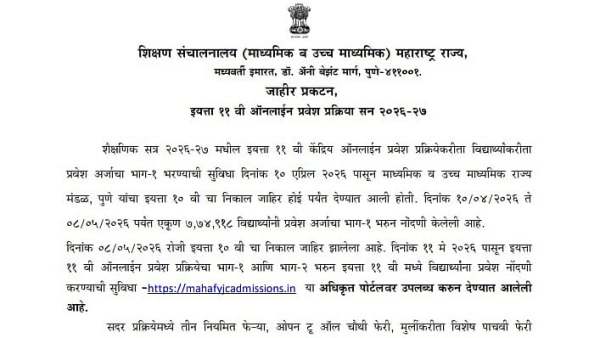
Maharashtra FYJC Admission 2026: Class 11 Online Admission Schedule Released, Registration Begins May 11
-
'All 3 Of Us Are Very Different...': Sara Ali Khan & Rakul Preet Singh Break Silence On Claims Of 'Ignoring' Co-Star Wamiqa Gabbi

-
Tensions Rise in Hapur District Following Clash During Maharana Pratap Jayanti Procession