As the US-Israeli war on Iran entered its 71st day on Saturday, May 9, the United States said it expected a response from Tehran to a proposed ceasefire framework amid renewed tensions in the Strait of Hormuz, escalating violence in Lebanon and continued diplomatic efforts to prevent a wider regional conflict.
US President Donald Trump said he expected Iran’s reply “tonight”, expressing hope that Washington’s latest proposal could open the door to serious negotiations aimed at ending the 10-week war, which has killed thousands across West Asia and disrupted global energy markets.
Hezbollah claims 26 attacks on Israeli forces
Hezbollah said it carried out 26 attacks targeting Israeli forces in southern Lebanon since Thursday, including strikes near Deir Siryan, Haddatha and Labbouneh, amid intensified fighting across the border region.

US strike on Iranian vessel leaves six missing
At least six people were injured and six others were reported missing after a US strike targeted an Iranian vessel in the Strait of Hormuz, according to the governor of Iran’s Lengeh Port, as tensions continued to rise in the ongoing conflict between Washington and Tehran.
Tehran reviews US ceasefire framework
US Secretary of State Marco Rubio said Washington was still awaiting Tehran’s final response, while Iranian Foreign Ministry spokesman Esmail Baghaei said Iran was reviewing the proposal and would not be influenced by deadlines or warnings.
According to The Wall Street Journal, discussions are centred on a proposed one-page, 14-point memorandum of understanding that could establish a month-long negotiation process between the two sides.
The proposed framework reportedly includes discussions on Iran’s nuclear programme, easing tensions in the Strait of Hormuz and the possible transfer of Iran’s highly enriched uranium stockpiles to another country.
ABC News, citing US officials, reported that Washington had not yet received a final Iranian response and that negotiations were continuing through multiple mediators.
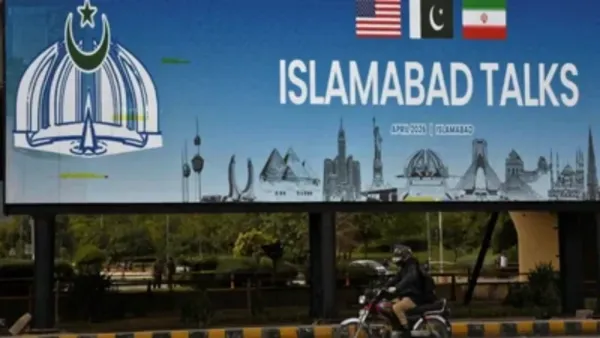
Islamabad could host next round of talks
Talks between the United States and Iran could reportedly resume as early as next week in Pakistan’s capital Islamabad as mediators continue efforts to secure a framework for negotiations aimed at ending the conflict.
Strait of Hormuz tensions intensify
Tensions continued to mount in the Strait of Hormuz after reports of US military action against Iranian-linked vessels and continued restrictions around Iranian ports.
In a statement posted on X, Iranian Foreign Ministry spokesman Esmail Baghaei criticised what he described as American “adventurism and roguish behaviour” following reports of attacks on Iranian vessels in the strategic waterway.
Mohammad Mokhbar, an adviser to Iran’s Supreme Leader, described the Strait of Hormuz as “a power card equivalent to a nuclear bomb”, according to Iran’s Tasnim news agency.
He said Tehran’s ability to influence one of the world’s most important energy routes gave it enormous strategic leverage over the global economy.
The latest escalation came after Iran largely closed the Strait of Hormuz following the outbreak of the conflict on February 28, while the United States later imposed restrictions targeting Iranian ports and shipping activity.
Oil spill fears emerge near Kharg Island
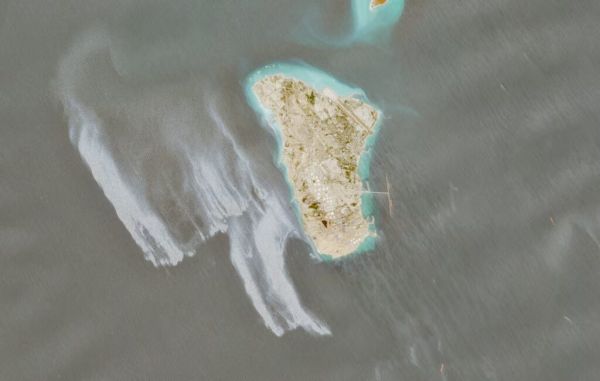
Satellite imagery appeared to show a large oil slick spreading off Iran’s Kharg Island, the country’s main oil export terminal in the Gulf.
Orbital EOS estimated the spill covered more than 20 square miles, while the Conflict and Environment Observatory said the source remained unclear and warned the slick appeared to be drifting southward, according to *The New York Times*.
Kharg Island hosts Iran’s largest oil terminal, storage facilities and export infrastructure, making it a crucial part of the country’s energy sector.
Hezbollah launches drone attacks on Israel
On the Lebanese front, Hezbollah said it launched a swarm of drones targeting an Israeli airbase in northern Israel after earlier attacks on Israeli military positions.
The Iran-backed group said the operations were carried out in response to Israeli strikes on Beirut’s southern suburbs and ongoing attacks in southern Lebanon.
Hezbollah later issued 26 statements detailing attacks on Israeli military positions, troop gatherings and vehicles in more than 13 locations, including strikes targeting the Meron and Shraga bases in northern Israel.
Israeli strikes kill dozens in southern Lebanon
Lebanon’s National News Agency reported that at least 31 people, including a rescue worker, were killed in Israeli attacks across southern Lebanon on Friday, making it one of the deadliest days since fighting resumed on March 2.
Among the victims were five people killed in air strikes on the town of Toura in the Tyre district, while rescue teams continued searching for a missing girl trapped beneath the rubble.
According to Al Jazeera, more than 40 Israeli air raids targeted towns across southern Lebanon on Friday, alongside evacuation orders affecting seven towns north of the Litani River.
US sanctions Chinese and Hong Kong entities over Iran links
The US Treasury announced sanctions against 10 individuals and companies, including several entities in China and Hong Kong, accusing them of helping Iran secure materials linked to Shahed drones and ballistic missile programmes.
Reuters reported that the sanctions targeted firms and individuals allegedly connected to Iran’s military industrial networks ahead of Trump’s planned visit to China for talks with President Xi Jinping.
Treasury Secretary Scott Bessent said Washington would continue its “economic wrath” campaign against Tehran and target foreign entities supplying Iran’s military industry.
The US Treasury Department also warned it could impose secondary sanctions on entities supporting Iran’s activities, including companies linked to Chinese oil refineries and firms involved in Iran’s trade networks.
Rubio warns against rebuilding Iran’s military capabilities
Rubio said Washington had sanctioned Chinese entities accused of supplying Iran with satellite imagery that allegedly supported attacks against US forces in the Middle East.
He added that the sanctions targeted Iran’s overseas procurement networks and suppliers connected to missile and drone programmes.
Rubio also warned that the US would continue using all available tools to prevent Iran from rebuilding sensitive nuclear and military capabilities.
CIA assessment questions effectiveness of naval blockade
Efforts to pressure Tehran economically may take longer than anticipated, according to a reported CIA assessment.
Reuters cited a US official familiar with the intelligence analysis as saying Iran could withstand a US naval blockade for several months before facing severe economic strain.
The assessment reportedly concluded that Tehran may avoid major economic pressure for up to four months, potentially limiting Washington’s leverage during negotiations.
Iran signals openness to diplomacy
Iranian President Masoud Pezeshkian said Tehran would continue working towards “friendly relations” with other countries based on mutual respect and shared interests while rejecting all forms of “colonialism and exploitation”.
He said such ideas had no place in the future of international relations.
FAO warns of rising global food prices
The UN’s Food and Agriculture Organization (FAO) said its global food price index rose 2 percent year-on-year in April, reaching its highest level since 2023 due to instability linked to the Middle East conflict.
The FAO said rising crude oil prices had increased demand for seed oils used in biofuel production, while concerns over lower production in Southeast Asia further pushed prices higher.
Wheat prices rose by 0.8 percent partly because of higher fertiliser costs linked to the conflict.
The agency warned that expensive fertilisers could push farmers towards less fertiliser-intensive crops, tightening global wheat supplies further.
Qatar reiterates support for regional stability
Qatar’s Prime Minister and Foreign Minister Sheikh Mohammed bin Abdulrahman Al Thani said he discussed regional developments with the US Vice President in Washington and reaffirmed support for efforts aimed at promoting regional security, stability and sustainable peace.
-
Cancer Tarot Horoscope Today, May 11, 2026: Maintain balance and coordination, proceed with caution

-
Love Horoscope for Monday, May 11, 2026: Taurus Natives to Charm Hearts, Discover What Awaits Other Zodiac Signs

-
Birthday Horoscope: The future of children born on 11 May 2026 will wave the flag in the field of leadership ability and education.

-
Beneficial drinks of Sattu in summer for children

-
Rajbhar’s challenge to Akhilesh before UP elections 2027, said – ‘Wherever he goes, he sinks his boat’