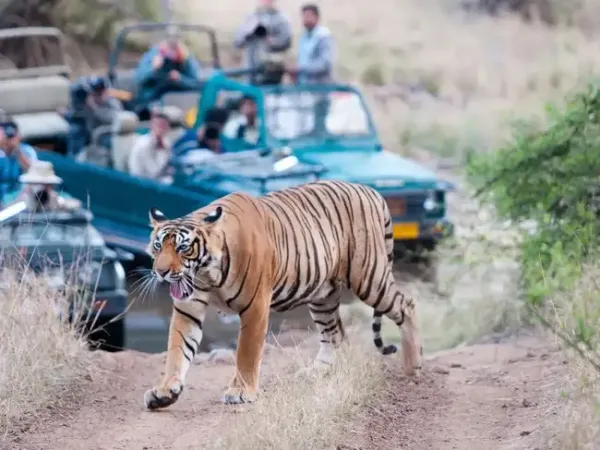
Tigers, the majestic apex predators of the wild, are known for their strength and stealth. These powerful big cats rely on bursts of strength to stalk and capture prey, making rest essential for energy conservation. Do you know that, unlike many animals, tigers require long hours of rest, a vital survival strategy that supports their intense hunting lifestyle? Understanding why tigers sleep so much offers deeper insight into their biology, hunting patterns, and role in maintaining ecological balance. Along similar lines, IIT Roorkee alumnus and IFS officer Himanshu Tyagi has now offered a deeper insight into the matter.
Himanshu Tyagi recently shared a post on his official X-handle explaining the reason behind these majestic predators’ prolonged resting patterns. In his informative write-up, the IFS officer stated that tigers understand calorie math better than humans.
IFS officer breaks down tigers' sleep pattern
Justifying his claim, Himanshu Tyagi revealed that tigers require 16-20 hours of rest and sleep every day. But their period of inactivity is not born out of laziness but energy conservation. Breaking down the striped beast’s sleep pattern, the IFS officer shared that the phenomenon is called polyphasic. It is a type of deep sleep, interspersed with periods of light dozing, ensuring maximum recovery between hunts.
As per Himanshu Tyagi, a single hunt demands a massive burst of anaerobic energy from the tiger. But one successful kill of a large ungulate keeps the animal fed for up to 7 days. This indicates that while their energy investment is high, so is their return. Despite being aggressive hunters, tigers are remarkably calm and conflict-averse, shared Himanshu, adding that they avoid unnecessary confrontations until essential. Since every movement, every calorie, is accounted for, they are one of nature's most efficient energy managers.
5 offbeat tiger reserves in India
India is home to several tiger reserves and sanctuaries, including Bandhavgarh, Ranthambore, Kanha, Tadoba, and Jim Corbett, offering a thrilling experience. But wildlife enthusiasts seeking less-crowded destinations for tiger spotting this summer season can venture into these 5 offbeat tiger reserves to experience these majestic predators in their natural habitat.
Pilibhit Tiger Reserve, Uttar Pradesh
Set in Uttar Pradesh’s Terai belt, Pilibhit blends forests, grasslands, and wetlands, offering excellent tiger sightings in a less crowded, more natural safari setting. Its rich biodiversity and peaceful terrain make it ideal for wildlife enthusiasts.
Satkosia Tiger Reserve, Odisha
Famous for the dramatic Satkosia Gorge and the Mahanadi River, this Odisha reserve offers both jeep and boat safaris. Along with tigers, it shelters gharials and crocodiles.
Anamalai Tiger Reserve, Tamil Nadu
Nestled in the Western Ghats, Anamalai combines rainforests with unique wildlife like lion-tailed macaques and Nilgiri tahr, alongside memorable eco-tourism experiences.
Buxa Tiger Reserve, West Bengal
Bordering Bhutan, Buxa offers dense forests, trekking routes, and historic ruins, making it a perfect blend of wildlife and heritage exploration.
Nameri Tiger Reserve, Assam
Known for river rafting, walking safaris, and untouched wilderness, Nameri delivers a thrilling alternative to traditional tiger reserve adventures.
Himanshu Tyagi recently shared a post on his official X-handle explaining the reason behind these majestic predators’ prolonged resting patterns. In his informative write-up, the IFS officer stated that tigers understand calorie math better than humans.
IFS officer breaks down tigers' sleep pattern
Justifying his claim, Himanshu Tyagi revealed that tigers require 16-20 hours of rest and sleep every day. But their period of inactivity is not born out of laziness but energy conservation. Breaking down the striped beast’s sleep pattern, the IFS officer shared that the phenomenon is called polyphasic. It is a type of deep sleep, interspersed with periods of light dozing, ensuring maximum recovery between hunts.
As per Himanshu Tyagi, a single hunt demands a massive burst of anaerobic energy from the tiger. But one successful kill of a large ungulate keeps the animal fed for up to 7 days. This indicates that while their energy investment is high, so is their return. Despite being aggressive hunters, tigers are remarkably calm and conflict-averse, shared Himanshu, adding that they avoid unnecessary confrontations until essential. Since every movement, every calorie, is accounted for, they are one of nature's most efficient energy managers.
5 offbeat tiger reserves in India
India is home to several tiger reserves and sanctuaries, including Bandhavgarh, Ranthambore, Kanha, Tadoba, and Jim Corbett, offering a thrilling experience. But wildlife enthusiasts seeking less-crowded destinations for tiger spotting this summer season can venture into these 5 offbeat tiger reserves to experience these majestic predators in their natural habitat.
Pilibhit Tiger Reserve, Uttar Pradesh
Set in Uttar Pradesh’s Terai belt, Pilibhit blends forests, grasslands, and wetlands, offering excellent tiger sightings in a less crowded, more natural safari setting. Its rich biodiversity and peaceful terrain make it ideal for wildlife enthusiasts.
Satkosia Tiger Reserve, Odisha
Famous for the dramatic Satkosia Gorge and the Mahanadi River, this Odisha reserve offers both jeep and boat safaris. Along with tigers, it shelters gharials and crocodiles.
Anamalai Tiger Reserve, Tamil Nadu
Nestled in the Western Ghats, Anamalai combines rainforests with unique wildlife like lion-tailed macaques and Nilgiri tahr, alongside memorable eco-tourism experiences.
Buxa Tiger Reserve, West Bengal
Bordering Bhutan, Buxa offers dense forests, trekking routes, and historic ruins, making it a perfect blend of wildlife and heritage exploration.
Nameri Tiger Reserve, Assam
Known for river rafting, walking safaris, and untouched wilderness, Nameri delivers a thrilling alternative to traditional tiger reserve adventures.