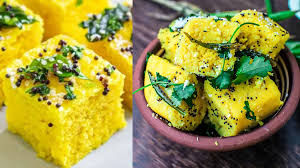
Dhokla is such a Gujarati snack, whose name makes your mouth water. Its sweet and sour taste and lightness make it a favorite of people of all ages. Often people try to make Dhokla at home, but complain that it does not become ‘soft’ and ‘fluffy’ like the one in the market. Sometimes the Dhokla settles in the middle and sometimes it becomes quite hard. If this happens to you too, then understand that you are making a small mistake somewhere.
Today we are going to tell you those 6 common mistakes, by correcting which you can prepare halwai-like lattice dhokla at home.
1. Negligence in measuring ingredients
In making Dhokla, it is all a game of ‘ratio’. The right amount of gram flour, water and curd decides the texture of Dhokla. If you add less gram flour than expected, the dhokla will not set properly. At the same time, too much curd can make it excessively sour and sticky. Always use a fixed cup or bowl for measurement so that the batter remains balanced.
2. Wrong consistency of batter
The Dhokla batter should neither be too thick nor too thin. If the batter is thick, it will become hard as a stone after steaming. At the same time, too thin a batter will make the dhokla ‘flat’ and soggy instead of making it puffy. An ideal batter should be of ‘ribbon consistency’, which falls easily but is not watery.
3. Ignoring the process of fermentation
Fermentation is the most important step to make Dhokla a lattice. If you don’t leave the batter for the right amount of time, it will become heavy. Keep in mind that fermentation time depends on the weather. In summer it is ready in 4-5 hours, whereas in winter it needs a little more time and a warm place. However, even for instant Dhokla, it is beneficial to give the batter a rest of 10-15 minutes.
4. Timing of adding fruit salt (Eno) or soda
The biggest mistake happens here. Many people add fruit salt or baking soda to the batter and keep it for hours. By doing this the effect of soda gets eliminated and the dhokla does not swell. Always remember to add fruit salt only when your steamer (kadhai or cooker) is completely hot and you are going to place the dhokla plate inside. After adding soda, the batter should not be beaten too much.
5. Opening the lid frequently during steaming
Dhokla needs continuous steam to cook properly. If you open the lid to check frequently, steam escapes and the temperature drops, causing the dhokla to not puff up properly. Let it steam on medium flame for at least 15-20 minutes. Use a toothpick to check for doneness; If it comes out clean, then understand that Dhokla is ready.
6. Not using water and sugar in tadka
After making Dhokla it often feels dry. The reason for this is not applying proper tempering. Just mustard seeds and curry leaves are not enough. Add water, sugar and some lemon juice in the tempering. When this tadka water is lukewarm, then pour it on the cold dhokla. Due to this, Dhokla absorbs water and remains juicy and soft from inside.
-
Arrests Mount To 11 In Odisha Mob Lynching Case As Minister Vows Exemplary Action
-
India Implements Major Reforms with New Labour Codes

-
KKR's Remarkable Comeback in IPL 2026: Can They Secure a Playoff Spot?

-
Massive Drug Seizure at Delhi Airport: Nearly 35 Kilograms of Marijuana Confiscated

-
HPSCB Job Alert: Recruitment Notification Issued for 91 Junior Clerk Posts; Applications to Begin on This Date..