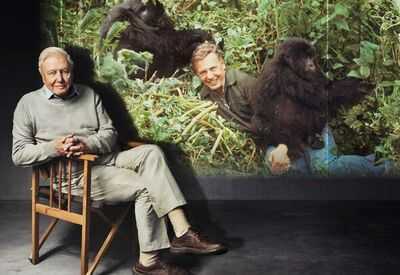
It was a bird that, in many ways, launched Sir David Attenborough's career. The first Zoo Quest mission in 1954 sent him to the forests of Sierra Leone, with the aim of filming and collecting a rare white-necked picathartes.
The white-necked picathartes is a strange-looking bird, cartoonish in appearance - medium-sized with a black back, bright yellow head, large beaming black eyes and what can only be described as black earmuffs. The mystique of the mission for this unusual bird captured the attention of viewers up and down the country, bringing glimpses of places and wildlife that had never before been witnessed. From the gorillas of Rwanda to the puffins of Skomer Island in Wales, these snapshots of the drama and complexities of nature, brought directly to our front rooms, have been fundamental to building our personal connections to the natural world.
Developing this appreciation for nature, of course, has inherent value, for our health and happiness, for example, but these individual experiences also matter greatly for nature conservation. As we celebrate Sir David Attenborough's 100th birthday, it is clear to see he has fundamentally changed how we all see, perceive and associate ourselves with our planet, particularly here in the UK.
As Attenborough himself says: "No one will protect what they don't care about," adding: "And no one will care about what they have never experienced". Nothing could be truer when it comes to nature.
Every generation has its own memory of an Attenborough documentary. A first sighting of a picathartes in the 1950s, an immersion into the life of a Blue Whale in the early 2000s or learning more about the wildlife on our own doorsteps more recently in his first UK-based series, Wild Isles - a series that revealed British wildlife includes the excitement of Orcas, Golden Eagles and seahorses. His current series, Secret Garden, lays bare the drama of wildlife in our own backyards.
I still recall my dear 100-year-old neighbour, who had doubts about the impacts of climate change on wildlife, being converted overnight when Sir David said it was so. Such is our level of trust in someone who is, without a shadow of a doubt, a true national treasure.
And as our disconnection from nature widens in a world where it is less physically present in our lives, this long-running dedication to natural history broadcasting provides an increasingly rare, regular and familiar touchpoint into the real wild world. That is vital.
From his initial expeditions to capture wildlife, Attenborough's work has evolved and reacted to the changing world around him.
Exposing the vast levels of ocean plastic pollution led to a tidal wave of support to reduce and ban the use of single-use plastics. His programmes have also highlighted the impacts of climate change, deforestation, overfishing and other human activities on the species and wildlife we have come to love.
So, would we have the same momentum behind restoring nature and tackling the climate crisis without Sir David Attenborough?
Absolutely not. Nature charities in the UK are proud to have more members than all the political parties put together, and I have no doubt that this support would not exist at the levels it does without his driving influence.
As many of us revisit our favourite Attenborough moments for his 100th birthday, it's a time to celebrate his immense legacy and impact and indulge in the wonders of the natural world yet again.
But we must also harness this love of nature that has been instilled in us to ensure the memories we have of the species and spectacles on our screens aren't just a history written into film but something that will be in our children's world too. That will be the ultimate legacy for us all.
-
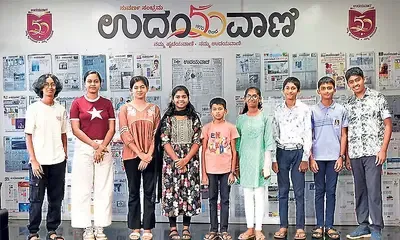
Udayavani Vidyarthivani: Students learn importance of newspaper reading at Udayavani workshop
-
President neglecting kitchen at Rashtrapati Bhavan, complain foodies

-
Patient dies after surgeon removes wrong organ - 'couldn't tell difference'

-
Unbelievable Claims of a Man Wanting to Marry a Snake in Uttar Pradesh
-
विटामिन ई: स्वास्थ्य और सौंदर्य के लिए एक अनमोल तत्व