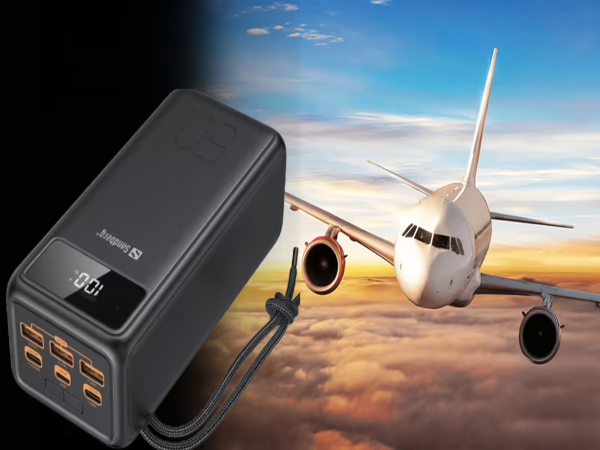
A recent incident aboard an IndiGo flight in Chandigarh has once again drawn our attention to safety regulations during air travel. Specifically, panic ensued among passengers after a power bank caught fire inside the aircraft's cabin shortly after landing. Following the appearance of smoke in the cabin, passengers were evacuated in accordance with emergency protocols. According to reports, in the wake of this incident, the aviation regulatory body—the DGCA (Directorate General of Civil Aviation)—has tightened its safety guidelines regarding electronic devices, particularly power banks. However, there has been no official confirmation of this as yet.
**Why do Power Banks Pose a Risk on Flights?**
Nowadays, power banks have become an essential item in every traveler's bag for charging smartphones and other gadgets. However, if proper precautions are not taken during the journey, this small device can prove to be dangerous. Power banks contain lithium-ion batteries. Under certain specific circumstances, these batteries can overheat or catch fire. Aviation regulators worldwide have adopted a stricter stance on this issue following numerous incidents involving batteries emitting smoke or igniting.
**What are the New Rules Regarding Power Banks on Flights?**
To further bolster passenger safety, the DGCA has now fully clarified the regulations regarding the carriage of power banks. According to the new guidelines, passengers are permitted to carry their power banks only in their 'hand baggage'—that is, their cabin bags. Placing them in 'check-in luggage' is strictly prohibited. The primary reason for this is that if a battery stored in the aircraft's cargo hold overheats or catches fire, detecting it promptly is nearly impossible.
Furthermore, placing power banks in the overhead storage compartments—also known as overhead bins—located above the seats has now also been prohibited. The logic behind this rule is straightforward: if a power bank were to emit smoke in any situation, it must be in plain sight of the passengers and crew so that immediate action can be taken. If hidden inside a bag or stowed in an overhead bin, detecting the hazard could be delayed—a scenario that poses a significant safety risk.
**Why is charging via power banks banned during flights?**
The most critical aspect of the DGCA's new guidelines is that you are now strictly prohibited from using power banks while traveling by air. Under this rule, passengers are not permitted to charge any electronic device—such as mobile phones, tablets, laptops, or smartwatches—using a power bank while the flight is in progress.
Furthermore, with safety in mind, a ban has also been imposed on passengers charging their power banks using the charging ports located at their seats. This is because continuous charging cycles generate rapid heat within lithium batteries, thereby multiplying the risk of malfunction or combustion. To mitigate this specific hazard, airlines have been issued strict directives to ensure they mandatorily inform passengers about this rule during both boarding and the flight itself.
**What to do if a power bank overheats?**
To prevent any untoward incidents during travel, the DGCA has advised passengers to exercise heightened vigilance regarding their electronic devices. If you detect unusual heat, smoke, sparks, or a burning odor emanating from your power bank or any other device, do not panic; instead, immediately alert the cabin crew. Such prompt reporting on your part plays a pivotal role in averting potential major hazards promptly.
Additionally, from a safety perspective, it is recommended that if you are carrying spare (extra) batteries, you should always keep them inside a plastic pouch or a protective case. If possible, apply insulating tape over the exposed terminals of the batteries. This ensures that there is no risk of a short circuit resulting from friction or contact between them.
**Rules Regarding Gadgets on Flights Are Becoming Stricter**
The primary reason behind this tightening of regulations in the aviation sector is the persistent occurrence of lithium-battery-related fires worldwide. In reality, although lithium batteries may be small in size, if one malfunctions—or if a condition known as "thermal runaway" occurs within it—it can generate extreme heat and ignite a dangerous fire in a very short span of time. The recent incident at Chandigarh Airport serves as yet another instance of this alarming trend. This is precisely why aviation authorities and the DGCA are no longer willing to make any concessions regarding safety; for within the confines of an aircraft soaring through the skies, even a tiny spark can trigger a major catastrophe.
**Tech Tip:** The next time you prepare for air travel, ensure that your power bank is packed not in your checked-in luggage, but rather in your backpack or handbag. Place it in a spot where it remains within your line of sight...
Disclaimer: This content has been sourced and edited from Amar Ujala. While we have made modifications for clarity and presentation, the original content belongs to its respective authors and website. We do not claim ownership of the content.
-
The 40-year-old railway ticket reservation system is set to change; AI will predict whether a waitlisted ticket will get confirmed..

-
These 6 facilities are available for free at every petrol pump; if asked to pay, file a complaint immediately—know your rights..

-
Noida Airport: Ticket booking for Noida Airport has commenced; flights to begin from June 15. Check the flight schedule here..

-
Don't throw away your junk—these 3 apps are buying it at rates higher than scrap dealers...

-
Smart Meter Update: Does a Smart Meter Really Increase Electricity Bills? Find Out What Technology It Uses..