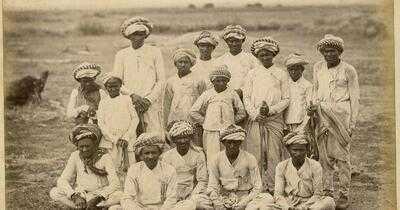
The study of the Bhil revolts in Khandesh, Barwani and Alirajpur in separate chapters has been a challenging proposition. All these areas were adjacent to and also dependent administratively upon one another. Barwani and Alirajpur shared borders with Khandesh and Gujarat and were ruled by Rajput thakurs who were, in turn, controlled by the British. Internally, these states remained autonomous until India’s independence. After the British had established a foothold in Khandesh, the army-supervised process of Bhil settlement gathered momentum in Barwani from 1833 onwards. The Bhil chiefs were agitated at the time and the British soon realised that they would not be pacified until the Barwani state restored their rights. The situation demanded a balance between oppression and the establishment of a security system. When, by the end of the 1830s, the Bhils had not received their due rights (an agreed upon share in fixed revenue), they perforce took to vandalism. At the beginning of the 1840s, colonial policy concentrated on using arms against rebellious Bhils. In the middle of the decade, British officials inspected the forests of Barwani and investigated the claims of Bhil chiefs. However, as the Rajput king remained indifferent, their raids continued. As a result,...
Read more
-
UP Home Guard Recruitment 2026: Answer Key Released and Objection Process Explained

-
UPPSC APO 2025 Mains Exam Application Now Open

-
UP Police SI Exam Results 2026 Announced: Key Details and Cutoff Scores

-
Bihar: Over 150 children fall ill after eating mid-day meal in Saharsa

-
US says it targetted Iranian military facilities after attack on its warships