Tourism to Antarctica is no longer as rare as it once was. As more travelers head to the icy continent, experts are beginning to raise serious concerns. What was once an isolated frontier is now seeing growing human activity — and that shift is drawing global attention.
ALSO READ: Nancy Guthrie case update: New theories emerge on 'porch figure' and potential 'boss' involvement- here's what you need to know
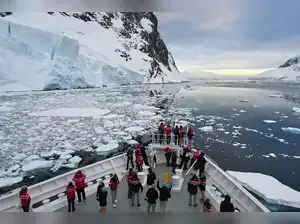
Antarctica, once considered one of the most remote and untouched places on Earth, is now experiencing a noticeable rise in tourism. Much of this growth is driven by what experts call “last chance tourism,” where travelers want to see the frozen landscape before climate change alters it permanently, as per a report by The AP.
Visitor numbers, while still relatively small, are climbing at a pace that has caught the attention of scientists and environmental groups. In 2024 alone, more than 80,000 people set foot on the continent, while another 36,000 viewed it from ships. Over the past three decades, tourism has increased tenfold, according to estimates from the International Union of Concerned Scientists.Experts believe this trend could accelerate even further. With improvements in ship technology and potentially lower travel costs, projections suggest that annual visits could rise to over 400,000 in the coming years.'
The appeal is easy to understand. As Claire Christian of the Antarctic and Southern Ocean Coalition put it, “The sites you will see in Antarctica are extremely unique and not replicable anywhere else on the planet — the whales, the seals, the penguins, the icebergs — it’s all really stunning and it makes a huge impression on people.”
ALSO READ: Shocking claim: Ex-JPMorgan Chase banker Chirayu Rana accused of faking family tragedy in lawsuit against Lorna Hajdini — what we know
Alongside this surge in tourism comes growing concern about environmental and health risks. A recent outbreak of hantavirus aboard the Dutch cruise ship MV Hondius has drawn fresh attention to the issue. The vessel had been on a week-long polar journey, visiting Antarctica and nearby islands, as per a report by The AP.
While officials have not confirmed contamination from the ship, the incident highlights how easily diseases can travel into isolated environments. Health experts are now even investigating the possibility of human-to-human transmission in that case.
Other risks have already been observed. Migratory birds have carried avian flu from South America to Antarctica, raising alarms about how external threats can reach even the most remote ecosystems. Cruise ships themselves can also become hotspots for illness, as seen with past outbreaks of norovirus and COVID-19, as per a report by The AP.
Hantavirus, which typically spreads through exposure to rodent droppings, adds another layer of concern. Even though there are reportedly no rats aboard the Hondius, the case underscores the unpredictable nature of disease spread.
To reduce these risks, strict rules are already in place for visitors heading south. Travelers are required to follow detailed biosecurity measures, including cleaning shoes and equipment to remove seeds, dirt, and microbes.
As Hanne Nielsen, a senior lecturer in Antarctic law, explained, “There are rules that people are bound by when they’re heading south.” She described how crews use vacuums, disinfectants, and brushes to ensure nothing harmful is carried onto the continent, as per a report by The AP.
The Antarctic Treaty, established in 1959, also plays a crucial role. It designates the region as a scientific preserve and limits activities to peaceful purposes. Additional guidelines require operators to assess environmental impacts and follow strict conduct rules to protect wildlife and ecosystems.
Still, some experts worry that these protections may not be enough as tourism grows. The treaty was created at a time when visitor numbers were far lower, and today’s scale presents new challenges.
Christian emphasized the need for stronger oversight, noting, “Activity needs to be regulated appropriately, as you would with any of the world’s sensitive and precious ecological sites.”
Antarctica’s growing popularity highlights a difficult balance between exploration and preservation. While the continent offers unmatched natural beauty, its fragile environment faces increasing pressure. With visitor numbers expected to rise further, the challenge now is ensuring that tourism does not come at the cost of the very landscape people travel to see.
Why is Antarctica seeing more tourists now?
Many travelers want to experience the region before climate change significantly alters its landscape.
What is the biggest concern with rising tourism?
Experts worry about disease spread, contamination, and long-term damage to the fragile ecosystem.
ALSO READ: Nancy Guthrie case update: New theories emerge on 'porch figure' and potential 'boss' involvement- here's what you need to know
Why is tourism in Antarctica rising so quickly?
Antarctica, once considered one of the most remote and untouched places on Earth, is now experiencing a noticeable rise in tourism. Much of this growth is driven by what experts call “last chance tourism,” where travelers want to see the frozen landscape before climate change alters it permanently, as per a report by The AP.
Visitor numbers, while still relatively small, are climbing at a pace that has caught the attention of scientists and environmental groups. In 2024 alone, more than 80,000 people set foot on the continent, while another 36,000 viewed it from ships. Over the past three decades, tourism has increased tenfold, according to estimates from the International Union of Concerned Scientists.Experts believe this trend could accelerate even further. With improvements in ship technology and potentially lower travel costs, projections suggest that annual visits could rise to over 400,000 in the coming years.'
The appeal is easy to understand. As Claire Christian of the Antarctic and Southern Ocean Coalition put it, “The sites you will see in Antarctica are extremely unique and not replicable anywhere else on the planet — the whales, the seals, the penguins, the icebergs — it’s all really stunning and it makes a huge impression on people.”
ALSO READ: Shocking claim: Ex-JPMorgan Chase banker Chirayu Rana accused of faking family tragedy in lawsuit against Lorna Hajdini — what we know
What risks do visitors bring to the fragile ecosystem?
Alongside this surge in tourism comes growing concern about environmental and health risks. A recent outbreak of hantavirus aboard the Dutch cruise ship MV Hondius has drawn fresh attention to the issue. The vessel had been on a week-long polar journey, visiting Antarctica and nearby islands, as per a report by The AP.
While officials have not confirmed contamination from the ship, the incident highlights how easily diseases can travel into isolated environments. Health experts are now even investigating the possibility of human-to-human transmission in that case.
Other risks have already been observed. Migratory birds have carried avian flu from South America to Antarctica, raising alarms about how external threats can reach even the most remote ecosystems. Cruise ships themselves can also become hotspots for illness, as seen with past outbreaks of norovirus and COVID-19, as per a report by The AP.
Hantavirus, which typically spreads through exposure to rodent droppings, adds another layer of concern. Even though there are reportedly no rats aboard the Hondius, the case underscores the unpredictable nature of disease spread.
Can regulations keep Antarctica protected?
To reduce these risks, strict rules are already in place for visitors heading south. Travelers are required to follow detailed biosecurity measures, including cleaning shoes and equipment to remove seeds, dirt, and microbes.
As Hanne Nielsen, a senior lecturer in Antarctic law, explained, “There are rules that people are bound by when they’re heading south.” She described how crews use vacuums, disinfectants, and brushes to ensure nothing harmful is carried onto the continent, as per a report by The AP.
The Antarctic Treaty, established in 1959, also plays a crucial role. It designates the region as a scientific preserve and limits activities to peaceful purposes. Additional guidelines require operators to assess environmental impacts and follow strict conduct rules to protect wildlife and ecosystems.
Still, some experts worry that these protections may not be enough as tourism grows. The treaty was created at a time when visitor numbers were far lower, and today’s scale presents new challenges.
Christian emphasized the need for stronger oversight, noting, “Activity needs to be regulated appropriately, as you would with any of the world’s sensitive and precious ecological sites.”
Antarctica’s growing popularity highlights a difficult balance between exploration and preservation. While the continent offers unmatched natural beauty, its fragile environment faces increasing pressure. With visitor numbers expected to rise further, the challenge now is ensuring that tourism does not come at the cost of the very landscape people travel to see.
FAQs
Why is Antarctica seeing more tourists now?
Many travelers want to experience the region before climate change significantly alters its landscape.
What is the biggest concern with rising tourism?
Experts worry about disease spread, contamination, and long-term damage to the fragile ecosystem.