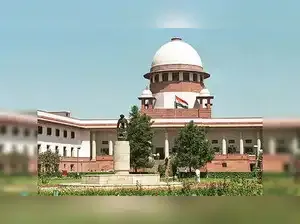
The Supreme Court on Thursday held that electricity consumers cannot be compelled to pay tariff charges for a power plant that had ceased to supply electricity to them. It said that power generating companies do not have an unconditional right to recover depreciation of the entire capital costs of plants from the consumers if these plants had stopped operations.
Restoring the Delhi Electricity Regulatory Commission's order that ruled against Tata Power Delhi Distribution Ltd (TPDDL), a bench comprising Justices PS Narasimha and Alok Aradhe said that the consumers cannot be required to pay for a service which they no longer receive.
It set aside the Appellate Tribunal for Electricity's 2025 judgment that had permitted TPDDL to recover the entire capital cost of the Rithala Combined Cycle Power Plant through depreciation over a period of 15 years despite the plant ceasing electricity supply after March 2018. TPDDL, joint venture entity between Tata Power Company and Delhi Power Company, cannot be permitted to burden consumers with tariff charges beyond March 2018, the apex court ruled, adding that the tariff determination is not merely a mathematical exercise but a regulatory balancing act
The apex court further said that the object of enabling reasonable cost recovery for utilities must be weighed against and calibrated with paramount obligation to safeguard consumer interest.
The dispute arose after the establishment of a temporary 108 MW gas-based power plant at Rithala in Delhi. The project was conceived as an emergency measure to meet peak electricity demand in the lead-up to the Commonwealth Games 2010. TPDDL had told the authorities that the plant would operate only for a short duration of 5-6 years, after which the land would revert to the Delhi Development Authority.
In 2017, the Commission determined the capital cost of the plant at Rs 197.70 crore against TPDDL's claim of Rs 320.17 crore. While it accepted a technical useful life of the plant of 15 years based on experts' certification, it restricted the operational and tariff recovery framework to six years. The plant was thus allowed to operate for supply purposes only till March 2018.
Restoring the Delhi Electricity Regulatory Commission's order that ruled against Tata Power Delhi Distribution Ltd (TPDDL), a bench comprising Justices PS Narasimha and Alok Aradhe said that the consumers cannot be required to pay for a service which they no longer receive.
It set aside the Appellate Tribunal for Electricity's 2025 judgment that had permitted TPDDL to recover the entire capital cost of the Rithala Combined Cycle Power Plant through depreciation over a period of 15 years despite the plant ceasing electricity supply after March 2018. TPDDL, joint venture entity between Tata Power Company and Delhi Power Company, cannot be permitted to burden consumers with tariff charges beyond March 2018, the apex court ruled, adding that the tariff determination is not merely a mathematical exercise but a regulatory balancing act
The apex court further said that the object of enabling reasonable cost recovery for utilities must be weighed against and calibrated with paramount obligation to safeguard consumer interest.
The dispute arose after the establishment of a temporary 108 MW gas-based power plant at Rithala in Delhi. The project was conceived as an emergency measure to meet peak electricity demand in the lead-up to the Commonwealth Games 2010. TPDDL had told the authorities that the plant would operate only for a short duration of 5-6 years, after which the land would revert to the Delhi Development Authority.
In 2017, the Commission determined the capital cost of the plant at Rs 197.70 crore against TPDDL's claim of Rs 320.17 crore. While it accepted a technical useful life of the plant of 15 years based on experts' certification, it restricted the operational and tariff recovery framework to six years. The plant was thus allowed to operate for supply purposes only till March 2018.