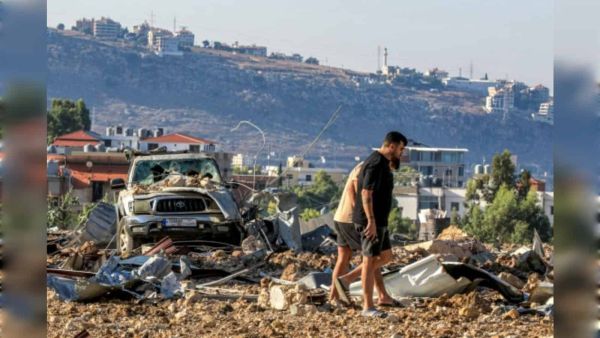
Lebanon and Israel are due to hold a fresh round of negotiations in Washington on May 14 and 15 as international efforts intensify to prevent further escalation in the Middle East and reinforce ceasefire initiatives along the border.
A US State Department official confirmed on Thursday, May 7, that representatives from both countries would meet in the US capital next week amid continuing regional tensions and diplomatic activity involving Washington, Tehran and regional mediators.
Talks to focus on security and political issues
Lebanese sources familiar with the discussions said the negotiations are expected to cover security and political matters, including border disputes, detainees, displaced civilians, reconstruction and proposals aimed at extending the existing truce.

According to the sources, Beirut is seeking progress towards a lasting ceasefire arrangement rather than a formal peace accord with Israel. Lebanese officials also reportedly informed Washington that any meeting involving President Joseph Aoun and Israeli Prime Minister Benjamin Netanyahu at this stage could complicate efforts to maintain stability.
The sources added that recent Israeli strikes on Beirut’s southern suburbs were viewed in Lebanon as an attempt to place pressure on the negotiations process ahead of the Washington meetings.
Israeli strikes and Hezbollah attacks continue
Military exchanges continued across southern Lebanon despite the diplomatic push.
Israeli warplanes carried out strikes on several towns including Al-Shahabiya, Ain Baal, Balat, Qaqaiyat Al-Jisr, Kfarsir, Adshit and Zifta. Additional raids were reported near Tyre, Bint Jbeil and Wadi Zibqin, according to Lebanon’s National News Agency.
Lebanese media also reported that an Israeli strike targeted a civil defence team linked to the Islamic Health Authority in Majdal Selm, causing injuries.
The Israeli army said it killed a Hezbollah operative accused of launching rockets at Israeli troops from the town of Jouaya. It also said Hezbollah launched several drones that exploded near Israeli soldiers in southern Lebanon.
Hezbollah announced separate drone attacks targeting an Israeli command position and a Merkava tank near Al-Bayada.
Israeli military spokesperson Avichay Adraee claimed Israeli forces had killed 220 Hezbollah fighters since the ceasefire brokered in mid-April, including 85 during the past week.
Netanyahu confirms killing of Hezbollah commander
Israeli Prime Minister Benjamin Netanyahu said Israel was responsible for a strike in Beirut that killed a senior Hezbollah commander from the group’s Radwan Force.
In remarks released by his office, Netanyahu said no individual threatening Israel would be beyond the reach of Israeli military operations.
Reports identified the commander as Ahmed Ghaleb Balout, who was described as a senior operational figure within Hezbollah.
Washington and Tehran edge towards temporary arrangement
Reuters reported, citing sources familiar with the negotiations, that the United States and Iran are nearing a limited temporary understanding aimed at ending the conflict and reopening the Strait of Hormuz.
The proposed arrangement would reportedly unfold in stages, beginning with halting military operations, followed by efforts to resolve the shipping crisis and then opening a short negotiation window for broader discussions.
The report said the draft framework falls short of a full peace agreement and reflects continuing disagreements over Iran’s nuclear programme and uranium enrichment activities.
Iranian Foreign Ministry spokesperson Ismail Baghaei said Tehran was still reviewing the proposal and would deliver its response through Pakistani mediation after internal consultations were completed.
Iranian Foreign Minister Abbas Araghchi also held talks with Pakistani Foreign Minister Ishaq Dar, with both sides stressing the importance of diplomacy and regional cooperation.
US imposes new sanctions on Iran
The United States announced a fresh round of Iran-related sanctions on Thursday, according to a notice published by the US Treasury Department.
The sanctions were introduced as Washington continued diplomatic efforts aimed at securing a temporary arrangement with Tehran to reduce regional tensions and reopen the Strait of Hormuz.
Pezeshkian calls for unity inside Iran
Iranian President Masoud Pezeshkian said he recently held extensive talks with Supreme Leader Mojtaba Khamenei during what he described as a frank and constructive meeting.
Pezeshkian said Iran was under increasing external pressure designed to weaken social cohesion and create unrest through economic strain.
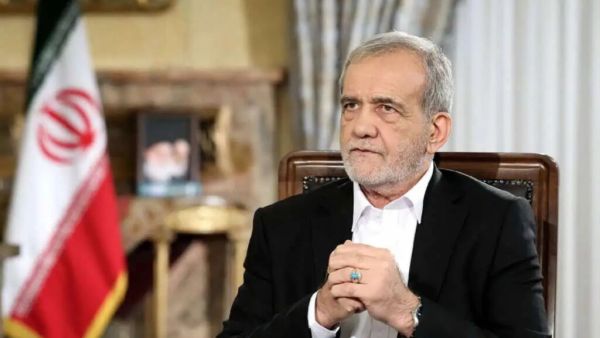
He said foreign powers were attempting to fuel dissatisfaction and destabilise the country, while urging Iranians to remain united despite political differences.
The Iranian president also accused opponents of targeting economic infrastructure and public institutions during the conflict in an attempt to trigger internal disorder.
Tehran returns to full operations
Authorities in Tehran announced that all ministries and government institutions in the capital province would resume full operations from Saturday, May 9.
Officials also said schools and universities would continue functioning according to guidance from the education authorities.
At the same time, reconstruction work began on Karaj’s B1 Bridge, which Iranian state media said was damaged during US strikes earlier in the conflict.
Oil prices fall amid hopes of diplomatic progress
Oil markets reacted positively to reports of possible diplomatic progress.
Brent crude fell by more than five percent to USD 96.06 a barrel, while West Texas Intermediate dropped to USD 89.87.
US President Donald Trump said negotiations aimed at ending the conflict were moving in a positive direction and suggested an agreement could be reached soon.
Trump had earlier announced a naval mission intended to assist commercial shipping through the Strait of Hormuz before later pausing the operation as negotiations advanced.
Strait of Hormuz blockade disrupts global trade
The crisis around the Strait of Hormuz continues to affect international trade, shipping and energy supplies.
The International Maritime Organization said around 1,500 vessels and approximately 20,000 crew members remain stranded in the Gulf region due to the blockade.
The disruption has contributed to rising fuel and food prices in several countries.
The World Food Programme warned that Somalia’s hunger crisis had worsened significantly, with 6.5 million people now facing severe food insecurity.
WFP officials said families were increasingly being forced to sell belongings, reduce meals and leave their homes in search of assistance.
India continues Gulf maritime operations
India said all Indian seafarers in the Gulf region remain safe despite tensions surrounding the Strait of Hormuz.
External Affairs Ministry spokesperson Randhir Jaiswal said 11 Indian ships had successfully crossed the strait, while authorities continued efforts to assist 13 additional vessels.
Shipping officials also said more than 2,999 seafarers had been brought home safely from the region in Gulf crisis.
Indian seafarers recount ordeal in Gulf crisis
Indian sailor Tithi Chiranjeevi told Reuters that crews stranded near Iran’s Khorramshahr port endured nightly missile and drone attacks after vessels became trapped for weeks because of the blockade.
“Around 10 to 20 missiles struck every night. No one could sleep,” he said after returning to India following a journey through Iraq, Armenia and Dubai.
Another sailor, Anant Singh Chauhan, said crew members feared they might never return home as explosions continued around the port area.
The International Maritime Organization estimated that nearly 20,000 crew members remain stranded aboard vessels in the Gulf region.
UAE documents damage linked to Iranian attacks
UAE Vice President Sheikh Mansour bin Zayed Al Nahyan issued a decree establishing a committee to document Iranian attacks and assess resulting damage.
The committee will compile evidence and create a registry intended to support future legal accountability efforts. Its work will include documenting military operations, evaluating losses and preserving forensic and technical evidence.
Vatican and Washington discuss peace efforts
US Secretary of State Marco Rubio met Pope Leo XIV and Vatican Secretary of State Cardinal Pietro Parolin during talks focused on regional developments and peace efforts.
The US State Department said the discussions highlighted shared commitments to peace and human dignity, while the Vatican stressed the importance of continued diplomatic efforts to end the conflict.
International concern grows over regional escalation
France said sanctions on Iran would remain in place as long as the Strait of Hormuz remained blocked.
French Foreign Minister Jean-Noel Barrot said the strategic waterway could not be used as a political tool or means of pressure.
Swiss authorities warned the conflict could threaten European energy security during the coming winter because of uncertainty over gas supplies.
China also voiced concern over the military escalation in the Gulf region following attacks targeting the UAE, calling for respect for regional sovereignty and protection of civilians.
Saudi Arabia rejects report on US military operation
A Saudi source denied reports suggesting Riyadh had intervened to halt a US naval operation intended to guide commercial vessels through the Strait of Hormuz.
The source told AFP that reports claiming Saudi Arabia denied the United States access to its airspace and military facilities were inaccurate, adding that US forces continue to have regular access to Saudi bases and airspace.
-
What is E-Cigarette? What is an e-cigarette? Know the myths and misconceptions about vaping?

-
Summer Traveling Guide: If you want to make summer holidays memorable, then you will find peace and beautiful views here.

-
Consumption of Fitness Supplements: Effects on Liver and Precautions

-
There will be chaos of nature in 13 states in the next 8 hours, storm will come at the speed of 75KM; Big alert from IMD
-
iPhone-like design and 5000mAh battery… itel’s new smartphone sets the tone, price is only