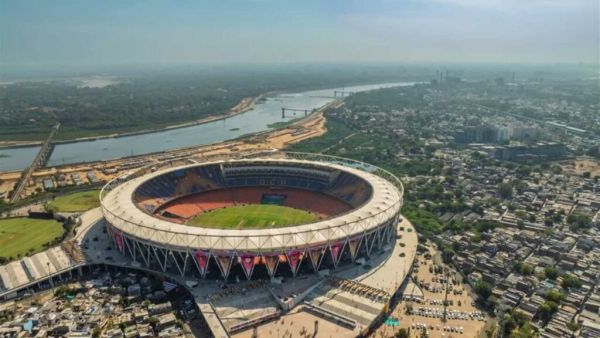
The Indian Premier League finals and the Narendra Modi Stadium have turned into a constant love story in recent years. Since 2022, the venue has hosted four IPL finals, and now, with the BCCI announcing the IPL 2026 playoffs schedule, Ahmedabad is once again set to stage the grand finale.
It is also worth noting that there was a pattern in the IPL where the final would often be hosted in the home city of the defending champions the following season. But this year, Chinnswamy stadium won’t host the marque event.
A noticeable shift in IPL final venues over the years
Since hosting first ever IPL game, the stadium has already witnessed four IPL finals and ready for the fifth one.
- 2026 – Narendra Modi Stadium, Ahmedabad
- 2025 – Narendra Modi Stadium, Ahmedabad
- 2024 – MA Chidambaram Stadium, Chennai
- 2023 – Narendra Modi Stadium, Ahmedabad
- 2022 – Narendra Modi Stadium, Ahmedabad
A broader look at the numbers further underlines how Ahmedabad has surged ahead in recent years.
- Ahmedabad – 4*
- Mumbai – 3
- Chennai – 3
- Kolkata – 2
- Bengaluru – 2
- Hyderabad – 2
- Dubai – 2
- Johannesburg – 1
This shift clearly shows how Ahmedabad has become the preferred destination in the current phase of the tournament.
Growing fan sentiment around repeated finals at one venue
The pattern has not gone unnoticed. Fans across platforms have consistently questioned why the IPL final continues to return to the same venue. The debate has only grown louder with time.
It is not limited to the IPL either. The ICC Cricket World Cup 2023 Final was also played at the same venue and several marquee international fixtures have been hosted there as well. This has led to a wider perception that the biggest matches are increasingly being centralised.
For many, the IPL final is more than just a game. It is about the atmosphere, the identity of the host city and the sense of occasion that comes with a new setting each year. When the venue becomes predictable, that sense of novelty begins to fade.
Understanding the logic behind Ahmedabad’s repeated selection
From a planning perspective, the reasons behind this trend are quite clear. The Narendra Modi Stadium offers unmatched capacity, modern infrastructure and streamlined logistics. It allows the organisers to host a larger crowd and deliver a visually grand event that matches the scale of the league.
With the IPL being one of the most watched sporting events in the world, these factors naturally hold significant weight. A bigger venue ensures wider access and higher revenue while also simplifying operational challenges.
The broader question of balance and representation in IPL finals
However, there is another side to this conversation. Cricket in India also thrives on regional passion and strong local identities. Across the country, there are several top-class venues from Rajiv Gandhi International Cricket Stadium, Hyerabad to Ekana Cricket Stadium, Lucknow that offer excellent facilities, large capacities and deeply engaged fan bases.
IPL connects with fans across different regions. Rotating the final across cities once reflected that diversity and allowed each venue to contribute to the league’s biggest night. It made the final feel fresh every season and kept the excitement intact.
Now, with repeated hosting at one venue, there is a growing concern that the league may be losing a part of that wider connect.
The BCCI’s preference is understandable, but a more balanced approach could help retain the uniqueness that once defined IPL finals.
Cricket news in India
-->-
Caught between caution and pragmatism, Bengal Muslims weigh first BJP govt in state

-
IBA seeks 10% compulsory fermented organic manure blending target by 2030

-
Horoscope Tomorrow, 11th May 2026: A Surge of Power, Ambition & Bold Moves, But Can You Handle It?

-
Alibaba to integrate Qwen AI with Taobao, launch agentic shopping, source says

-
Australia's Trump-aligned populists vow to fight mass migration after winning first lower house seat