
Consistent saving habits are key to financial discipline. Having a separate account solely for savings is recommended.
Digital banking and mobile phone apps have given us instant access to cash anywhere, anytime. Along with the ease of online transactions and seamless UPI integration, it is easy to lose track of transactions and account balances. With constant notifications of flash sales, instant checkouts, and subscriptions, it is important to be mindful of spending habits.

This is where a savings account is important. For individuals choosing to open a bank account online, it offers a structured way to manage money. By separating savings from daily spending and letting the balance earn interest, a savings account helps build consistency and financial discipline over time. It is important to understand how to use a savings account to maximise its earning potential and increase your savings.
Building the habit of setting money aside
Consistent saving habits are key to financial discipline. Having a separate account solely for savings is recommended. Individuals can park a portion of their monthly income in this account and earn interest.
Instead of treating savings as a future financial plan, individuals can begin to allocate money with intent. Even small, regular deposits can gradually add up to a sizeable amount for the future. This repeated behaviour builds the habit of saving and reduces dependence on short-term borrowing for routine expenses.
Banks such as IDFC FIRST Bank calculate interest daily and credit it monthly. Over time, the interest earned is added to the account balance, which then continues to earn additional interest. This compounding effect can gradually enhance overall savings growth.
Building good financial habits
Discipline can only be achieved with consistent repetition of good habits. Financial discipline improves significantly when individuals are aware of where their money is being spent. A savings account used for everyday spending provides a clear record of transactions, making it easier to spot spending patterns.
By regularly checking account activity, individuals can identify unnecessary expenses and adjust their spending habits. This monitoring creates a sense of control, identifies areas where money can be saved, assists with budgeting monthly income, and helps individuals make better financial choices.
Using interest as a financial incentive
Interest earnings may seem small in the short term, but when systematically and consistently applied, they grow with time. Using digital tools such as a savings account interest calculator helps individuals evaluate growth by calculating how balances may increase with regular deposits.
Seeing this potential earning can motivate individuals to maintain their savings habits. Instead of withdrawing funds frequently, they may choose to keep money in the account for longer periods to maximise interest earnings.
A simple way to stay consistent
Financial discipline becomes easier with a structured plan for budgeting, savings and investments. A commonly recommended approach is the 50-30-20 rule, which divides income into 50% for needs, 30% for wants, and 20% for savings.
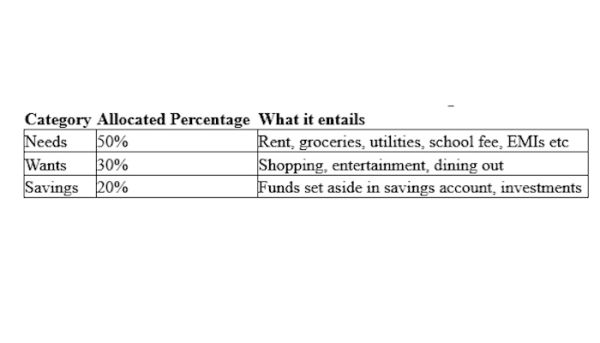
Funds set aside in savings account, investments
Following this structure ensures that saving is a priority. Setting aside a fixed portion of income each month helps build consistency over time. Use a savings account interest calculator to evaluate your savings with monthly deposits.
Getting started with a dedicated savings account
Digital banking has made opening a bank account online a simple, paperless and quick process. It can be done in 5 easy steps:
- Head to the mobile app or website of your chosen bank
- Enter your personal details like name, phone number, and Aadhar information
- Upload required documents
- Complete Video KYC with your PAN details
- Start transacting
This allows individuals to begin building financial discipline without delay.
Creating discipline through small actions
Rome was not built in a day, and neither is financial discipline. It comes from small, repeated habits rather than large one-time actions. A dedicated savings account creates a clear separation between spending and saving.
Simple practices that can help are setting aside money immediately after receiving income, avoiding frequent withdrawals, and reviewing account balances periodically. Over time, these actions become habits that support better financial control. By opening a bank account online and using tools such as a savings account interest rate calculator, individuals can gradually build habits that support long-term financial stability.
-
Dhoni will play the last match of his IPL career on this day, then he will retire.

-
Delhi to host 22nd Commonwealth Table Tennis Championship in 2026

-
Hyderabad Shocker: Men Attack Restaurant Staff Over Rs 5,900 Bill Discount Row

-
Pune Horror: Father becomes executioner! In Pune, a 9 year old innocent girl was murdered, her body burnt in the house, then… Pune Horror Father Kills 9 Year Old Daughter Over Suspected Report Card Tampering

-
किस राज्य में सबसे ज्यादा रेलवे स्टेशन? महाराष्ट्र-पश्चिम बंगाल तो टॉप-3 में भी नहीं