
Social Media Ads: Online scammers craft advertisements with such cunning that they appear completely authentic. They replicate the names, logos, and designs of major companies to ensure users harbor no suspicion.
Social Media Ads: In today's digital age, social media has become an integral part of our lives. We spend our days scrolling through platforms like Instagram, Facebook, and YouTube. During this time, we encounter numerous enticing advertisements—ranging from affordable smartphones and heavily discounted products to offers promising opportunities to earn money from the comfort of our homes. But have you ever stopped to wonder how many of these ads are genuine, and how many are merely elaborate scams?
How Do These Fake Ads Work?
Online scammers craft advertisements with such cunning that they appear completely authentic. They replicate the names, logos, and designs of major companies to ensure users harbor no suspicion. The moment you click on one of these ads, you are redirected to a fake website where you are prompted to provide personal information or payment details.
Often, these ads employ tactics such as "Limited Time Offers" or "Today-Only Deals" to create a sense of urgency, compelling you to make a hasty decision. Driven by this haste, people often transfer money without conducting proper verification.
What Types of Scams Are Most Prevalent?
Currently, the most common scams seen on social media involve fake shopping ads, job offer schemes, and investment opportunities. People are lured in with the promise of expensive gadgets at rock-bottom prices. Meanwhile, other ads make claims—such as "Earn Thousands from Home"—that are entirely false. Furthermore, instances of data theft—perpetrated by tricking users into downloading fake applications—are also on the rise.
How Can You Identify Fake Ads?
If an advertisement appears to be *too* good to be true, proceed with caution. Always verify the website's URL; if it contains irregularities or unusual spelling, it is likely a fake. Additionally, offers involving excessively high discounts or deals that seem implausible serve as major warning signs that something is amiss. Avoid clicking on any unfamiliar links, and never share your banking details or OTP information.
How to Stay Safe?
It is crucial to remain vigilant while using social media. Make purchases only from trusted websites and official apps. If an advertisement appears suspicious, report it. Additionally, it is essential to keep your phone updated with security patches and to use antivirus software. Social media advertisements can be just as dangerous as they appear attractive. A little caution and common sense can save you from significant financial loss.
-
Bihar NDA Government Prepares for Major Cabinet Expansion on May 7

-
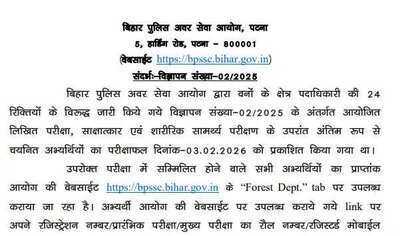
Final Marks Released for BPSSC Range Officer of Forest Recruitment 2025
-
Indian illustrator Anand RK, journalist Suparna Sharma win Pulitzer Prize for illustrated reporting

-
BJP Appoints J.P. Nadda as Central Observer for Assam Legislative Party Leadership

-
Rare Oriental Pied Hornbill Spotted in Arunachal Pradesh, Signaling Ecological Health