
If you’ve been scrolling through shopping apps lately, you’ve probably noticed that something has changed on many platforms. There is less noise, and you do not have to scroll as much. This is because India’s ecommerce story, which was built on endless choices — more products, more sellers, more everything — is starting to crack. Instead of trying to be everything to everyone, a new crop of D2C marketplaces, focused on sharply defined categories, is mushrooming.
Interestingly, this shift is happening at a time when quick commerce players are doubling down on speed and convenience. While they race to deliver groceries in 10 minutes, investors are looking toward platforms that sit between discovery and fulfilment, where trust, community, and expertise carry more weight than sheer assortment.
The latest signal came last week, when HyugaLife, a Mumbai-based D2C protein and supplements marketplace, raised ₹100 Cr (nearly $10.5 Mn) in a Series A round led by IvyCap Ventures. A couple of months earlier, D2C petcare marketplace Supertails also raised $30 Mn from Fireside Ventures and Saama Capital to build a full-stack pet care ecosystem.
Together, these moves make one thing clear – micro-vertical commerce is attracting serious capital. And while more players are entering the space, it doesn’t feel crowded just yet. If anything, it feels like the early build-out of a much larger opportunity – one that’s pulling in both founders and investors looking for the next big category.
“At IvyCap, we look for category ownership potential, and that’s precisely what’s attracting capital to this space,” said IvyCap Ventures’ founder Vikram Gupta.
According to him, these are large, underpenetrated markets riding a premium consumption wave. In the right categories, repeat behaviour kicks in early, improving lifetime value and customer acquisition cost over time. And the upside isn’t just limited to commerce – there’s room to expand into private labels, subscriptions, services, even fintech layers like insurance or financing.
“Recent capital raises by players like Supertails and HyugaLife are a signal that the market is validating category-depth strategies, not just marketplace models,” Gupta added.
What’s Driving The Shift?What’s driving this shift isn’t just supply. It’s a deeper change in how people are choosing to buy. For one, especially in metros and tier I cities, the conversation is moving beyond price. In categories like pet care, wellness and nutrition, consumers are asking questions like – what works and whom to trust? Therefore, the cheapest options do not have the advantage anymore.
At the same time, younger consumers, millennials and Gen Z, are far more involved. They research, compare, and often arrive at platforms with a clear idea of what they want. Naturally, they lean toward platforms that help them make better decisions, not just ones that offer more options.
Then, there’s the rise of identity-led consumption. Pet parents, fitness enthusiasts, clean beauty or K-beauty followers are more than customer segments. They have evolved into communities. And in many cases, buying something becomes an extension of that identity. And that’s why stronger platforms have started to form.
“Traditional marketplaces win where price and convenience are the priorities. For vertical D2C, it’s trust,” said Shreyans Jain, the cofounder of Nutrabay.
Where Lies The Moat?Micro-vertical marketplaces tend to do well where depth matters more than speed or scale. As Jain puts it, they may not always outperform across the board, but they can capture meaningful share in the right conditions, especially where decisions are complex, repeat usage is high, and trust plays a central role.
It helps to look at what they’re competing against. Horizontal platforms are built for scale. Quick commerce is built for speed. Neither is really optimised for considered purchases, where people want guidance, verified sourcing, and a sense of confidence in what they’re buying.
That’s the gap these platforms are filling.
“A platform like Supertails, for example, is not just selling pet food, it’s creating a trusted environment where a first-time pet parent can figure out nutrition, health and care with confidence. That’s a very different value proposition from what large horizontal or quick commerce platforms offer,” said Gupta.
Yes, acquiring customers can be expensive at the outset. But with strong repeat behaviour, retention improves, subscriptions kick in, and lifetime value starts to justify those early costs.
As far as competitive advantages are concerned, private labels and exclusive partnerships help with margins, while community and content build engagement and make it harder for users to switch. Over time, platforms also build proprietary data on high-intent users, which improves personalisation.
Of course, not all of them will get it right. As Gupta pointed out, platforms that only aggregate products without a clear point of view are easy to replicate. Over-reliance on paid acquisition is another red flag. And once larger players spot high-performing SKUs, they can move quickly to fill the gap.
Niche D2C Is Just Getting StartedZoom out, and it still feels like day one. While there are early players across categories, the white space is wide open. New opportunities are emerging across gifting, eyewear, sneakers and culture, nutrition, fragrance, chocolates, pet care, and intimate wellness. These are categories where D2C private labels can improve margins, platform models can scale, and there’s already some precedent for strong exits.
Right now, the most visible traction is in pet care, health and wellness supplements, and dermatology-led skincare. The pattern is consistent – high involvement, strong repeat rate, and consumers willing to pay a premium for trust.
The next wave could go even deeper. Preventive healthcare platforms that combine diagnostics, supplements and consultations. Senior care ecosystems are still largely underserved. Men’s health and longevity is now moving toward more serious, science-backed positioning. And premium sexual wellness is unlocking demand.
The next generation of winners won’t just be commerce platforms. They’ll look more like ecosystems – blending products, services, and community into a single experience.
Looking ahead, that could mean pet care platforms expanding into insurance and health tracking, AI-led personalisation shaping wellness journeys, or curated platforms bringing global premium brands into India.
At its core, the playbook is simple. These companies aren’t trying to out-scale Amazon or out-speed Blinkit. They’re building trust, depth, and expertise in categories where those things actually matter. And the ones that stay focused, without rushing to go horizontal, are likely to define what comes next.
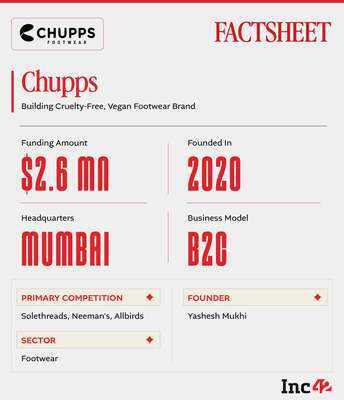
SPOTLIGHT: Chupps’ Biodegradable Twist To Open Footwear- Chupps is a D2C footwear brand that sells 100% vegan, plastic-free sliders and sandals for millennials and Gen Z. Targeting the mass market with its affordable products, it competes with the likes of Solethreads and Yoho in the open footwear category.
- The D2C brand’s flagship innovation is its True Zero technology, which allows its sliders to fully biodegrade within two years. Its portfolio also comprises a wide range of V-Straps, and Clogs for both men and women.
- The startup recently launched an innovation centre in Gurugram, which will focus on strengthening R&D on sustainable materials. Currently selling products through its own website and marketplaces such as Myntra and Amazon, Chupps is also expanding its offline presence across key urban markets.
HealthFab Bags Funds: The menstrual hygiene startup has raised ₹20 Cr in its Series A round led by Atomic Capital to expand its wellness portfolio, scale omnichannel distribution, and boost manufacturing, as it looks to evolve beyond period care and grow its user base significantly.
Amazon Scales Up Q-Comm Play: The ecommerce giant’s quick commerce bet is gaining momentum in India, with CEO Andy Jassy saying that Amazon Now orders are growing 25% month-on-month. This comes as the company is ramping up its dark store network and investments to catch up with rivals like Blinkit and Zepto.
Eternal Shines In Q4: The foodtech major reported a 4.5X YoY jump in profit to ₹174 Cr in Q4 FY26, driven by Blinkit’s growth and improved EBITDA. However, higher costs dragged the full-year profit down 31% YoY despite strong revenue growth.
The Deep Dive The Operator Question
In a market like India, what makes operating a D2C micro-vertical marketplace challenging, and what do startups need to get right to make this model work?
Speaking to Inc42, HyugaLife cofounder and CEO Sachin Parikh said that building a D2C micro-vertical marketplace in India is a discipline game. He said the business needs to strike a careful balance between product portfolio, customer acquisition costs, contribution margins, and, most importantly, ensuring customers keep coming back.
He also shared a few strategies that have so far worked for HyugaLife:
- Curated Assortment Over Scale: Parikh said that startups should initially have a tightly-selected product mix, instead of a wide catalogue. “We didn’t chase 10-minute delivery on day one, nor did we launch with a bloated assortment or rely on gamification,” he added.
- Fundamentals First: Strong focus on fundamentals like sharp pricing, strong in-stock rates, a clean tech stack enabling seamless checkout, and a clearly defined target audience. “Traffic SKUs drive discovery, while margin SKUs sustain economics.”
- Measured Growth: HyugaLife does not believe in growth-at-all costs. As per Parikh, the startup scaled, paused to optimise, and then scaled again once the numbers made sense. Every growth decision was tied to unit economics factors like LTV/CAC. Additionally, raising funds from investors, which align with the patient growth vision, is another important factor in consistent growth.
The post The Era Of Micro-Vertical Marketplaces appeared first on Inc42 Media.
-
Taiwan's Lai returns from Eswatini trip amid China objection

-
India describes attack on Fujairah 'unacceptable'

-
Salman Khan And Kareena Kapoor All Set To Reunite For Raj & DK's Superhero Film?

-
DesertBoard bets on a homegrown future for construction

-
LPG New Rules: Your LPG connection may be cut off! Otherwise, do this immediately..