In the aftermath of Covid, the Tata Group identified semiconductors as a key future growth bet, aligning with a broader push toward more resilient, localised supply chains.
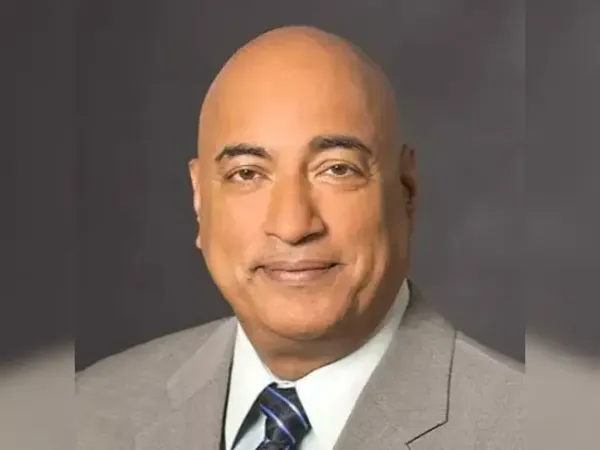
As part of this effort, Himachal Pradesh-born, US-based semiconductor veteran Randhir Thakur agreed to take charge in 2022 after multiple discussions led by Tata Sons chairman N Chandrasekaran aimed at persuading him to return to India to build the business from scratch. The results have been rapid: in just four years, Tata Electronics
has scaled at such a pace that it’s surpassed group unit Titan Co. in revenue.
From a Rs 400 crore base, the company has grown to a Rs 1.3 lakh crore revenue run rate, with ambitions of becoming a $30 billion business as semiconductor fabrication and packaging scale up. Already among the group’s top five by revenue, it is profitable and investing aggressively in future capabilities across electronics manufacturing
services (EMS), chip making and packaging. “We are in the right business at the right time,” Thakur, chief executive officer and managing director, Tata Electronics, told Kala Vijayraghavan & Dia Rekhi in an interview.
“This is a proven business — no one is risking capital.” Tata Electronics had been highlighted as one of the areas of concerns by Tata Trusts chairman Noel Tata at a recent Tata Sons board meeting. The company’s EMS facilities include its facility in Hosur as well as the Pegatron and Wistron plants it acquired in Tamil Nadu and Karnataka. It’s also building India’s first fab in Dholera as part of a Rs 91,000 crore project and an outsourced semiconductor assembly and test (OSAT) unit in Assam, pegged at Rs 27,000 crore.
Of this, central and state subsidies will absorb around 70% of the total cost. The electronics and semiconductor arm of the Tata Group has already signed on global customers
and partners such as PSMC, Intel, Tokyo Electron, Qualcomm, Analog Devices, Bosch and Rohm — 70% of the Dholera fab’s capacity is already committed.
“Our chairman has been clear on building capabilities first and it becomes a flywheel; one should not get hung up on numbers. The battle is about getting to the finish line in a global sector. Execution is key,” Tata Electronics chief executive officer Randhir Thakur said. Edited excerpts:
Tata Electronics has scaled rapidly in a short span of time. Can you walk us through its growth, current scale and future targets?
The collective strength of Tata (Group) came into play so that Tata Electronics could really scale and grow faster. The company started from hiring folks from Titan who have experience in precision engineering. That model continues as we expand, especially for chip making and for OSAT packaging. For example, for Dholera, a lot of the steel is coming from Tata Steel. We use a lot of air conditioning, chillers etc. from Voltas, a lot of the capability on the software side for automation from TCS. This collective strength helped us grow faster. We have had three years of full operations. Total revenue today is about Rs 1.3 lakh crore. We started with Rs 400 crore or so three years ago. The company has grown quite rapidly. We are about a $15 billion company today and in the next five years aspire to be a $30 billion company with all the capability like packaging as well as fab in place.
There have been some stakeholder concerns about the scale of investments made by Tata Sons in this business and the comparative returns. How does the profitability look?
We are already profitable. To go from a negative ebitda three years ago to be able to do more than Rs 4,000 crore of ebitda this year is a remarkable journey. Our focus will continue to be around growing the customer and employee capability base. In India, Tata Electronics has been the fastest growing electronics company. The duality of the incentive structure has been extremely beneficial to take these high capital-intensive businesses such as fab and packaging. We are 100% owned by Tata Sons and that investment smoothly keeps on coming. For the fab and the packaging side, the funding is secured. On the EMS (electronics manufacturing services) side, we have started
(funding) from our own cash generation. We fund our work and there is not much need for us for future capital.
We are fortunate (to be) among the top five companies in the Tata Group from the revenue standpoint. The return that Tata Electronics is delivering on invested capital is really at par with what the companies at our size (and) scale do and what Tata Sons expects us to do.
Net of subsidies, what kind of investments have already gone into and ill subsequently go into both of your large capital projects in Assam and Gujarat?
The investments we have made so far are in the range of Rs 9,000-10,000 crore. This will scale only when the semicon fab and the packaging businesses come up. We’ll probably put another Rs 15,000-20,000 crore. In terms of financial constraints, at this stage we don't need to go ask for any addition.
What is your strategy to build a worldclass, diversified electronics and semiconductor player?
For our business, three things are very important — technology, talent, and capital. All these three need to be in harmony. The focus has been getting the technology. For (the) fab, we wanted to make sure we mitigate any risk so we invested to have Powerchip Semiconductor Manufacturing Corp (PSMC) as our technology partner. For talent, we hired from 16 countries. And on capital, a combination of investment from the Tata (Group) and also importantly the government’s vision to invest in this sector
and provide lucrative incentives…. All these elements had to come together. At this stage we are very comfortable.
Semiconductor investments are capital-intensive and risky. How are you managing technology and market risks?
The chip-making business always has different challenges and they change over time. We find ourselves in a very fortunate situation, given the supply chain challenges the world over, given India's own appetite to have domestic chips made in the country.
Tata Electronics is going into the chip making business on proven technology nodes. We wanted to make sure we mitigate any technology risk. That’s why we chose five nodes with our partner (PSMC)–28 nanometre, 14 nanometre, 55 nanometre, 90 nanometre, and 130 nanometre. There’s so much demand in these nodes — 60% of the
worldwide chip appetite and needs are addressed by these nodes. Only 40% is addressed by the advanced node. That mix with the AI and other end applications is going to only improve (demand) for the mature node. Also, we have identified customers who are working with us on these nodes.
In fact, 70% of the capacity for our Dholera fab is already committed to our customers. So the key for us is really execution and to be able to meet our customers' demand.
This is a business driven by Moore's law — It is always on a roadmap. So for us, this is our starting point. It’s not our end state.
As the technology will evolve when our customers’ needs will evolve. We find so much demand in the markets like automotive (and) AI. When there is a need for us to go into the advanced node, at the right time, we can always consider that.
How sustainable is the business beyond government incentives like Production-Linked Incentive (PLI) scheme for smartphones and India Semiconductor Mission (ISM)? What are your expectations from PLI 2.0 and ISM 2.0?
We always look at the business we are in to be able to stand on its own. The PLI policy has been very helpful. This has been one of the most successful schemes. PLI 1.0 has given an opportunity to make mobile phones as the largest exported goods from this country. The next step is around PLI 2.0. And that’s going to materialise. We are
actively working with the Ministry of Electronics and Information Technology (MeitY). In PLI 2.0, this scheme will come through with the next level of investments as well as next capabilities development to reduce value gap against competitors. This really meets our requirements because we want to localise this industry more, add more capability, grow more skill (and) grow more revenue.
ISM 1.0 was a very effective scheme because 10 odd packaging and other facilities have come into play. So far the progress has been very good but there's more to be done. There is so much opportunity and so we have to invest a lot in this industry. ISM 2.0 is progressing well, we have provided our input. It’s going to help bring in some of the other electronics and chip making capabilities. The whole power devices area is open. Alot of the advanced capabilities are an opportunity. (For) ISM 2.0, there are a lot of
places where we will be able to use that capital very effectively to bring the semiconductor and chip capability to the next level.
How are you managing supply chain risks and localisation, especially at a time when there's an emerging regime of access control?
We always have supply chain concerns and the logistics concerns to secure. The benefit of having this factory in India is that unlike some of the other countries, most of the equipment that comes into our factories is coming from the US, Europe, Korea, Japan, Singapore. In all of these countries, we do not really have any supply chain related risk. That said, when we operate the factory of that complexity, the supply chain really becomes the bedrock of securing everything on time. We are putting together a very strong supply chain organisation. We are (also) forming strategic partnerships with most critical players, whether it is lithography or deposition equipment, so that we do not have interruption because of the geopolitical part. But this will always be a risk to watch like any semiconductor company.
What role do acquisitions and partnerships play in your strategy?
The strategy of the company is to grow the business both organically and inorganically. We will continue the organic scaling of the business on our eight sites and build our factories. Where possible, we will do joint ventures and if there are assets available, which are going to greatly benefit our vision to grow the company, we’ll do acquisitions. We evaluate each opportunity on its own merit. We’ll look at (whether) it is needed by the customer, (whether) it is financially viable and also look at the timing. Not all opportunities are created equal.
As part of this effort, Himachal Pradesh-born, US-based semiconductor veteran Randhir Thakur agreed to take charge in 2022 after multiple discussions led by Tata Sons chairman N Chandrasekaran aimed at persuading him to return to India to build the business from scratch. The results have been rapid: in just four years, Tata Electronics
has scaled at such a pace that it’s surpassed group unit Titan Co. in revenue.
From a Rs 400 crore base, the company has grown to a Rs 1.3 lakh crore revenue run rate, with ambitions of becoming a $30 billion business as semiconductor fabrication and packaging scale up. Already among the group’s top five by revenue, it is profitable and investing aggressively in future capabilities across electronics manufacturing
services (EMS), chip making and packaging. “We are in the right business at the right time,” Thakur, chief executive officer and managing director, Tata Electronics, told Kala Vijayraghavan & Dia Rekhi in an interview.
“This is a proven business — no one is risking capital.” Tata Electronics had been highlighted as one of the areas of concerns by Tata Trusts chairman Noel Tata at a recent Tata Sons board meeting. The company’s EMS facilities include its facility in Hosur as well as the Pegatron and Wistron plants it acquired in Tamil Nadu and Karnataka. It’s also building India’s first fab in Dholera as part of a Rs 91,000 crore project and an outsourced semiconductor assembly and test (OSAT) unit in Assam, pegged at Rs 27,000 crore.
Of this, central and state subsidies will absorb around 70% of the total cost. The electronics and semiconductor arm of the Tata Group has already signed on global customers
and partners such as PSMC, Intel, Tokyo Electron, Qualcomm, Analog Devices, Bosch and Rohm — 70% of the Dholera fab’s capacity is already committed.
“Our chairman has been clear on building capabilities first and it becomes a flywheel; one should not get hung up on numbers. The battle is about getting to the finish line in a global sector. Execution is key,” Tata Electronics chief executive officer Randhir Thakur said. Edited excerpts:
Tata Electronics has scaled rapidly in a short span of time. Can you walk us through its growth, current scale and future targets?
The collective strength of Tata (Group) came into play so that Tata Electronics could really scale and grow faster. The company started from hiring folks from Titan who have experience in precision engineering. That model continues as we expand, especially for chip making and for OSAT packaging. For example, for Dholera, a lot of the steel is coming from Tata Steel. We use a lot of air conditioning, chillers etc. from Voltas, a lot of the capability on the software side for automation from TCS. This collective strength helped us grow faster. We have had three years of full operations. Total revenue today is about Rs 1.3 lakh crore. We started with Rs 400 crore or so three years ago. The company has grown quite rapidly. We are about a $15 billion company today and in the next five years aspire to be a $30 billion company with all the capability like packaging as well as fab in place.
There have been some stakeholder concerns about the scale of investments made by Tata Sons in this business and the comparative returns. How does the profitability look?
We are already profitable. To go from a negative ebitda three years ago to be able to do more than Rs 4,000 crore of ebitda this year is a remarkable journey. Our focus will continue to be around growing the customer and employee capability base. In India, Tata Electronics has been the fastest growing electronics company. The duality of the incentive structure has been extremely beneficial to take these high capital-intensive businesses such as fab and packaging. We are 100% owned by Tata Sons and that investment smoothly keeps on coming. For the fab and the packaging side, the funding is secured. On the EMS (electronics manufacturing services) side, we have started
(funding) from our own cash generation. We fund our work and there is not much need for us for future capital.
We are fortunate (to be) among the top five companies in the Tata Group from the revenue standpoint. The return that Tata Electronics is delivering on invested capital is really at par with what the companies at our size (and) scale do and what Tata Sons expects us to do.
Net of subsidies, what kind of investments have already gone into and ill subsequently go into both of your large capital projects in Assam and Gujarat?
The investments we have made so far are in the range of Rs 9,000-10,000 crore. This will scale only when the semicon fab and the packaging businesses come up. We’ll probably put another Rs 15,000-20,000 crore. In terms of financial constraints, at this stage we don't need to go ask for any addition.
What is your strategy to build a worldclass, diversified electronics and semiconductor player?
For our business, three things are very important — technology, talent, and capital. All these three need to be in harmony. The focus has been getting the technology. For (the) fab, we wanted to make sure we mitigate any risk so we invested to have Powerchip Semiconductor Manufacturing Corp (PSMC) as our technology partner. For talent, we hired from 16 countries. And on capital, a combination of investment from the Tata (Group) and also importantly the government’s vision to invest in this sector
and provide lucrative incentives…. All these elements had to come together. At this stage we are very comfortable.
Semiconductor investments are capital-intensive and risky. How are you managing technology and market risks?
The chip-making business always has different challenges and they change over time. We find ourselves in a very fortunate situation, given the supply chain challenges the world over, given India's own appetite to have domestic chips made in the country.
Tata Electronics is going into the chip making business on proven technology nodes. We wanted to make sure we mitigate any technology risk. That’s why we chose five nodes with our partner (PSMC)–28 nanometre, 14 nanometre, 55 nanometre, 90 nanometre, and 130 nanometre. There’s so much demand in these nodes — 60% of the
worldwide chip appetite and needs are addressed by these nodes. Only 40% is addressed by the advanced node. That mix with the AI and other end applications is going to only improve (demand) for the mature node. Also, we have identified customers who are working with us on these nodes.
In fact, 70% of the capacity for our Dholera fab is already committed to our customers. So the key for us is really execution and to be able to meet our customers' demand.
This is a business driven by Moore's law — It is always on a roadmap. So for us, this is our starting point. It’s not our end state.
As the technology will evolve when our customers’ needs will evolve. We find so much demand in the markets like automotive (and) AI. When there is a need for us to go into the advanced node, at the right time, we can always consider that.
How sustainable is the business beyond government incentives like Production-Linked Incentive (PLI) scheme for smartphones and India Semiconductor Mission (ISM)? What are your expectations from PLI 2.0 and ISM 2.0?
We always look at the business we are in to be able to stand on its own. The PLI policy has been very helpful. This has been one of the most successful schemes. PLI 1.0 has given an opportunity to make mobile phones as the largest exported goods from this country. The next step is around PLI 2.0. And that’s going to materialise. We are
actively working with the Ministry of Electronics and Information Technology (MeitY). In PLI 2.0, this scheme will come through with the next level of investments as well as next capabilities development to reduce value gap against competitors. This really meets our requirements because we want to localise this industry more, add more capability, grow more skill (and) grow more revenue.
ISM 1.0 was a very effective scheme because 10 odd packaging and other facilities have come into play. So far the progress has been very good but there's more to be done. There is so much opportunity and so we have to invest a lot in this industry. ISM 2.0 is progressing well, we have provided our input. It’s going to help bring in some of the other electronics and chip making capabilities. The whole power devices area is open. Alot of the advanced capabilities are an opportunity. (For) ISM 2.0, there are a lot of
places where we will be able to use that capital very effectively to bring the semiconductor and chip capability to the next level.
How are you managing supply chain risks and localisation, especially at a time when there's an emerging regime of access control?
We always have supply chain concerns and the logistics concerns to secure. The benefit of having this factory in India is that unlike some of the other countries, most of the equipment that comes into our factories is coming from the US, Europe, Korea, Japan, Singapore. In all of these countries, we do not really have any supply chain related risk. That said, when we operate the factory of that complexity, the supply chain really becomes the bedrock of securing everything on time. We are putting together a very strong supply chain organisation. We are (also) forming strategic partnerships with most critical players, whether it is lithography or deposition equipment, so that we do not have interruption because of the geopolitical part. But this will always be a risk to watch like any semiconductor company.
What role do acquisitions and partnerships play in your strategy?
The strategy of the company is to grow the business both organically and inorganically. We will continue the organic scaling of the business on our eight sites and build our factories. Where possible, we will do joint ventures and if there are assets available, which are going to greatly benefit our vision to grow the company, we’ll do acquisitions. We evaluate each opportunity on its own merit. We’ll look at (whether) it is needed by the customer, (whether) it is financially viable and also look at the timing. Not all opportunities are created equal.