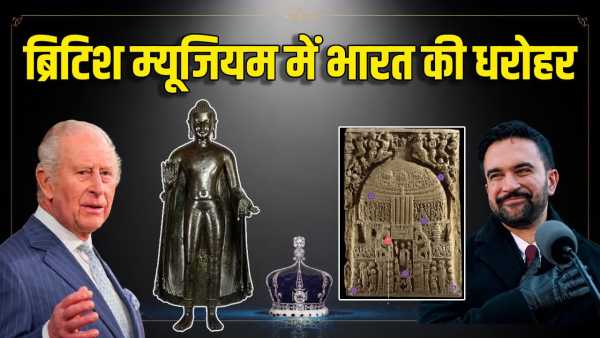
From Sultanganj Buddha to Tipu Sultan's sword, everything is kept in the British Museum.
New York Mayor Zoharan Mamdani has advocated returning the Kohinoor diamond present in Britain to India. Mamdani, who is originally of Indian origin, made this demand when the King of Britain was on a tour of America. Mamdani even said that if he got a chance, he would ask the King of Britain to return India's precious Kohinoor diamond to him. This diamond is currently kept in the Jewel House of the Tower of London.
This statement of Mamdani went viral. After this, experts started trying to find out how many things Britain still has from India? Let us understand in detail.
Britain has even diamonds, jewels and statues
Not only Kohinoor, many historical and cultural heritages of India are still in Britain. This issue has been under discussion for a long time. Some intellectuals and leaders have raised the demand for the return of these items. This has increased awareness among the people. Many things from India are kept in the museums of Britain. These include diamonds, gems, sculptures, manuscripts and artefacts. These objects are an important part of India's history. Their cultural and religious importance is also very great.
How did Kohinoor reach Britain after returning from Iran to India?
Kohinoor diamond remains the most discussed. This is considered the identity of India. It remained with many rulers. Later it became part of the British crown. India has been demanding its return for a long time, but has not been successful yet. This diamond was with the Mughals. When the Iranian ruler attacked India, he took this diamond into his possession from the Mughal emperor Rangeela on the pretext of exchanging his turban. Then when Nadir Shah died, this diamond came back to Maharaja Ranjit Singh of Punjab through his close associate Ahmed Shah.
New York Mayor Zoharan Mamdani has advocated returning the Kohinoor to India.
After the death of Maharaja Ranjit Singh, the officers of the East India Company almost took over his kingdom because Ranjit Singh's heir Dilip Singh was very young. The flag of the East India Company was hoisted on his fort in Lahore and the precious diamond Kohinoor came into the possession of the British. Then the British officers sent it to Britain. After reaching there, many queens of Britain wore it. That diamond is still with Britain.
Tipu Sultan's sword and ring also
Tipu Sultan's sword, ring and his famous tiger model are also in Britain. This model shows a tiger attacking a British soldier. This is a symbol of his thinking and struggle. The historical importance of these items is very great.
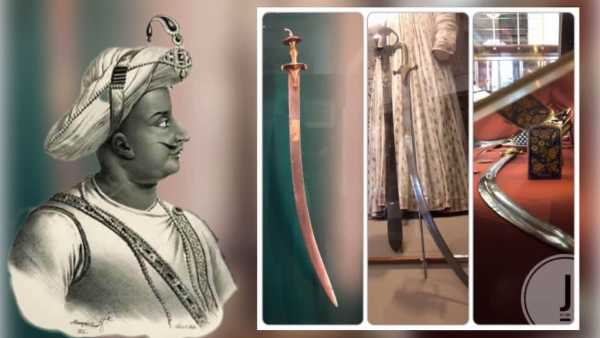
Tipu Sultan's sword and ring kept in the London Museum.
Amaravati Stupa sculptures and Sultanganj Buddha
The huge bronze statue of Lord Buddha found from Bihar is also kept in Birmingham Museum and Art Gallery, Britain. The British also took this with them at the time when they ruled India.Many statues related to Amaravati Stupa of Andhra Pradesh are kept in Britain. These are excellent examples of ancient Buddhist art. These were taken from India during the colonial period. Now India has been continuously demanding their return.
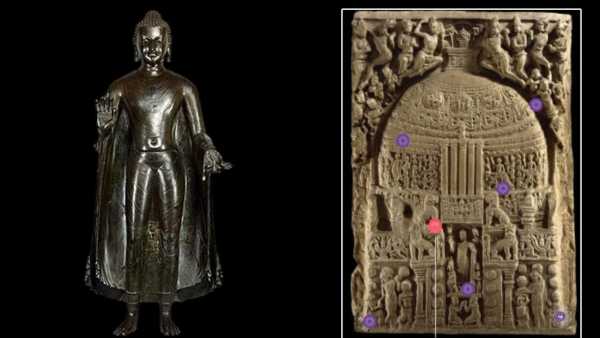
Many sculptures related to Sultanganj Buddha and Amravati Stupa.
Religious and cultural sculptures
Statues of gods and goddesses like Saraswati are also in Britain. These are related to Indian culture and faith. People feel emotional pain due to their being abroad. It is not only art but also a matter of faith. Therefore, India wants the things related to it to be returned to Britain.
Rare Manuscripts- Granthmughal and Shahjahan's Wine Cup
Many rare manuscripts are also kept in Britain. These include many texts in Sanskrit and Persian. These are part of the knowledge and tradition of India. These are studied by researchers from all over the world.A precious vessel belonging to the Mughal emperor Shah Jahan, the builder of important buildings like the Taj Mahal of Agra and the Red Fort of Delhi, is also part of the British Museum. This is a wine cup, which is said to be very valuable.
How did these items reach Britain?
Most of these items reached Britain during the colonial period. At that time India was ruled by the British. Many things were taken after the war. Some were taken as treaties or gifts. But in many cases this process was not fair.
India's demand for withdrawal, what did Britain say?
India has been demanding the return of these items for a long time. The government and experts consider it an issue of historical justice. He says that this is a topic related to our cultural identity. Under any circumstances, India should get these items of historical importance.
British museums argue differently. They say that they take good care of these items. He believes that these are now global heritage. Therefore, they should remain where people of the world can see them.
Many countries took back their things
Some experts suggest a middle path. They say that an agreement can be reached between the two countries. Some items may be returned. Some can be given on loan for long periods. Many countries of the world are demanding their heritage back. Greece, Egypt and Nigeria have also made such efforts. In some cases they have been successful. This also strengthens India's demand.
In simple words, this issue is not just about goods. It is related to history, respect and identity. Kohinoor is a symbol, but the real question is bigger than that. Should cultural heritages be returned to their country of origin? The flat answer to this could be-yes. But, it is not that easy. There are many legal complications also. Some arguments are also fallacies. But, if people of Indian origin like Mamdani continue to raise their voice, it is certain that the demands of the Indian government will definitely be affected. A solution will definitely emerge in the future.


-
Ayushmann Khurrana Says Pati Patni Aur Woh Do Doesn't Promote Infidelity; Internet Says 'This Is Old Bollywood Formula'
-
Sheikh Mohammed inaugurates work for Dubai Metro Blue Line tunnels

-
International Booker shortlist: Wives cry tears of blood in 'The Witch'

-
Philippines' Mayon volcano spews ash (VIDEO)

-
Gardening expert reveals one exception to No Mow May rule to 'keep lawn healthy'