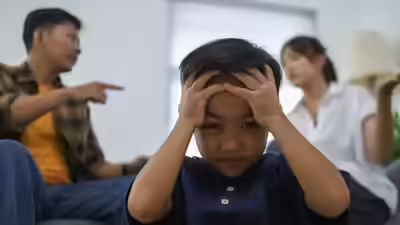
The first-borns may be the eldest among their siblings, but at the end of the day, they are also a child; A child who’s also experiencing everything for the first time. Here are 7 things parents should avoid saying to their eldest child, and what they should say to convey their message.
“You’re older, you should know better.”
This is a line heard in countless homes. While parents never use this with a purpose of harm, to the child this sounds more like a criticism.If the eldest one makes a mistake, offer your support instead of judgement.
“Your brother is younger, let him have it.”
Repeated use of such sentences can leave the child feeling that his needs are neglected. These words can make the child develop a sense of resentment over time, and even lead to them suppressing their feelings.
“You’re supposed to be the responsible one.”
While it sounds like praise, it can box the child into a role where they feel they must always be perfect, dependable, and composed.Parents should appreciate their eldest child’ actions without turning it into an identity they must live up to.
“Set an example for you little sister.”
These words can build a leadership burden for the child. The child will constantly feel like they should be the role model for their younger siblings, which eventually can make them feel like they’re being constantly watched and evaluated.
“You’re not a little kid anymore.”
When a new baby is welcomed into the family, many parents unintentionally make the eldest sibling feel like they have “grown overnight.” But the presence of a baby doesn’t instantly make someone a grown-up. Phrases like: “You’re not a kid anymore” can make the child feel like their childhood is over.
“You’re older, you should help more.”
Encouraging responsibility is important but tying it to their age can make a child feel that their value lies in how much they contribute. Over time, a child can start to feel they are appreciated only when they are useful or helpful. Parents should frame help as a shared value rather than an obligation.
“Stop acting like you’re the little one.”
Parents should understand that vulnerability isn’t something to be ashamed of. This phrase can feel dismissive and shaming, especially when the child is simply expressing emotions like frustration, jealousy, or a need for attention. Over time, the child may start suppressing their feelings to avoid being judged, which can affect their emotional confidence and communication.
-
'I won £1m on Who Wants To Be A Millionaire' - my must-read book for everyone'

-
Air fryers will be free of grease when cleaned with 2 kitchen staples - no scrubbing
-
Sanjay Dutt Apologizes for Controversial Song Lyrics in KD The Devil

-
Junaid Khan Prepares for His Next Film 'Ek Din' Featuring Sai Pallavi

-
Dinesh Karthik Lavishes Praise For Krunal Pandya, Credits Him For Revolutionising Finger Spin