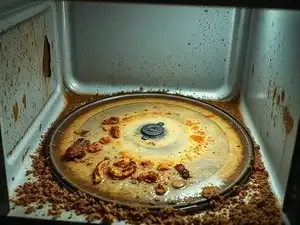
Most people clean their microwaves by wiping the inner surface whenever the sauces splatter in the appliance. The process looks like a good idea since the appliance usually looks clean even when it is dirty. However, cleaning specialists say that microwave ovens are usually dirtier than people think.
Dirt, grease residue, food particles, moisture, and odor accumulate in the oven's cracks, vents, door gaskets, and under the revolving tray. Despite the cleanliness of its interior, hidden dirt can accumulate. As per the guidelines offered by the United States Department of Agriculture, food residues in an appliance may lead to bacterial proliferation and contamination.
Therefore, according to cleaning professionals, simply wiping food residues constitutes maintenance but not cleaning.
For example, tomato sauces, oils, butter, and sugar-rich products can solidify and be difficult to clean up using a wet towel. What’s more, the residues that get left behind could potentially create unpleasant odors in the appliance. Some experts on cleaning services advise conducting a deep clean once a month, regardless of whether the appliance looks clean. Others say this should be done more frequently.
The process typically involves cleaning the turntable, wiping the ceiling and walls, cleaning the edges of the door, and even steaming off the dirt that’s tough to remove.
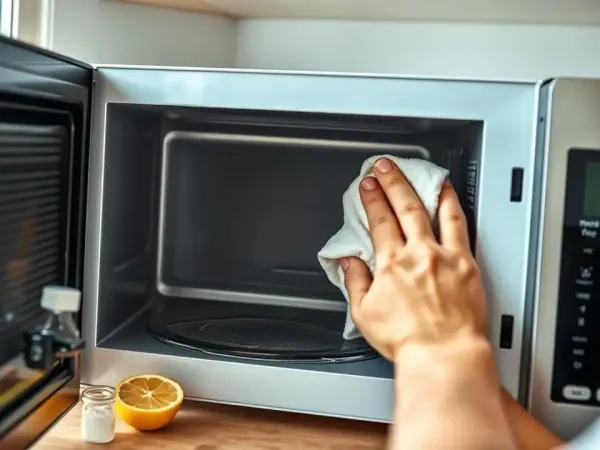
The cleaning trick that is suggested by many people includes placing a bowl of water mixed with lemon or vinegar and heating it until steam comes out of it.
It is easy, economical, and effective enough to make sure everything gets cleaned effectively.
This is the basic principle.
Furthermore, there were studies conducted by the USDA that demonstrated the importance of cleanliness in kitchens. Even commonly used household items, such as sponges, may carry large amounts of bacteria. In one study conducted by the USDA, heating a wet sponge in the microwave for one minute eliminated almost all bacteria.
The overall conclusion here is clear. Heat is not enough.
It is also essential to take into account the frequency with which the microwave oven is used for reheating dinner, melting butter, or heating up breakfast on a busy workday morning.
Dirt, grease residue, food particles, moisture, and odor accumulate in the oven's cracks, vents, door gaskets, and under the revolving tray. Despite the cleanliness of its interior, hidden dirt can accumulate. As per the guidelines offered by the United States Department of Agriculture, food residues in an appliance may lead to bacterial proliferation and contamination.
Therefore, according to cleaning professionals, simply wiping food residues constitutes maintenance but not cleaning.
Food splatters can become harder to remove
These kinds of messes don’t just stay put. Multiple cycles of heating may actually cause the substances to bake into the inner surfaces of the microwave.For example, tomato sauces, oils, butter, and sugar-rich products can solidify and be difficult to clean up using a wet towel. What’s more, the residues that get left behind could potentially create unpleasant odors in the appliance. Some experts on cleaning services advise conducting a deep clean once a month, regardless of whether the appliance looks clean. Others say this should be done more frequently.
The process typically involves cleaning the turntable, wiping the ceiling and walls, cleaning the edges of the door, and even steaming off the dirt that’s tough to remove.
Odors can signal buildup
Even when you clean out any old food from your microwave and still smell something odd, there might be some residue causing it. Certain strong-scented foods, such as fish, popcorn, curry, or heated food, might leave their residues inside the microwave. Such particles get stuck to different surfaces of the microwave.The cleaning trick that is suggested by many people includes placing a bowl of water mixed with lemon or vinegar and heating it until steam comes out of it.
It is easy, economical, and effective enough to make sure everything gets cleaned effectively.
Image Credit: TIL Creatives| Wiping away grime from the microwave interior, using a damp cloth and natural cleaning agents like lemon and vinegar.
Grease and grime can affect performance
A forgotten microwave can do more than just stink up your kitchen. Excess grease in the vicinity of the vents and other areas inside the microwave can hinder proper airflow. Accumulation of food scraps near the door can also be an issue. Though a few spots of spilling might not affect your microwave, persistent accumulation could affect its efficiency. Like how you maintain your fridge, for example, you may clean your shelves regularly, yet occasionally perform a thorough cleaning to ensure smooth operation.This is the basic principle.
There may be more bacteria than you think
It is not an issue only about appearance. In 2024, there was a study in Frontiers in Microbiology that showed that domestic microwaves may carry different microbial communities similar to any other surface in the kitchen. It means that microwaves are not sterile places simply because they heat up food.Furthermore, there were studies conducted by the USDA that demonstrated the importance of cleanliness in kitchens. Even commonly used household items, such as sponges, may carry large amounts of bacteria. In one study conducted by the USDA, heating a wet sponge in the microwave for one minute eliminated almost all bacteria.
The overall conclusion here is clear. Heat is not enough.
A little extra effort can go a long way
Microwave ovens are generally one of the most frequently used appliances that do not get thoroughly cleaned. Cleaning the interior can give it a clean appearance. However, thorough cleaning will eliminate accumulated grease, reduce unpleasant odors, ensure safe food preparation, and extend the life of the appliance.It is also essential to take into account the frequency with which the microwave oven is used for reheating dinner, melting butter, or heating up breakfast on a busy workday morning.