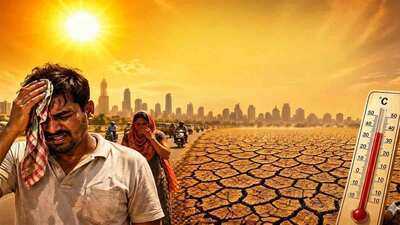
Is 2026 heading toward a climate catastrophe for India, driven by a potential “Super El Nino”? Scientists and environmentalists are increasingly worried by this possibility, warning that extreme heat, drought, and soaring inflation could define the year.
History offers a grim reminder. During the Great Famine of 1876–78, nearly 5.8 million people lost their lives due to starvation and water scarcity—an event largely attributed to a powerful El Nino. Now, more than 140 years later, experts fear a similar but potentially more severe scenario.
According to the latest April 2026 report by the World Meteorological Organization, neutral conditions in the Pacific Ocean are fading, with a 61%–80% chance of El Nino developing between May and July 2026. Some models suggest it could intensify into a “strong” or even “very strong” event—commonly referred to as a “Super El Nino.”
What is El Nino?
El Nino is a climate pattern linked to unusual warming of sea surface temperatures in the Pacific Ocean.
- Normal conditions: Trade winds push warm water toward Asia, supporting good rainfall in India.
- During El Nino: These winds weaken, causing warm water to accumulate in the central and eastern Pacific, disrupting global weather patterns.
Impact on India:
- Weak monsoon
- Reduced rainfall
- Increased risk of droughts and heatwaves
When the Pacific Ocean warms, it alters atmospheric pressure systems, weakening India’s monsoon and triggering extreme weather conditions.
1877 vs 2026: Why the Risk is Greater Now
In the 1870s, even with lower ocean temperatures, El Nino triggered a devastating famine. Today, the threat is amplified by Climate Change. With 2024 already recorded as one of the hottest years globally, the combination of El Nino and global warming could push temperatures to unprecedented levels.
Scientists caution that forecasting during April–May is challenging due to the “spring barrier,” but current signals remain strong. The peak impact is expected between August and December 2026.
Four Major Threats to India
1. Deadly Heatwaves: Rising carbon dioxide levels (now above 420 ppm) could make heatwaves far more intense than in 1877. Regions like Delhi, Rajasthan, and Uttar Pradesh may see temperatures crossing 50°C. Dangerous “wet-bulb temperatures” could make conditions life-threatening.
2. Agricultural Collapse: Over 50% of India’s agriculture depends on monsoon rainfall. A weak monsoon could severely hit crops like wheat and rice.
3. Food Inflation: Lower crop yields will drive up prices of essential food items, increasing the financial burden on households.
4. Water Crisis: Urban areas could face severe groundwater depletion, worsened by the “urban heat island” effect.
Policy Gaps and Criticism
Despite rising heat risks, heatwaves are often not officially treated as disasters. Governments tend to classify cyclones and floods as disasters but hesitate to do the same for heatwaves.
Why this matters
Declaring heatwaves as disasters would require compensation for affected populations, placing financial pressure on governments. As a result, the crisis is often downplayed as a seasonal variation, limiting preparedness and funding.
Human Factors Making It Worse
The crisis is not just natural—it is also man-made.
- Deforestation: Reduces Earth’s natural cooling capacity.
- Urban Heat Island Effect: Concrete structures trap heat, making cities 5–7°C hotter than rural areas.
What Can Be Done?
While we cannot control nature, we can change our actions.
Individual Steps:
- Plant trees and protect existing green cover
- Shift toward renewable energy and reduce fossil fuel use
Collective Measures:
- Urban greening through green belts
- Rainwater harvesting to conserve water
A Wake-Up Call for 2026
Unlike 140 years ago, we now have science, data, and early warnings. Ignoring them could lead to devastating consequences. If environmental degradation continues in the name of development, history may repeat itself—with even greater intensity.
The time has come to redefine development and prioritize environmental sustainability before it’s too late.
-
Nawazuddin Siddiqui Calls Out Racism in Hindi Cinema, Praises Smita Patil’s ‘Unmatched Beauty’

-
Sahil Parakh: Played 2 matches, failed in both, still gave Delhi Capitals his debut, know who is Sahil Parakh?

-
Sai Pallavi nervous ahead of Ek Din debut

-
Randeep Hooda is going to return in the role of super cop, teaser of Inspector Avinash 2 released…

-
Land Loan 2026: Is loan available to buy a plot? Know these special conditions of the bank