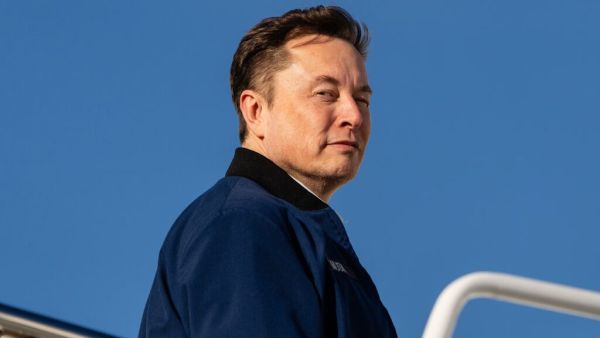
In January 2018, Elon Musk needed $100 million. Instead of calling a bank, he turned to SpaceX, the rocket company he founded and where he serves as CEO.
Over the next three years, Musk borrowed a total of $500 million from his company. The loan terms were significantly lower than what most banks offered, with an interest rate that fluctuated from less than 1% to nearly 3%, according to internal SpaceX documents obtained by The New York Times. The documents did not say how Musk planned to use the money, which he paid back to SpaceX by the end of 2021.
The loans and their exceptionally kind terms, which are not permitted at public companies, were possible only because SpaceX is privately held. They were just one way Musk has used SpaceX as a kind of piggy bank over the last two decades, according to an examination by the Times based on corporate filings, lawsuits, internal documents and interviews with people close to the firm.
Musk not only secured loans from SpaceX to himself, but he also relied on the firm to shore up at least three troubled businesses in his orbit, the Times found. Those included SpaceX lending money to his electric carmaker Tesla when it needed cash; injecting funds into SolarCity, a struggling solar energy company he owned a large stake in; and buying his cash-burning artificial intelligence venture, xAI.
The moves benefited Musk personally and his other businesses to an unusual degree, even in the opaque world of private companies. Some SpaceX investors — including Founders Fund, the venture capital firm co-founded by Peter Thiel — have at times been concerned that Musk prioritized his interests to the detriment of other shareholders, said two people with knowledge of their thinking, who were not authorized to speak about confidential discussions.
“These are conflicted transactions,” said Ann Lipton, a law professor at the University of Colorado Boulder. She added that such conflicts were a “hazard” of investing in someone who runs multiple companies.
Founded in 2002 with the goal of taking humans to Mars, SpaceX dominates space with its rocket business and Starlink satellite internet service. With a value exceeding $1 trillion, the company is the jewel of Musk’s business empire and has given him enormous geopolitical influence. The 54-year-old has constantly talked up SpaceX as “incredible” and as the “expansion of consciousness to the stars.”
Now as Musk prepares to take SpaceX public in what is likely to be one of the largest initial stock offerings in history, he will increasingly have to answer to Wall Street and other investors. SpaceX, which is a major federal contractor, will be required to detail its financial performance and transactions with Musk and other companies he has ties to.
His actions at SpaceX are part of a pattern. Much of Musk’s financial maneuvering is done behind closed doors, as most of his companies — which also include the tunneling venture Boring Co. and the brain technology firm Neuralink — are privately held and are not required to publicly disclose information.
But Musk’s actions at his other major company, Tesla, which went public in 2010, have sometimes been divulged. The tech mogul, who is one of the world’s richest people, has used his Tesla shares to back hundreds of millions of dollars in personal loans, with the automaker also aiding some of Musk’s other businesses when they foundered.
While Tesla investors have reaped rewards — the company’s stock is up more than 29,000% since it went public — Musk’s moves angered some of them. He has faced at least seven shareholder lawsuits to Tesla in the Delaware Court of Chancery, which oversees corporate disputes.
In a 2024 lawsuit, a pension fund claimed the billionaire was damaging Tesla by sending resources earmarked for the company to xAI, his AI firm.
“Could the CEO of Coca-Cola loyally start a competing soft-drink company on the side, then divert scarce ingredients from Coca-Cola to the startup?” the lawsuit asked. “Of course not.”
Musk, Tesla and SpaceX did not respond to requests for comment.
The value of SpaceX
For years, SpaceX was far from a sure thing. Musk’s dream for humans to become a multiplanetary species was straight out of science fiction.
But over time, SpaceX’s business blossomed. Starlink has been indispensable for communicating by satellite in war zones and areas hit by natural disasters. SpaceX landed contracts with NASA and the Department of Defense, among others.
That success turned SpaceX into a financial tool for Musk, who owned about 40% of the company as of 2022.
In 2018, Musk obtained the $100 million loan from SpaceX, the first of three loans that carried an interest rate that oscillated between less than 1% to almost 3%, according to an internal document. The prime rate, which banks charge customers with high credit ratings, hovered closer to 5% for much of the life of the loan.
As collateral, which is something valuable that a borrower gives a lender in return for money, Musk pledged some of his SpaceX shares, the documents show. The loan offered a generous 10-year repayment window, though SpaceX retained the right to call the loan with 90 days’ notice. It was unclear who signed off on the loans, which the internal documents said had been specifically taken out for the CEO.
By December 2020, Musk had borrowed $500 million from SpaceX, including the $100 million he took out in 2018. He repaid all of it by the end of 2021, plus almost $14 million in interest, according to the document. If he had borrowed at a 4% interest rate, the interest owed across the different loans would have been closer to $40 million. The Wall Street Journal previously reported the existence of the loan arrangement.
The loans were possible because SpaceX is a private company. In contrast, public companies are subject to strict laws.
Under the 2002 Sarbanes-Oxley Act, public companies are prohibited from lending corporate funds to many senior executives because such loans can be risky. Banks typically assess lending risks, but that objectivity can be compromised when a board of directors provides money to a corporate officer. The law was passed after accounting scandals caused the collapse of companies like Enron, the onetime energy giant, that lent money to its executives.
SpaceX also became a vital tool for Musk to strengthen his other businesses. When Tesla faced challenges in the 2008 global financial crisis, Musk borrowed $20 million from SpaceX to help the car company, he said in a 2016 interview. He said he later repaid the loan.
Nearly a decade later, he looked to SpaceX again to aid SolarCity, a solar-power financing and installation company founded in 2006 by two of his cousins. Musk was one of SolarCity’s largest shareholders and served as chair. The company, which went public in 2012, was losing money and accumulated more than $1.4 billion in debt by 2014.
In 2015, Musk arranged for SpaceX to buy some of SolarCity’s debt, which credit ratings agencies said had a high risk of default. By 2016, the rocket company had injected $255 million into SolarCity, court and public records show.
SpaceX bought the debt even though its own rules prohibited it from doing so, according to court testimony. If SolarCity had gone bankrupt, SpaceX’s investment could have been wiped out. Musk has said there were “exceptions” to SpaceX’s rules but did not detail them.
In 2016, Tesla bought SolarCity in a $2.6 billion stock deal. That angered some Tesla investors, who sued the company, arguing the transaction was a waste of its resources.
A Delaware Court of Chancery judge ultimately sided with Musk on the deal but said the billionaire had been “more involved in the process than a conflicted fiduciary should be.” Musk said Tesla repaid SpaceX for the SolarCity debt.
He once explained the financial connections among the three companies, saying he did not want to allow “some sort of house of cards that crumbles if one element of the pyramid of Tesla, SolarCity and SpaceX falters.” He later distanced himself from the remark.
The Tesla precedent
Before Musk took out loans from SpaceX, he had done something similar at his public company, Tesla. He has long been able to use his Tesla shares as collateral to back hundreds of millions of dollars in personal loans from Wall Street banks, according to public filings.
The practice is risky and prohibited at many publicly traded companies. That’s because a sudden decline in the share price can force banks to sell the company’s stock so they do not lose money. That can create a downward spiral, driving the company’s share price even lower.
Michael Garland, a New York City assistant comptroller, said the city’s five retirement systems, which together own 3.4 million shares of Tesla, had always opposed Musk borrowing against his Tesla stock.
“I don’t think any investors like it, because it creates risk,” Garland said, adding that Musk was “becoming less transparent as time goes on.”
In 2021, Tesla said in a filing that if top executives — including Musk — use company stock to obtain a personal loan, the amount of money they borrow could not be more than 25% of what those shares were worth.
But some shareholders argued the policy remained overly generous and could put the company at risk if Tesla’s shares fell. In 2023, Tesla’s board went further, restricting the total loan amount that Musk could secure with his stock to the smaller of two figures, either $3.5 billion or 25% of the stock’s value.
By last year, Musk had pledged 236 million Tesla shares — worth about $100 billion — that he could use as collateral for loans if needed, according to a regulatory filing. Last year, the company said Musk no longer had loans against those shares.
Tesla’s board has raised questions about the use of the company’s resources to benefit Musk.
In 2023, the board opened an internal investigation into the use of corporate funds and employees to build a glass house for Musk outside Austin, Texas, two people familiar with the project said. (Musk moved to Texas from California in 2020.) Tesla had discovered the work on the house after someone put in an order for the company to pay millions of dollars for special glass, the people said.
Musk’s role in the incident could not be learned. Several Tesla employees who worked on the project or were to the investigation lost their jobs for various reasons. The house was not built. The Journal earlier reported some details of the investigation.
In 2024, two pension funds — the Cleveland Bakers and Teamsters Pension Fund, and the Employees’ Retirement System of Rhode Island — sued Musk and Tesla’s board in Delaware Chancery Court.
The Cleveland fund claimed Musk had diverted Nvidia computer chips from Tesla to xAI, hurting Tesla. The fund accused Musk of “unjust enrichment” and the directors of breaching their duty to shareholders.
Tesla said none of the accusations were “alleged to have actually harmed the company.” A judge recently dismissed the suit, saying Texas and not Delaware was the proper forum for it.
Musk’s AI and social media companies get involved
After leaving his role advising President Donald Trump last year, Musk focused on another of his private companies, xAI. The AI startup, established in 2023, quickly became central to his financial maneuvering.
AI was booming, and xAI raised about $12 billion by March 2025, according to PitchBook, which tracks startups. The company’s value soared as Musk praised its Grok chatbot.
At the time, another of Musk’s companies — X, formerly Twitter — was struggling. The social media platform was “barely breaking even,” he said last year.
In March 2025, xAI bought X in a deal that Musk said valued the AI startup at $80 billion and the social platform at $33 billion. He declared that “xAI has rapidly become one of the leading AI labs in the world.”
Musk then prodded Tesla shareholders to invest in the newly combined xAI and X. Some Tesla investors balked, since xAI and Tesla both make AI products.
Others sided with Musk. Last year, one Tesla stockholder proposed a shareholder resolution for the auto company to invest in xAI. Tesla shareholders voted against it at the company’s annual meeting in November.
In January, Tesla overrode that vote and said it would put $2 billion into xAI anyway.
A month later, Musk announced SpaceX was buying xAI, which was spending billions to develop AI. The move created “the most ambitious, vertically-integrated innovation engine on (and off) Earth,” he said, valuing SpaceX at more than $1 trillion.
SpaceX investors like Founders Fund were concerned because they would own a smaller percentage of the company, people familiar with the investors’ thinking said.
Musk “is a great salesman,” Lipton said. “If you believe he has the heft with the markets and so forth to pull it off, then you’re fine. But he’s doing something that does not appear to be great for the SpaceX shareholders.”
At least seven xAI co-founders, plus other employees, have since posted that they were leaving the company. Last month, Musk said the AI venture was “not built right” and was “being rebuilt from the foundations up.”
Once again, SpaceX and Tesla had come to the rescue of a troubled Musk company.
-
If you don't recharge, how many days will it take for your SIM to be deactivated? Know the rules...
-
This amazing Facebook feature is coming to WhatsApp—you'll be able to chat without opening the app...
-
Jharkhand Board 12th Result: The wait for the JAC Board Intermediate results is about to end..

-
School Timings Revised in UP and Uttarakhand Due to Heat and Heatwaves; Holidays Announced in Several States..

-
UP Board Scrutiny Applications Begin: Apply to Have Answer Sheets Rechecked by This Date..