For obstetrician Zhang Xuan, long nights, emergency surgeries and unpredictable deliveries once defined her work. In her early years, she sometimes went 72 hours without proper sleep, grabbing short naps on a stool between procedures.
But by her second decade in the profession, births were declining fast enough to alarm policymakers. Her salary stagnated, opportunities shrank and on some days there were more staff than pregnant women.
In 2016, she quit obstetrics. “It wasn’t an impulsive choice,” she says. “It was more like countless regrets piling up.”
Today, at 43, she works in insurance.
|
Zhang Xuan (far left) works in an operating room in Hubei between 2014 and 2015, and (right) presents a life insurance policy in Guangdong. Photo courtesy of Zhang Xuan |
Also in 2016, China ended its one-child policy and sometime later allowed three children per couple, even rolling out incentives such as cash subsidies, extended parental leave and housing support. Yet the hoped-for baby boom never materialized. Births kept falling, reaching just 7.92 million in 2025, a historic low.
As authorities looked for ways to boost births, they expanded support for assisted reproductive technology (ART) and encouraged hospitals to open infertility clinics.
At the time, more than 12% of married couples in China were estimated to suffer from infertility, and the share of babies born through ART had risen from 0.46% in 2009 to 2.37% in 2018.
Fertility treatment briefly appeared to be a rare growth area in an otherwise shrinking field. But that momentum proved temporary.
|
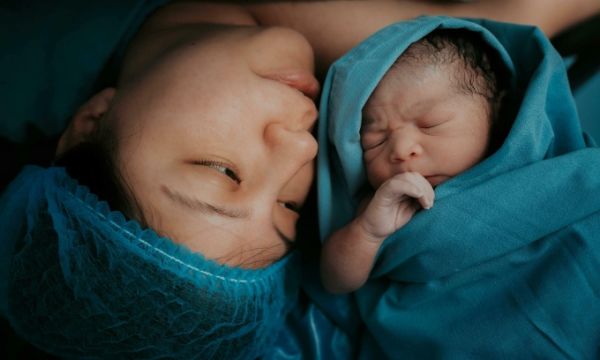
A woman with her newborn child. Photo by Pexels |
According to Sixth Tone, as smaller cities opened their own fertility centers, positions in major hospitals became harder to secure. The field grew crowded, leaving many young doctors struggling to find steady jobs.
Meanwhile, traditional obstetrics departments faced mounting pressure. Some delivery wards were merged, scaled back or shut entirely.
In 2024, prominent obstetrician Duan Tao publicly warned that the specialty was “collapsing,” and called for action to “save obstetrics.”
The National Health Commission responded by designating delivery care as a basic medical service and ordering counties to maintain public delivery units.
Still, fewer medical students are choosing obstetrics, and some doctors are switching specialties or quitting medicine altogether.
Those who remain find themselves working in a transformed system. As smaller facilities close, patients are funneled into top-tier hospitals. Public maternity wards increasingly resemble private ones, offering premium packages with dedicated specialists and private rooms costing more than 100,000 yuan, over 10 times the standard rate.
Hospitals have also diversified to survive, expanding into reproductive health, preterm birth prevention, postpartum rehabilitation, cosmetic medicine, and others.
“If you rely on obstetrics alone, it’s basically impossible to sustain,” one senior doctor says. At its core, however, the challenge remains demographic. “People are simply unwilling to have children,” one obstetrician observes.
With China’s fertility rate being persistently low and its population shrinking, the medical system built around childbirth is being forced to reinvent itself.
For Zhang, the decision to leave came before the full scale of the transformation unfolded. She now earns significantly more than she did as a doctor and finally has time to rest. “After leaving medicine,” she wrote on social media, “I finally started living like a normal person.”
-
Madhya Pradesh: BJP holds legislative party meeting ahead of one-day Assembly Session

-
Confusion over LKG admission age limit continues in Udupi as government order awaited

-
Bullets fired at woman advocate's residence in Belagavi

-
Finance Minister to inaugurate IIGJ centre in Udupi on April 28

-
Lifeguard shortage in Udupi district; risk rises at beaches