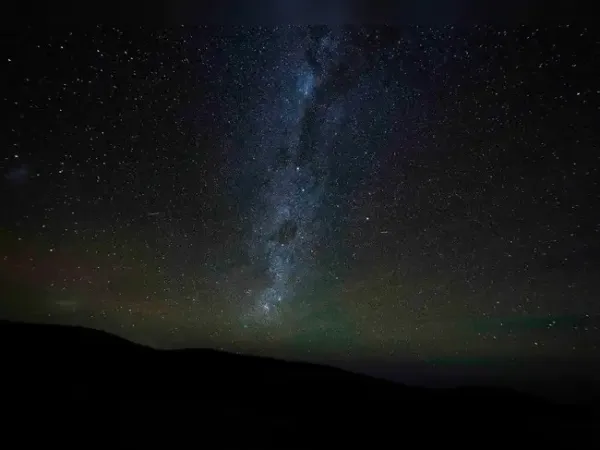
Chile’s Atacama Desert, known for offering some of the clearest views of the universe, is facing renewed concerns over the preservation of its night skies, even after a proposed energy project near a major observatory was scrapped. Scientists warn that weak and outdated regulations could allow similar developments to threaten the region again.
The Atacama Desert is considered one of the most suitable places on Earth for astronomical observation due to its dry climate, high altitude and isolation from artificial light. These factors allow celestial objects such as stars, planets and galaxies to be visible to the naked eye.
“The conditions in the Atacama Desert are unique in the world. There are more than 300 clear nights per year, meaning no clouds and no rain,” Chiara Mazzucchelli, president of the Chilean Astronomical Society, said to AP.
The desert hosts some of the world’s most advanced ground-based observatories and has become a leading center for global astronomy research.
The Paranal Observatory, operated by the European Southern Observatory, is among nearly 30 astronomical sites in northern Chile, many run by international organizations. The region attracts thousands of scientists annually studying the origins of the universe.
Access to such facilities remains competitive. “We are lucky to be here,” Julia Bodensteiner, an assistant professor at the University of Amsterdam, said to AP, noting limited selection rates for visiting astronomers.
In Paranal, specialists live in underground facilities designed to minimize any light interference. Windows remain covered, interiors are kept dark and movement outdoors is limited to flashlight use, as even minimal light can disrupt telescope operations.
Despite harsh conditions including high altitude and extreme temperatures, the desert’s environment remains ideal for space observation.
The Atacama’s conditions have enabled ambitious projects such as the Extremely Large Telescope, a $1.5 billion initiative by the European Southern Observatory scheduled for completion in 2030.
With 798 mirrors and a light-gathering area of nearly 1000 square meters, the telescope is expected to be significantly more powerful than existing instruments and far sharper than the Hubble Space Telescope.
“We should be able to see Earth-like planets in what we call the habitable zone, so basically the planets which are candidates towards life,” ESO astronomer Lucas Bordone said to AP.
Scientists emphasize that data collected from these observatories is crucial for understanding life on Earth and the possibility of life beyond it.
Twenty years ago, the Atacama Desert was “an ocean of darkness,” Eduardo Unda-Sanzana, director of the Astronomy Center at the University of Antofagasta, recalled to AP, adding that it once felt like being alone with the universe.
“If you place the ELT next to a city, it doesn’t matter that its diameter is 40 meters long. It’s just the same as having a tiny telescope,” Gregorio-Monsalvo said to AP.
Although the company withdrew the project in January following widespread criticism, the episode highlighted gaps in existing laws protecting astronomical zones.
“We are working to ensure the new criteria are strict enough to guarantee that there will be no impact on astronomical areas,” Daniela González, director of the Cielos de Chile Foundation, said to AP.
However, scientists caution that without clear and updated rules, similar proposals could emerge again.
“Despite all the media hype in 2025, we find ourselves exactly where we were last year,” Unda-Sanzana said to AP.
“We’ve had 70 years to learn from history and avoid repeating those same mistakes,” Unda-Sanzana said to AP.
Researchers stress that preserving the Atacama’s dark skies is essential to sustain its role as one of the world’s most important centers for astronomical discovery.
The Atacama Desert is considered one of the most suitable places on Earth for astronomical observation due to its dry climate, high altitude and isolation from artificial light. These factors allow celestial objects such as stars, planets and galaxies to be visible to the naked eye.
“The conditions in the Atacama Desert are unique in the world. There are more than 300 clear nights per year, meaning no clouds and no rain,” Chiara Mazzucchelli, president of the Chilean Astronomical Society, said to AP.
The desert hosts some of the world’s most advanced ground-based observatories and has become a leading center for global astronomy research.
The Paranal Observatory, operated by the European Southern Observatory, is among nearly 30 astronomical sites in northern Chile, many run by international organizations. The region attracts thousands of scientists annually studying the origins of the universe.
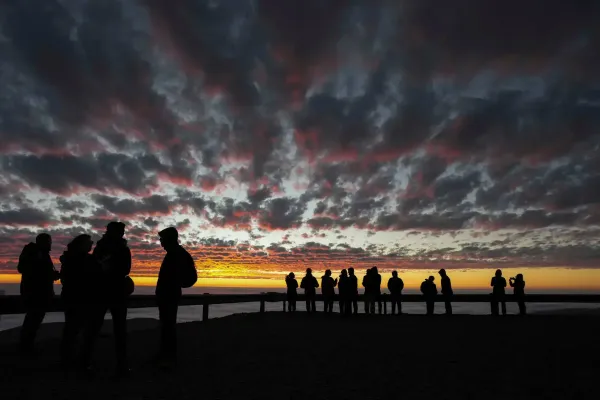
Astronomers are silhouetted against the sunset sky at Paranal Observatory in the Atacama Desert, Chile, Tuesday, April 14, 2026.
Why scientists live underground like moles
“Many of these large facilities are located in Chile, and ESO's telescopes in particular are the most powerful astronomical facilities on the planet,” Itziar de Gregorio-Monsalvo, the organization’s representative in Chile, said to AP.Access to such facilities remains competitive. “We are lucky to be here,” Julia Bodensteiner, an assistant professor at the University of Amsterdam, said to AP, noting limited selection rates for visiting astronomers.
In Paranal, specialists live in underground facilities designed to minimize any light interference. Windows remain covered, interiors are kept dark and movement outdoors is limited to flashlight use, as even minimal light can disrupt telescope operations.
Despite harsh conditions including high altitude and extreme temperatures, the desert’s environment remains ideal for space observation.
Desert host to world's largest telescopes
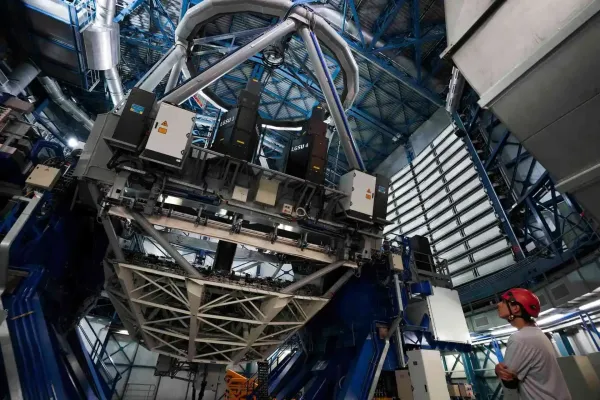
An operator looks at a Very Large Telescope at the Paranal Observatory operated by the European Southern Observatory in the Atacama Desert, Chile, Monday, April 13, 2026.
The Atacama’s conditions have enabled ambitious projects such as the Extremely Large Telescope, a $1.5 billion initiative by the European Southern Observatory scheduled for completion in 2030.
With 798 mirrors and a light-gathering area of nearly 1000 square meters, the telescope is expected to be significantly more powerful than existing instruments and far sharper than the Hubble Space Telescope.
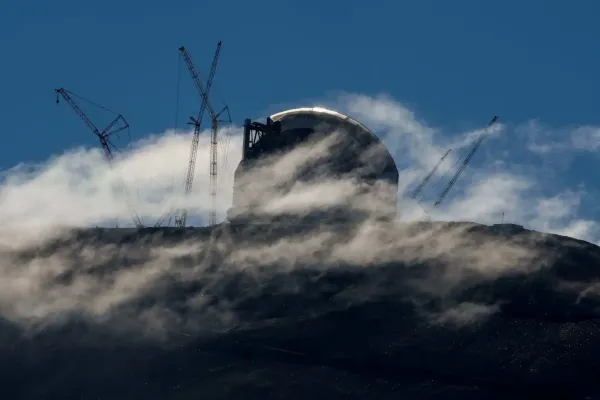
An Extremely Large Telescope is under construction by the European Southern Observatory, in the Atacama Desert, Chile, Tuesday, April 14, 2026.
“We should be able to see Earth-like planets in what we call the habitable zone, so basically the planets which are candidates towards life,” ESO astronomer Lucas Bordone said to AP.
Scientists emphasize that data collected from these observatories is crucial for understanding life on Earth and the possibility of life beyond it.
Development pressures raise concerns
The region has increasingly come under pressure from urban expansion, industrial activity, mining operations and renewable energy projects. Experts say even minimal disturbances such as light, dust or vibrations can disrupt astronomical observations.Twenty years ago, the Atacama Desert was “an ocean of darkness,” Eduardo Unda-Sanzana, director of the Astronomy Center at the University of Antofagasta, recalled to AP, adding that it once felt like being alone with the universe.
Renewable energy project sparks alarm
A proposed green energy complex near Paranal last year triggered strong opposition from the scientific community. The project, planned about 10 kilometers from the observatory, raised concerns over light pollution, dust, vibrations and atmospheric instability that could make observations unfeasible.“If you place the ELT next to a city, it doesn’t matter that its diameter is 40 meters long. It’s just the same as having a tiny telescope,” Gregorio-Monsalvo said to AP.
Although the company withdrew the project in January following widespread criticism, the episode highlighted gaps in existing laws protecting astronomical zones.
Regulatory review underway
Authorities in Chile have since begun reviewing environmental regulations, including those related to protected astronomical areas.“We are working to ensure the new criteria are strict enough to guarantee that there will be no impact on astronomical areas,” Daniela González, director of the Cielos de Chile Foundation, said to AP.
However, scientists caution that without clear and updated rules, similar proposals could emerge again.
“Despite all the media hype in 2025, we find ourselves exactly where we were last year,” Unda-Sanzana said to AP.
Past lessons underscore need for protection
Historical examples reinforce these concerns. A major solar observatory operated by the Smithsonian Institution in Chile was forced to shut down in 1955 due to pollution linked to mining expansion.“We’ve had 70 years to learn from history and avoid repeating those same mistakes,” Unda-Sanzana said to AP.
Researchers stress that preserving the Atacama’s dark skies is essential to sustain its role as one of the world’s most important centers for astronomical discovery.