Heatwave Alert: 5 DIY Tests to Detect Dehydration Early
Sanjeev Kumar | April 23, 2026 3:23 AM CST

As temperatures climb and humidity intensifies, the India Meteorological Department has issued a heatwave alert across several Indian states.
While most people focus on avoiding direct sun exposure, the bigger danger often goes unnoticed: dehydration. In extreme conditions, especially during a "moist heatwave" where sweat fails to evaporate, the body's natural cooling system breaks down, increasing the risk of heatstroke and heat exhaustion.
Dehydration isn't just about feeling thirsty - it is a serious fluid imbalance that can escalate rapidly. The good news? There are simple, science-backed DIY tests you can do at home to check your hydration status early and take action before complications arise.
Why is dehydration dangerous during a heatwave?
During extreme heat, your body loses water and essential electrolytes through sweat. If these fluids aren't replenished, blood volume drops, circulation slows, and vital organs struggle to function efficiently. In humid conditions, sweat doesn't evaporate effectively, making it even harder for your body to cool down.
Left unchecked, dehydration can lead to dizziness, confusion, rapid heartbeat, and in severe cases, life-threatening heatstroke.
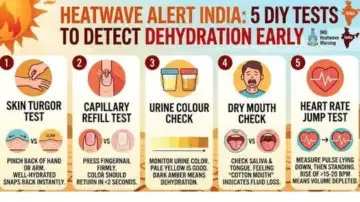
5 DIY tests to detect dehydration early
Skin turgor or pinch test
This quick test checks your skin's elasticity, which is an indicator of hydration.
How to do it: Pinch the skin on the back of your hand or arm for a few seconds, then release.
Result: If the skin snaps back instantly, you're well-hydrated. If it stays "tented" briefly, it may signal fluid loss.
Capillary refill test
Used in clinical settings, this test assesses blood circulation and hydration.
How to do it: Press your fingernail until it turns white, then release.
Result: Normal colour should return within 2 seconds. Delayed refill may indicate dehydration and reduced blood flow.
Urine colour check
Your kidneys provide one of the clearest signs of hydration status.
How to do it: Observe your urine colour.
Result:
 When should you seek medical help?
DIY tests are helpful, but they are not a substitute for medical care. Seek immediate attention if you experience:
When should you seek medical help?
DIY tests are helpful, but they are not a substitute for medical care. Seek immediate attention if you experience:
- Pale yellow: Well-hydrated
- Dark yellow or amber: Dehydrated
- Dark orange or brown: Severe dehydration or possible kidney stress - seek medical advice
When should you seek medical help?
DIY tests are helpful, but they are not a substitute for medical care. Seek immediate attention if you experience:
- Confusion or fainting
- Persistent vomiting
- High fever - above 102°F
- Inability to retain fluids
READ NEXT
-
World's 'longest underwater tunnel' will cut 45min journey to just 7 minutes

-
Charleston Airshow Canceled Due to Safety Concerns

-
Bomb Threat Leads to Evacuation at Columbus Zoo in Ohio

-
Reform is the only alternative to a Left-wing coalition of chaos

-
Van Halen star shares heartbreaking last exchange with Ozzy before his death