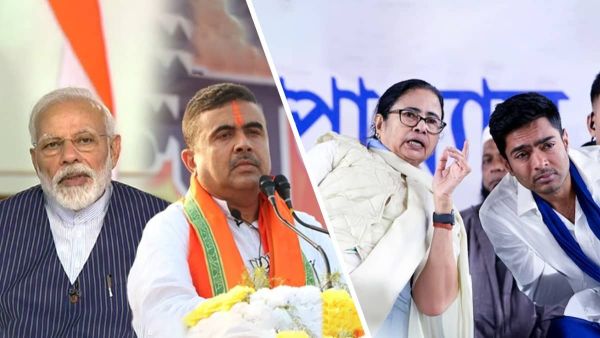
Kolkata: The capital city, Kolkata, and the sprawling rural heartlands of West Bengal are buzzing with anticipation as the state gears up for Phase 1 of the 2026 West Bengal Legislative Assembly Elections on Thursday, April 23. After weeks of intense, high-decibel campaigning, the fate of 152 constituencies, more than half of the state's total 294 seats, now rests with millions of voters.
Phase 1 will see polling across 16 districts, including the entire North Bengal region (Cooch Behar, Alipurduar, Jalpaiguri, Darjeeling, and others), parts of South Bengal, and Jangalmahal areas such as Purulia, Bankura, Jhargram, and Paschim Medinipur. Over 36 million electors are eligible to vote in this phase.
Phase 1 at a Glance
Constituencies: 152
Key Battlegrounds:
Nandigram (Purba Medinipur): A high-profile rematch of the 2021 showdown. BJP leader and Leader of Opposition Suvendu Adhikari, who defeated Chief Minister Mamata Banerjee here in 2021, is defending his seat against TMC's Pabitra Kar, a former aide turned rival.
North Bengal: Stronghold territory for the BJP since 2021. Districts like Darjeeling, Siliguri, Cooch Behar, Jalpaiguri, and Alipurduar are in focus as the saffron party seeks to consolidate gains amid a determined TMC pushback. Other watched seats include Asansol and Durgapur (industrial belt), Bankura, Purulia, and Malda-Murshidabad pockets.
Polling Timing: Polls open at 7:00 AM and close at 6:00 PM.
According to official figures to date, 36,077,171 electors are eligible to cast their votes in this phase. Of these, 18,499,496 are male voters, 17,577,210 are female voters, and 465 are third-gender electors. These figures will be revised once tribunals submit the final list of eligible voters.
Security: Over 800 companies of central paramilitary forces have been deployed to maintain peace, given West Bengal's history of poll-related tensions and violence.
Key Issues Shaping the Campaign
The 2026 contest has moved beyond pure identity politics toward a sharper focus on welfare governance, civic accountability, women’s safety, unemployment, industrialization, and border security (including the "infiltrator" debate).
The RG Kar Factor: The 2024 rape-murder of a trainee doctor at RG Kar Medical College and Hospital in Kolkata remains a potent campaign issue. Opposition parties, particularly the BJP, have repeatedly highlighted it to question the ruling TMC's handling of women’s safety and institutional accountability. The victim's mother has been fielded by the BJP as a candidate from Panihati (though in Phase 2), amplifying the emotional resonance.
Welfare vs. Anti-Incumbency: TMC is leaning heavily on its flagship schemes including Lakshmir Bhandar, Kanyashree Prakalpa, Swasthya Sathi, Khadya Sathi, Banglar Yuva Sathi and grassroots outreach. The BJP and the Left-Congress alliance are countering with narratives around joblessness, "cut money" (alleged extortion by local TMC cadres), the teachers' recruitment scam, and failure to attract industry.
Youth and Urban Votes: First-time voters and youth in urban-industrial centers like Durgapur, Asansol, and Siliguri are prioritizing demands for IT jobs, industrialization, and better infrastructure over traditional populism.
On-the-Ground Sentiments: A Divided Electorate
Voters present a mixed picture. In Kolkata's streets and North Bengal's tea gardens, many appreciate TMC's welfare schemes for helping with household expenses and education. Others express frustration over persistent issues: lack of industrialization, high unemployment, infiltration, women's safety concerns (including the RG Kar and Sandeshkhali incidents), "cut money," the teachers' recruitment scam, and past controversies such as the cash recovery at former minister Partha Chatterjee's residence and the cattle smuggling scam.
Anti-incumbency appears noticeable in several pockets, with some voters eager for change ("Paribartan") and improved opportunities. The deletion of nearly 90.66 lakh names from electoral rolls during the Special Intensive Revision (SIR), aimed at removing duplicates, deceased, and ineligible voters, could influence outcomes, though its exact impact remains debated.
Who Has the Edge?
Analysts describe this as one of the most fiercely contested elections in West Bengal in decades. TMC relies on Chief Minister Mamata Banerjee's personal popularity, strong rural and women voters, and consolidated Muslim support in certain areas. The party is projecting welfare delivery and "pro-people" governance.
BJP is strong in North Bengal and industrial belts, banking on Hindu consolidation, youth aspirations for a "secure future," and anti-incumbency waves. It is pushing hard on governance failures, law and order, and development.
The Left-Congress alliance is seen as having limited traction and minimal aggressive campaigning in most Phase 1 seats.
The verdict in Phase 1 could hinge on turnout, especially in North Bengal, and whether welfare schemes outweigh anti-incumbency. Tomorrow's results will offer the first major indicator of whether the wind favors change or continuity ahead of Phase 2 on April 29 and counting on May 4.
-
PGCIL Diploma Trainee Recruitment 2026: Apply for 670 Positions
-
R Ashwin Warns BCCI In Regard To Debut Of Vaibhav Sooryavanshi, “India Cap Should….”
-
Exciting Return of Run BTS 2.0: What to Expect

-
Critics Slam Michael Jackson Biopic Amidst Mixed Reviews

-
Ryu Hwa-Young Shares Heartwarming Birthday Moments with Fiancé