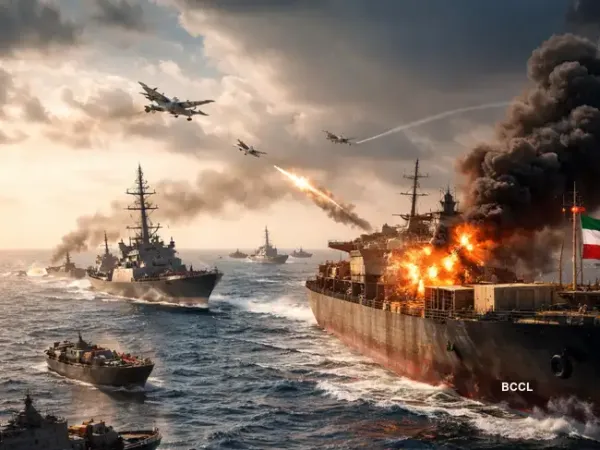
On Day 52 of the US–Israel–Iran war, tensions have escalated sharply with fresh military and maritime confrontations in the Gulf, raising fears of a wider regional conflict. The United States’ seizure of an Iranian cargo ship and Tehran’s warning of retaliation signal a dangerous new phase in the conflict. The crisis in the Strait of Hormuz, a critical global oil route, continues to disrupt shipping and push energy prices higher. With diplomacy stalled and naval posturing intensifying, the situation remains highly volatile.
Here are all the key updates from the latest developments in the conflict.
US seizes Iranian cargo ship
The standoff between the United States and Iran intensified after Washington confirmed it had seized an Iranian-flagged cargo ship attempting to breach a US naval blockade. President Donald Trump stated that American forces now have “full custody” of the vessel, raising tensions despite an ongoing ceasefire. Iran swiftly condemned the move, calling it “armed piracy” and warning of imminent retaliation. Iranian military officials indicated that any escalation could jeopardize the fragile ceasefire agreement currently in place.
Read more: Iranian forces launch drones toward US warships after attack on commercial ship in Sea of Oman
Strait of Hormuz crisis disrupts global oil supply
The crisis has severely impacted the Strait of Hormuz, a critical global energy corridor handling nearly one-fifth of the world’s oil supply. Iran has repeatedly closed and reopened the route in response to US actions, creating uncertainty for global markets. Iran’s Revolutionary Guard has also reportedly intercepted multiple foreign oil tankers, further tightening its grip on maritime traffic in the Persian Gulf. The ongoing disruption has heightened fears of a prolonged global energy crisis.
Read more: Tehran says restrictions on Iranian oil come with a price
Oil prices surge amid US–Iran conflict
Global markets reacted sharply to the escalating tensions. Brent crude prices surged nearly 7%, while US crude also recorded significant gains. Analysts warn that continued instability in the Strait of Hormuz could trigger further spikes in oil prices, impacting fuel costs worldwide. The blockade by both nations has disrupted shipping routes, affecting energy imports across Asia and Europe. Rising fuel prices are already placing pressure on businesses and consumers globally.
Ceasefire at risk as Iran rejects fresh talks
Efforts to extend peace talks have hit a roadblock, with Iran refusing to participate in a second round of negotiations proposed by the United States. Tehran cited ongoing US military pressure and the naval blockade as key reasons for rejecting further dialogue. The current ceasefire, brokered earlier this month, is set to expire soon.
Pakistan prepares for high-stakes US–Iran talks
Despite uncertainties, diplomatic preparations continue in Islamabad, where Pakistan is acting as a mediator. US officials are expected to arrive for potential negotiations, although conflicting statements from Washington have cast doubt on the talks. Security has been tightened across the city, with transport restrictions and heightened military presence signaling the high stakes involved. Meanwhile, Iran is not currently planning to attend talks with the United States, state media said, after President Donald Trump ordered US negotiators to travel to Pakistan on Monday, just days before a ceasefire in the Middle East expires.
Global energy crisis deepens as conflict enters eighth week
Now in its eighth week, the US–Israel–Iran conflict has triggered one of the most severe energy shocks in recent history. Military operations, blockades, and shipping disruptions have combined to destabilize global oil markets. Iran has warned that further attacks on its infrastructure could lead to retaliatory strikes on energy facilities across the Gulf region, raising fears of a wider regional war.
Uncertain future for oil markets and global stability
With the ceasefire hanging by a thread and negotiations stalled, the situation remains volatile. As per media reports, experts caution that any escalation in the Strait of Hormuz could have far-reaching consequences for global trade, energy security, and geopolitical stability.
Here are all the key updates from the latest developments in the conflict.
US seizes Iranian cargo ship
The standoff between the United States and Iran intensified after Washington confirmed it had seized an Iranian-flagged cargo ship attempting to breach a US naval blockade. President Donald Trump stated that American forces now have “full custody” of the vessel, raising tensions despite an ongoing ceasefire. Iran swiftly condemned the move, calling it “armed piracy” and warning of imminent retaliation. Iranian military officials indicated that any escalation could jeopardize the fragile ceasefire agreement currently in place.Read more: Iranian forces launch drones toward US warships after attack on commercial ship in Sea of Oman
Strait of Hormuz crisis disrupts global oil supply
The crisis has severely impacted the Strait of Hormuz, a critical global energy corridor handling nearly one-fifth of the world’s oil supply. Iran has repeatedly closed and reopened the route in response to US actions, creating uncertainty for global markets. Iran’s Revolutionary Guard has also reportedly intercepted multiple foreign oil tankers, further tightening its grip on maritime traffic in the Persian Gulf. The ongoing disruption has heightened fears of a prolonged global energy crisis.Read more: Tehran says restrictions on Iranian oil come with a price