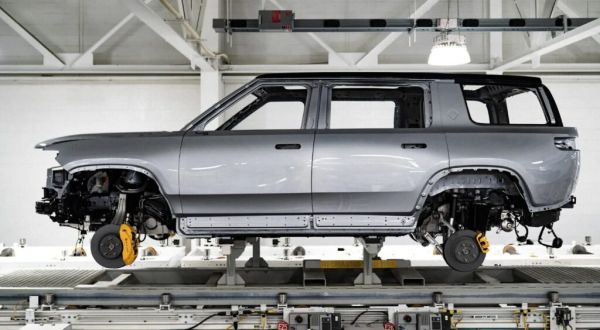
Rivian is giving used EV batteries a second life through a new partnership with Redwood Materials. The two companies are building a large-scale battery energy storage system at Rivian’s manufacturing plant in Normal that will use retired vehicle battery packs to store electricity and reduce energy costs.
The project marks a practical shift in how the EV industry views batteries after they are no longer suitable for road use. Instead of sending them directly for recycling, Rivian plans to repurpose them into stationary storage units that can continue delivering value for years.
More Than 100 Used Battery Packs to Power the System
The first phase of the installation will use over 100 retired Rivian battery packs, creating an initial capacity of 10 megawatt-hours. That is enough stored energy to help offset heavy electricity demand during expensive peak usage hours.
The battery system will be located directly at Rivian’s production facility, allowing the company to draw from stored electricity when grid prices spike. This can lower operating costs while reducing pressure on the local power network.
Executives say the long-term opportunity goes beyond a single plant. If successful, the model could be expanded to other manufacturing sites and industrial facilities across the country.
Why Second-Life Batteries Matter
Electric vehicle batteries are built to last hundreds of thousands of miles. Even after they are retired from vehicles, many still retain a significant amount of usable capacity. That makes them ideal for fixed storage applications, where battery size and weight are far less important than in a car.
Instead of building entirely new storage systems from raw materials, second-life battery packs can be deployed faster and often at a lower cost. This also extends the useful life of battery materials before they eventually enter the recycling stream.
For Rivian, it creates a circular system where batteries power vehicles first, then support factories later, and are recycled at the end of their full lifecycle.
Rising Power Demand Creates Urgency
The timing is significant. Electricity demand in the United States is climbing rapidly due to electrification, AI infrastructure, and the growth of energy-hungry data centers. Analysts estimate hundreds of gigawatt-hours of storage capacity will be needed by the end of the decade to keep grids stable and flexible.
Battery storage systems are increasingly seen as one of the fastest ways to balance supply and demand, especially during peak hours when electricity prices surge.
A Bigger Role for EV Batteries
Rivian founder and CEO RJ Scaringe said EV batteries should be seen as energy assets, not just vehicle components. Meanwhile, Redwood CEO JB Straubel called the project a scalable solution for near-term energy capacity needs.
What this really means is simple: the battery in tomorrow’s electric truck may someday help power the factory that builds the next one.
-
Nawazuddin Siddiqui Calls Out Racism in Hindi Cinema, Praises Smita Patil’s ‘Unmatched Beauty’

-
Sahil Parakh: Played 2 matches, failed in both, still gave Delhi Capitals his debut, know who is Sahil Parakh?

-
Sai Pallavi nervous ahead of Ek Din debut

-
Randeep Hooda is going to return in the role of super cop, teaser of Inspector Avinash 2 released…

-
Land Loan 2026: Is loan available to buy a plot? Know these special conditions of the bank